An Un-tended Native Flower Garden

I unfortunately have been unable to “take care” of my native flower garden this year.  In fact, today (June 14) was the first day since weed-whacking the entire garden last fall, that I got up the courage to take a look at what has come back up this year. I was pleased to find so many old friends doing not too badly.  Hopefully my untended garden will still be a haven for bees and butterflies.

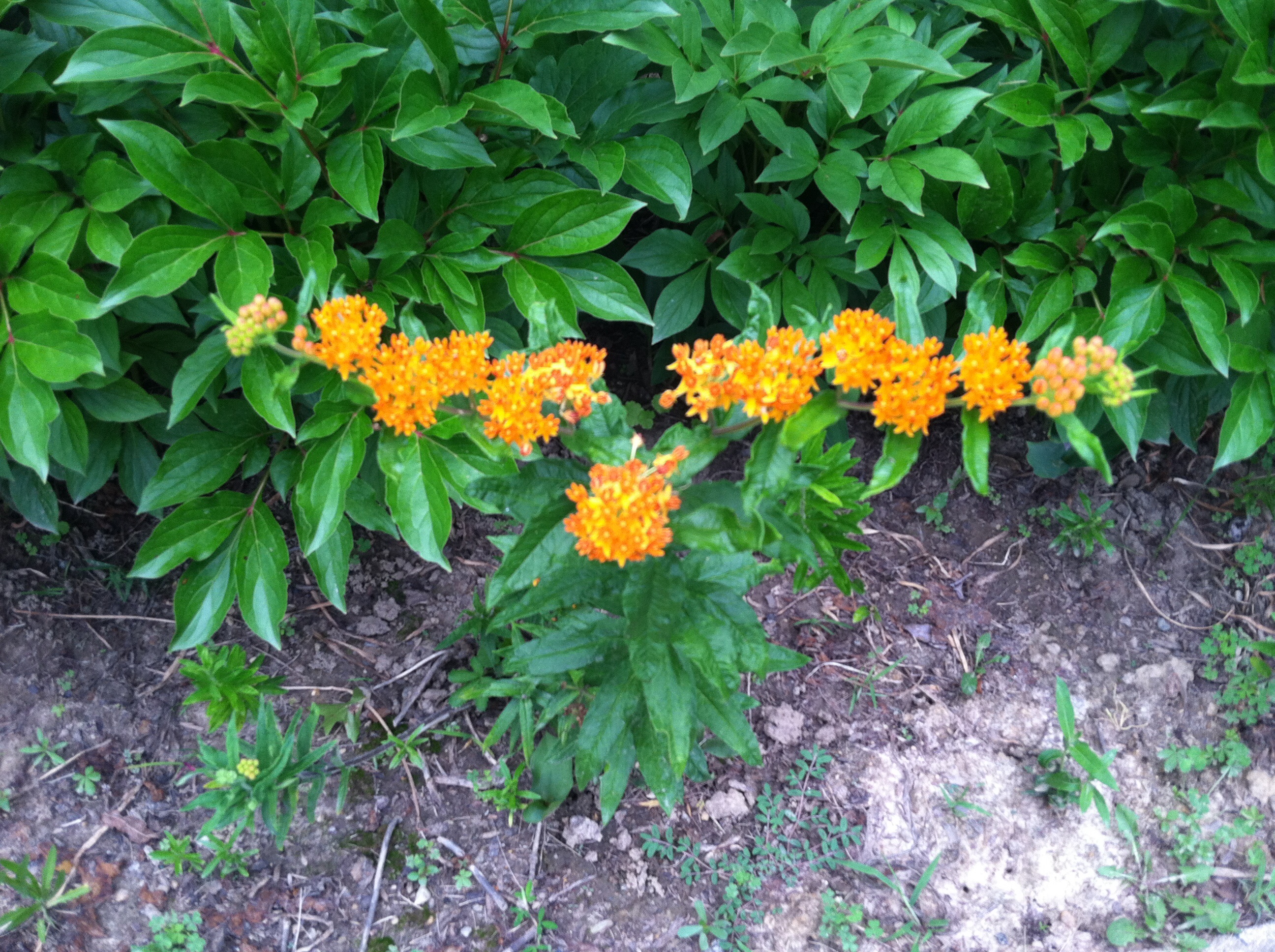
The first thing I noticed was a row of Butterfly Weed.
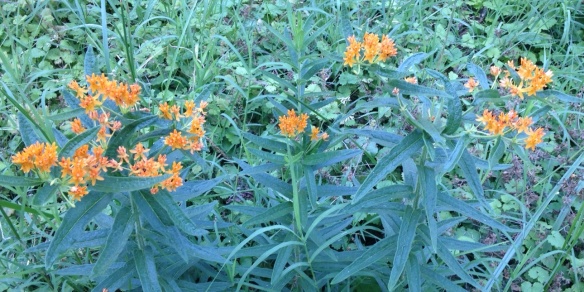
B Weed mid June

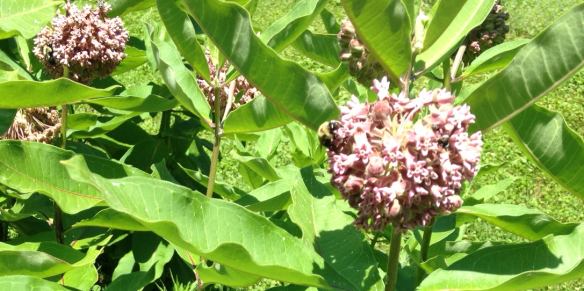
Then I took a look at my Common Milkweed patch.  It is definitely thriving, now coming into full bloom with bees all over it.
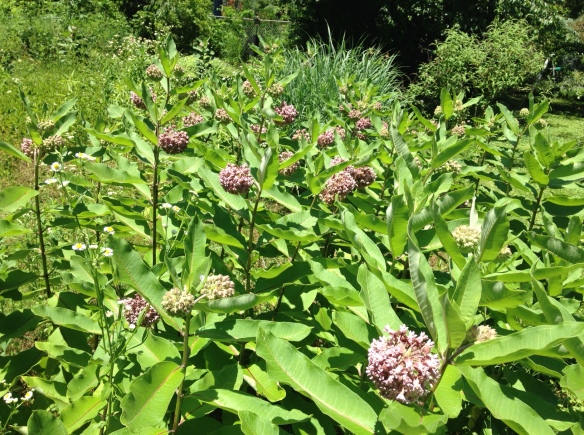
C milkweed 06:14

milkweed with bee

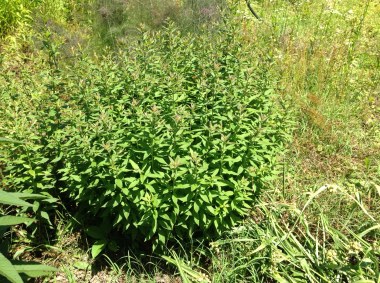
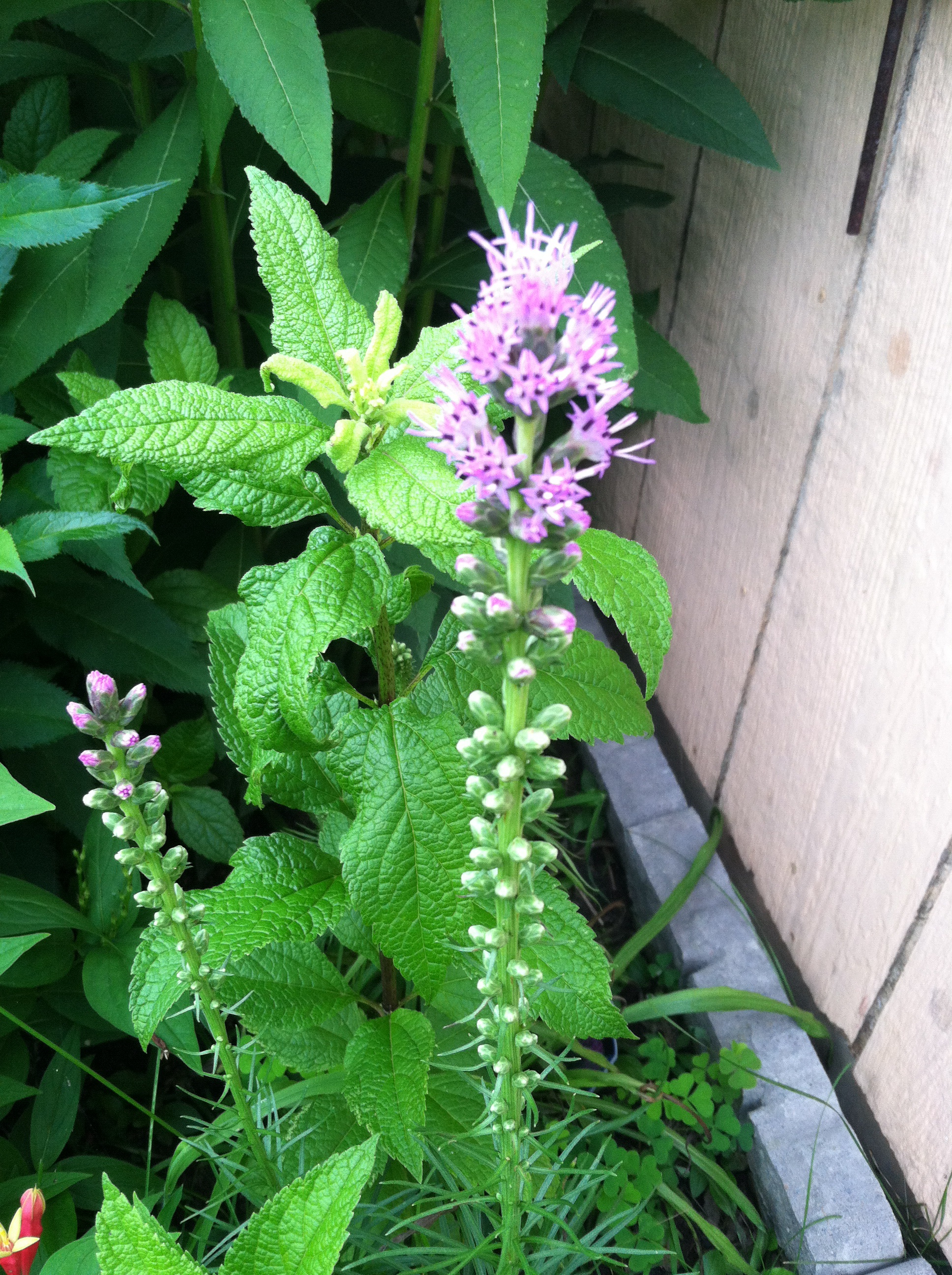
The Culver’s Root has re-appeared, very tall this year and just beginning to look like Culver’s Root.
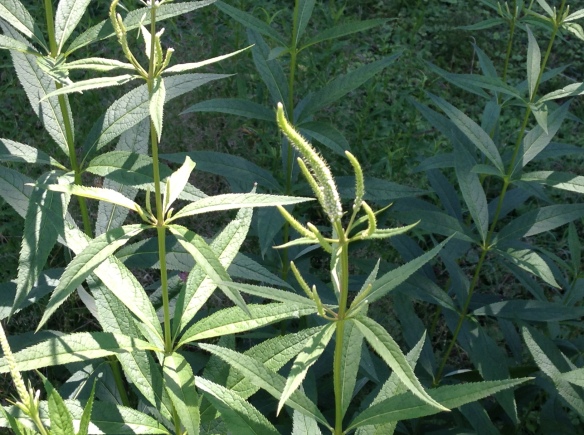
Culvers root 06:14

The Purple Coneflowers are just coming into bloom.
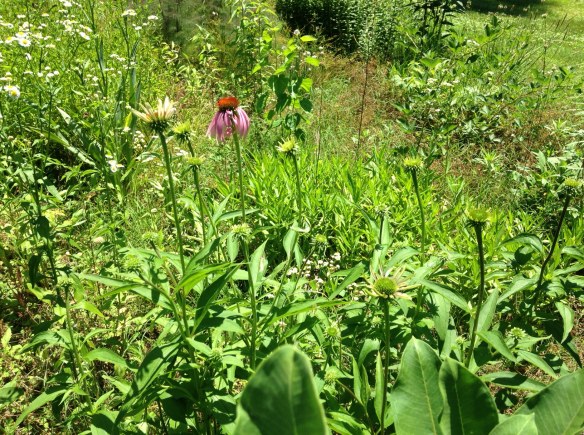
P Coneflower 06:14

The Daisy Fleabane is pretty much in bloom now.
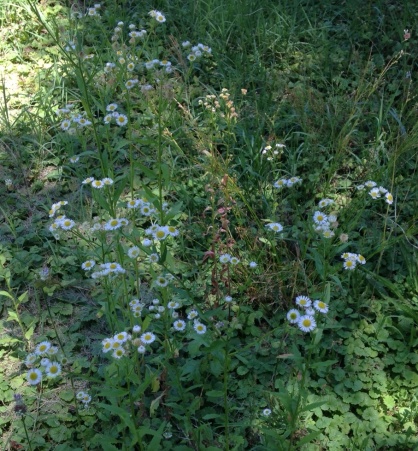
Daisy Fleabane mid-june

I THINK this is the New York Ironweed that I planted last year.
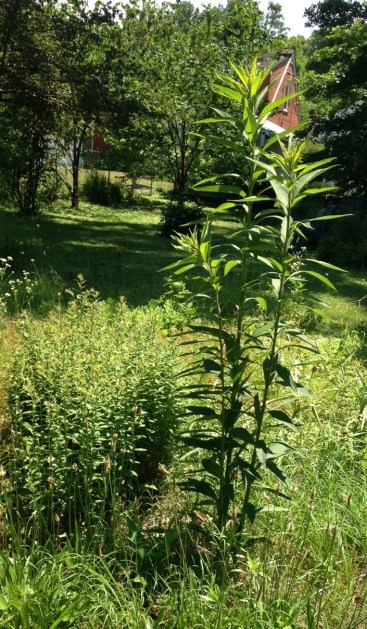
NY Ironweed mid-June

A tiny bit of very early goldenrod is already in flower.
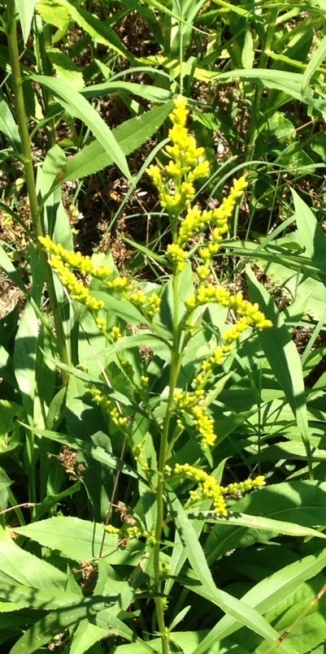
early goldenrod mid-june

Notably absent or still quite small:


M fistulosa 06:14

M. fistulosa mid-June 2016

  • Sweet Joe-Pye Weed.  I may see small amounts of it coming up, but apparently not thriving. This is another one I miss because it attracted so many bees.
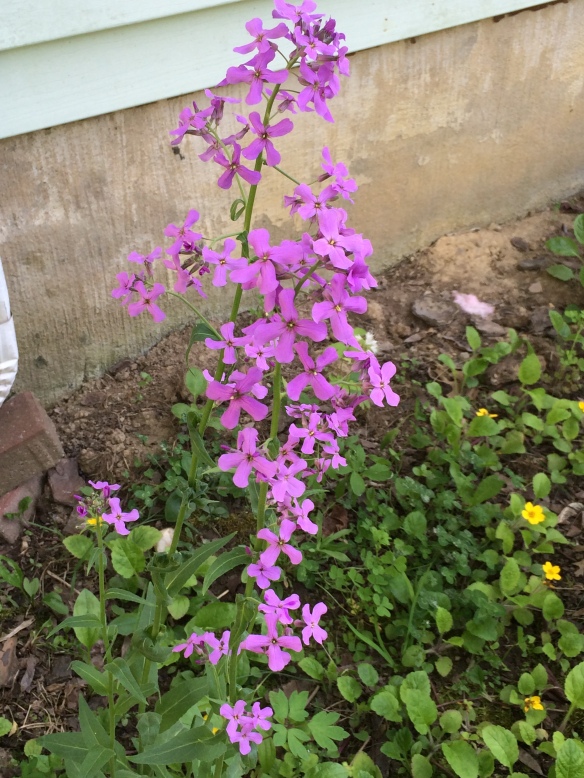


Springing Right into Summer

We have had a very cool, wet spring in Delaware, but as usually happens, we have suddenly gone right into summer.  Less than two weeks ago, we still had the heat running in our house, and now for the last four days, the temps have been in the high 80’s!

My flowers have been moving right along, enjoying the moisture while they have it, but now that it has finally gotten warm, they are really growing quickly.  Here are some pictures I took showing their progress:

image

Dame’s Rocket, a volunteer wildflower from a packet of seeds I planted 20 years ago!


image

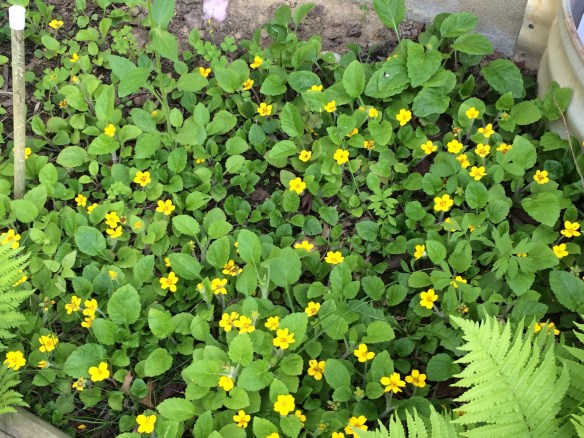
Green and Gold, or chrysogonum, a wonderful ground cover, is in full-bloom

image

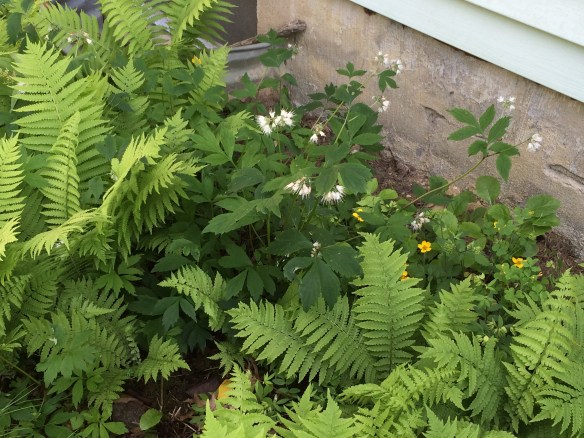
Virginia waterleaf is tucked in among my ferns which have taken off explosively!

image

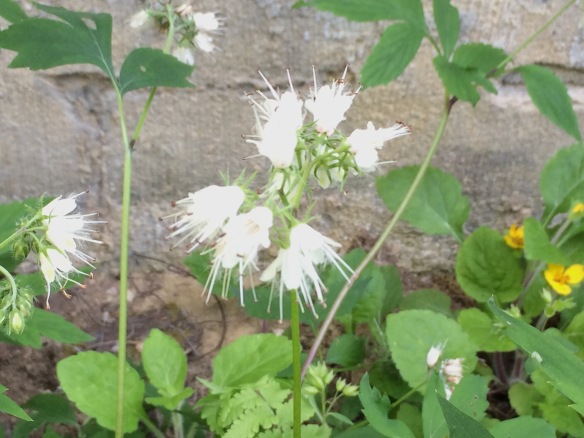
A close-up of my Virginia waterleaf

image

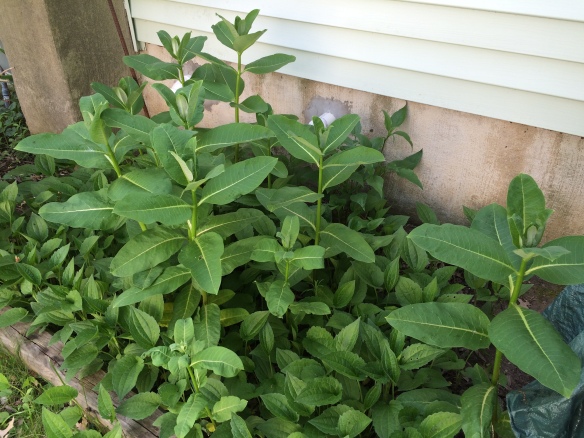
My up-and-coming common milkweed patch! Hopefully, some random female monarch will miraculously find them again this year.

image

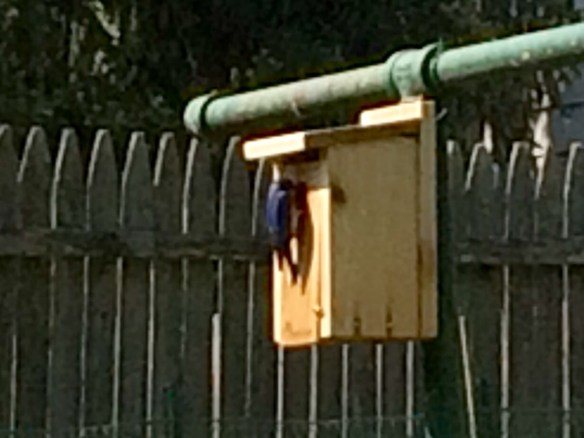
Last, but not least, my bluebird box has five babies in it! Here is Dad delivering a yummy morsel. They are so loud now, I can hear them from my upstairs window!

image

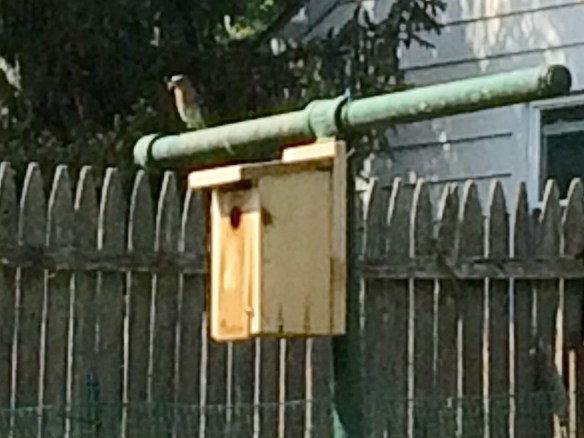
Momma bluebird waiting to make a delivery. She is SO cautious before entering the box.


Maybe My Milkweed Patch Is Sincere Enough!

Last Friday, July 24th, I went out into my backyard with a brick of suet for my suet feeder.  Something fluttering caught my eye, and it was a monarch butterfly coming around from the side of my house into my backyard!  I was transfixed, and watched in awe as it investigated my butterfly garden and swamp milkweed in the back.  Then I followed it around my house as it literally checked and rechecked every milkweed plant I have in the yard!  I must have circled the house 4 or 5 times, suet cake in hand, and NO CAMERA.  As I’ve said many a time, my neighbors must think I’m batty, and one did actually stop her car as she drove by and asked me what I was looking at, and then she spotted the monarch for me as it circled around from the back of the house again to my side yard. I was able to get a good enough look at it to determine that it was a female, and she landed on the underside of several of my common milkweed plants before finally settling down on a butterfly weed in bloom for a bit of a drink before taking off for good.

That evening I started checking my milkweed plants for eggs and found what could be one egg, and then yesterday I found another, then two more today, all on common milkweed.  They are all on leaves where I saw her land, ever so briefly.  It is so hard to tell the difference between a monarch egg, which is ridged and pointed, and milkweed latex, which is a round drop, so I’m reluctant to call them all eggs, but they certainly could be.  If they are eggs, they should hatch by the end of the week. Time will tell!

Here are some pictures I took with my phone, but they are a little blurry because the camera couldn’t focus well that close:

Possible monarch egg near the center of the picture

Possible monarch egg near the center of the picture.  It looks a little pointed.

Another possible egg

Another possible egg

Side view of another egg. Note how it is slightly pointed.

Side view of another egg. Note how it is slightly pointed.

Fourth possible egg!

Fourth possible egg!

Early Summer, Delaware-Style

The 4th of July has come and gone, and my summer flowers are starting to ramp it up.  The early-bloomers are humming with bees, and the late-bloomers are finally having a growth spurt after hanging back and letting the other ones go first.  My wrens fledged a few weeks ago, causing quite a ruckus in the backyard for about two weeks, then Mr. and Mrs. Wren decided to get in the “family way” again, so now she is sitting on eggs and he is still proclaiming his territory and keeping a close eye on the box.  After a brief hiatus in hummingbird activity while they were nesting, the hummers are back again in full force, and I am having a hard time keeping up with them so the feeder doesn’t run dry!  So here are some pictures showing what is going on:
image

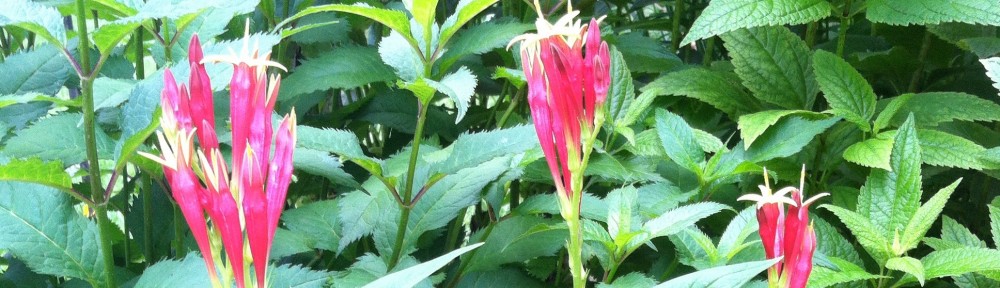
My Indian Pink was especially beautiful this year

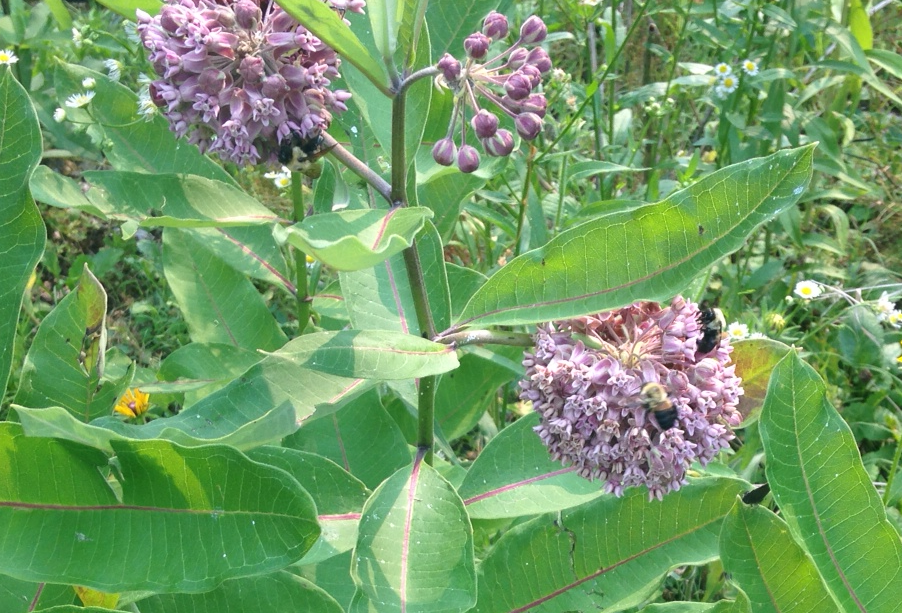
I finally got a blossom on my common milkweed and the bumblebees found it right away!

I finally got a blossom on my common milkweed and the bumblebees found it right away!

The butterfly weed in my hot, front garden is pretty happy

The butterfly weed in my hot front garden is pretty happy, and I actually saw a hummingbird visiting it last week!

Butterfly weed

Butterfly weed

The bee balm bloomed extravagantly and the bumblebees and hummingbirds have loved it!

The bee balm bloomed extravagantly and the bumblebees and hummingbirds have loved it!

Close-up of a bee balm flower

Close-up of a bee balm flower

My liatris is blooming very nicely after all the rain we've had this summer

My liatris is blooming very nicely after all the rain we’ve had this summer

I planted this little beautyberry bush last fall, expecting it to die over the winter, but it has done really well, even putting out a few blossoms, which a VERY tiny bee has found!

I planted this little beautyberry bush last fall, expecting it to die over the winter, but it has done really well, even putting out a few blossoms, which a VERY tiny bee has found! Click on the picture to enlarge it.

image

Tiny bee, about 1/8″ long, in the center

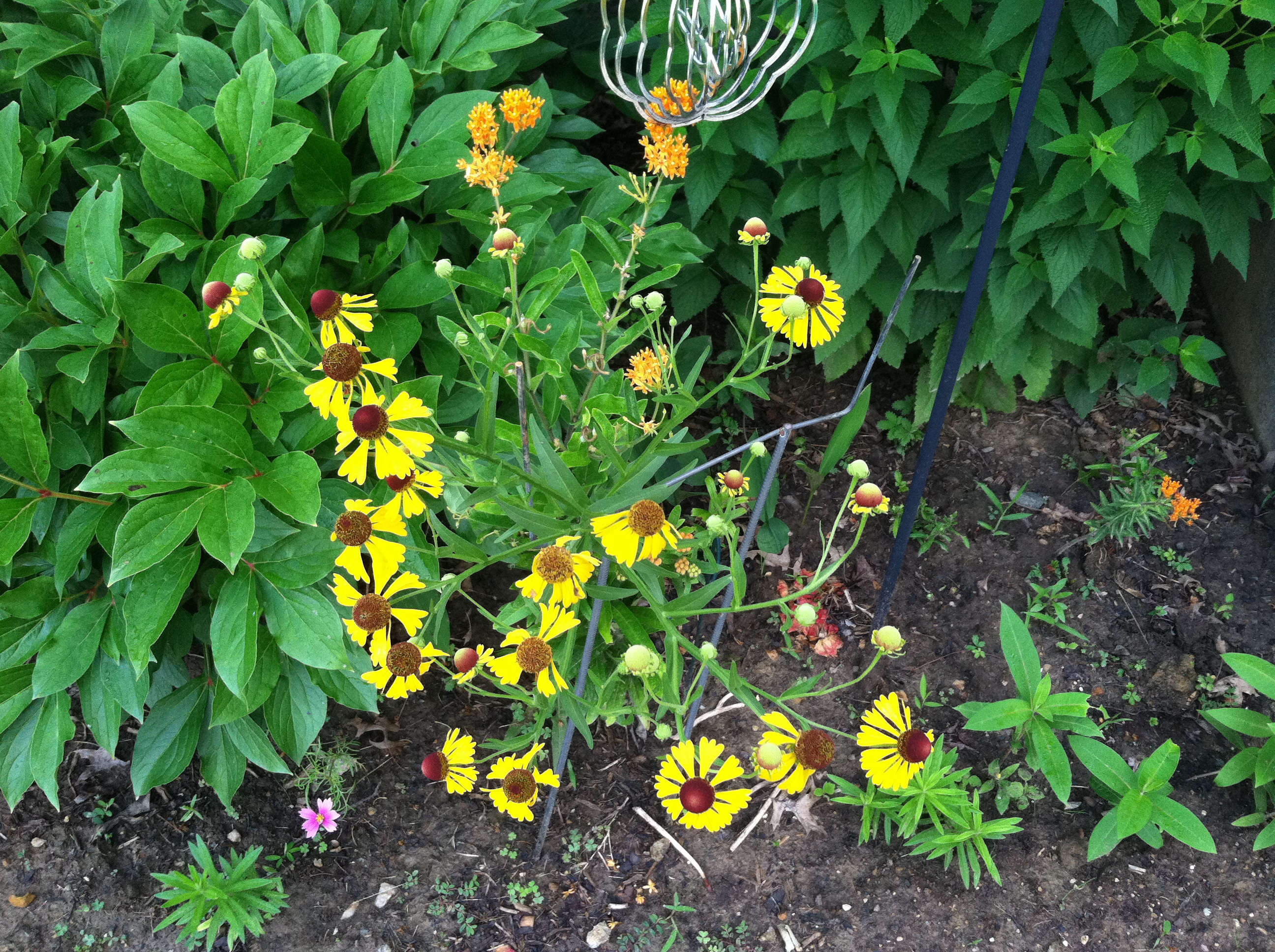
My common sneezeweed, inappropriately named, finally decided it could survive in my hot garden!

My common sneezeweed, inappropriately named, finally decided it could survive in my hot garden!

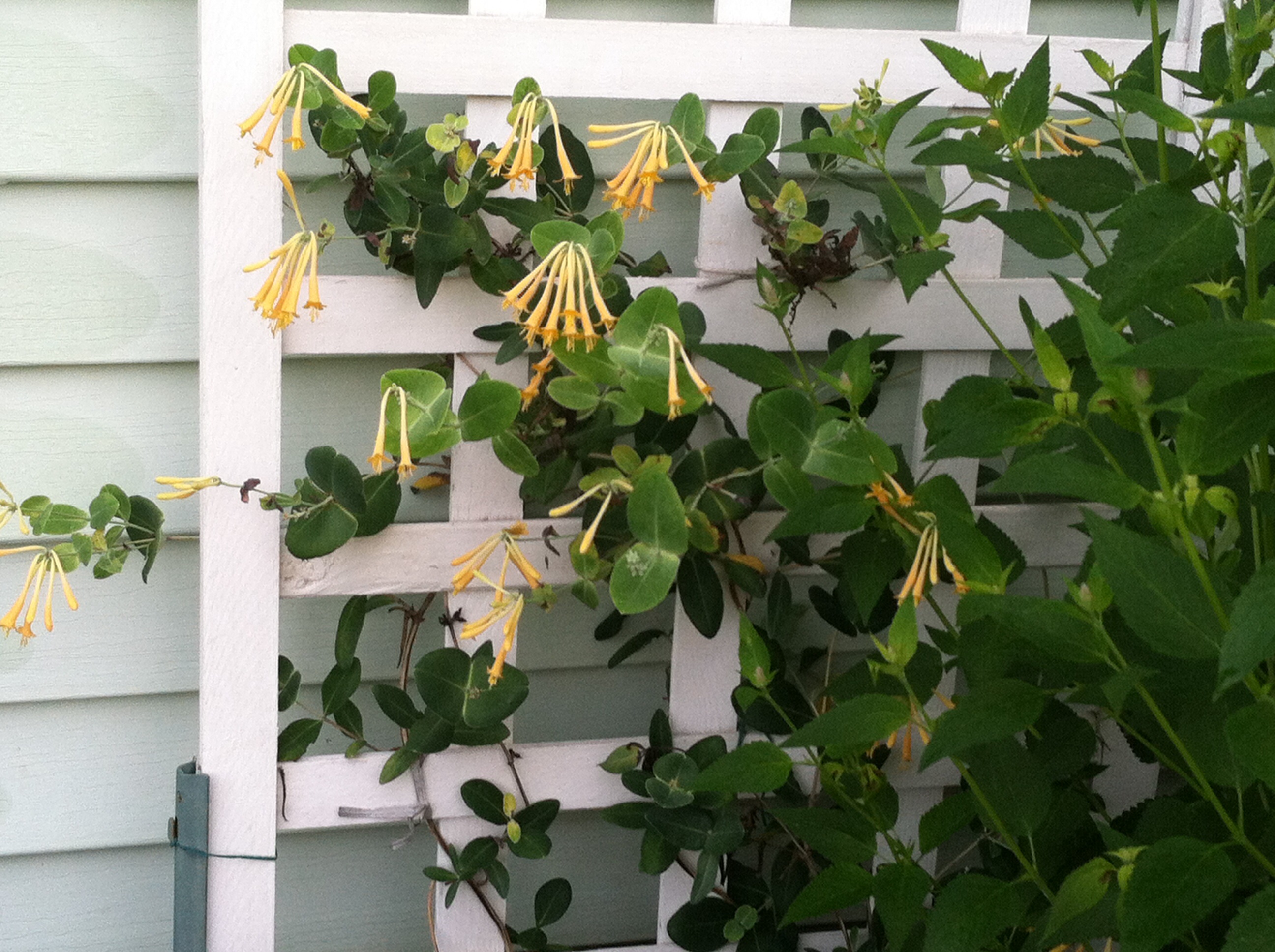
Native honeysuckle.  This is its second time blooming since spring.

Native honeysuckle. This is its second time blooming since spring.

Surprise visitors to my backyard!  I have been hearing red-shouldered hawks screaming all spring and summer in my neighborhood, so I figured there was a nest nearby.  This sight greeted me when I came down for breakfast last weekend--a young hawk sitting above my wren box, an adult on the fence, and a mockingbird harassing the adult!

Surprise visitors to my backyard! I have been hearing red-shouldered hawks screaming all spring and summer in my neighborhood, so I figured there was a nest nearby. This sight greeted me when I came down for breakfast last weekend–a young hawk sitting above my wren box, an adult on the fence, and a mockingbird harassing the adult!

And finally, my pokeweed is flourishing this year, practically looking like a tree!  I harvested the berries last year (the ones the birds didn't get first!) and took them in to TriState Bird Rescue for the birds to eat over the winter.

And finally, my pokeweed is flourishing this year, practically looking like a tree! I harvested the berries last year (the ones the birds didn’t get first!) and took them in to TriState Bird Rescue for the birds to eat over the winter.

Mid-June 2015 in Virginia

Here’s what’s happening as of June 15, 2015.

The Sweet Joe Pye  Weed is coming  into bloom.

Sweet Joe Pye Weed Coming into Bloom Mid June

Sweet Joe Pye Weed Coming into Bloom Mid June

The Monarda fistulosa is starting to bloom and the bumblebees have already found it.

M. fistulosa with Bumblebees

M. fistulosa with Bumblebees

My common milkweed patch is quite large and the bumblebees are all over it.

Common Milkweed Patch

Common Milkweed Patch

Bumblebees on Milkweed

Bumblebees on Milkweed

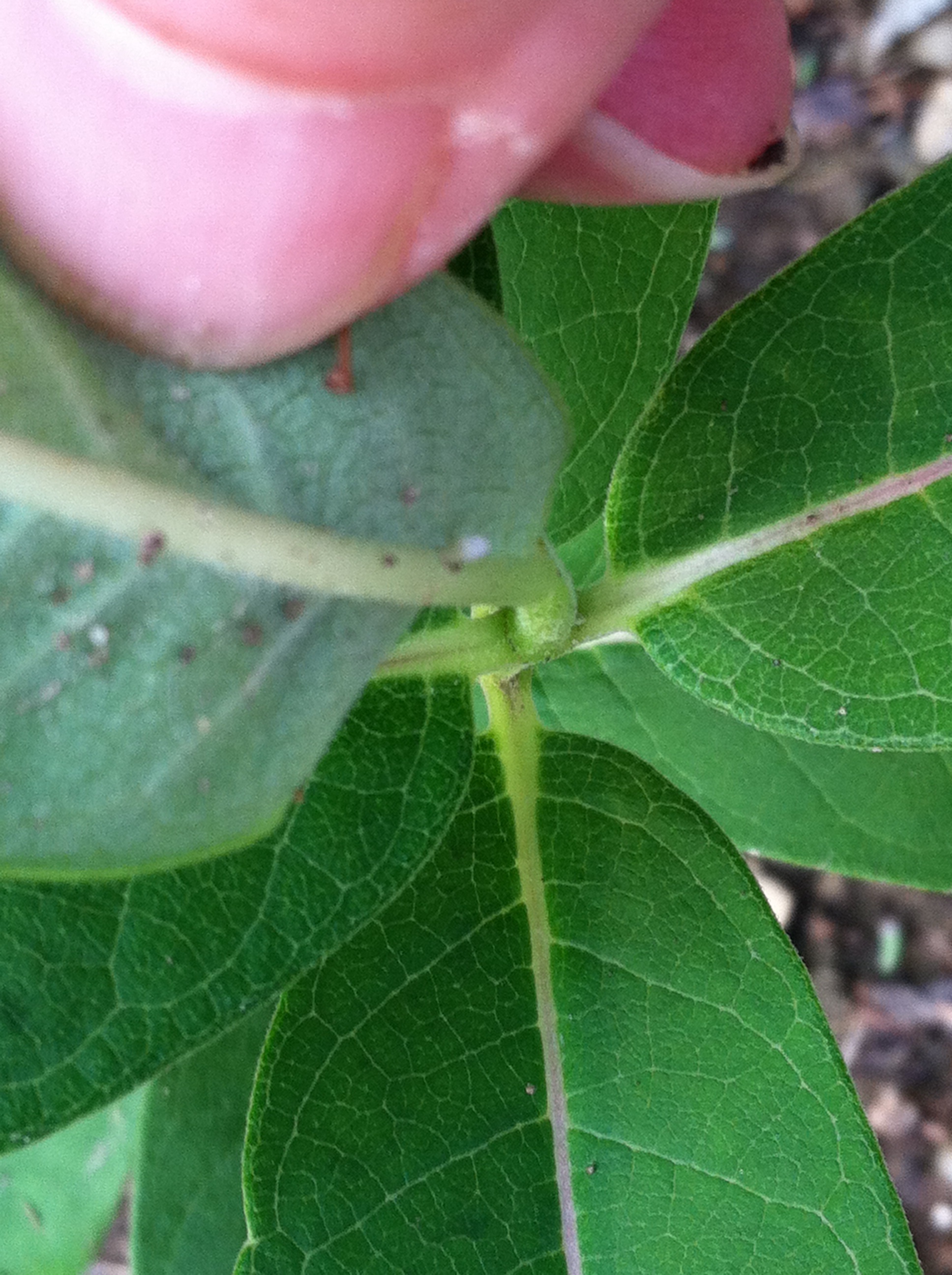
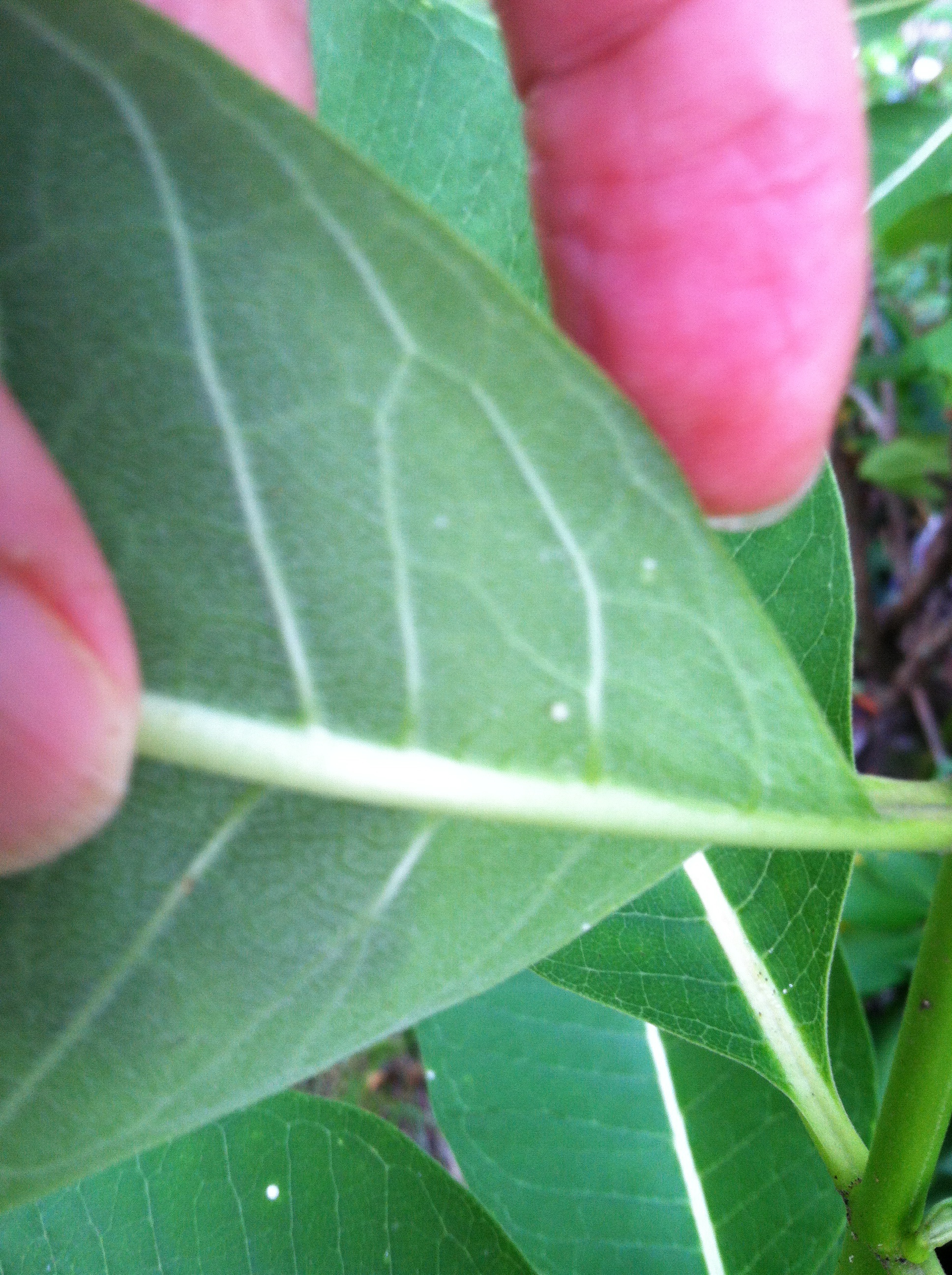
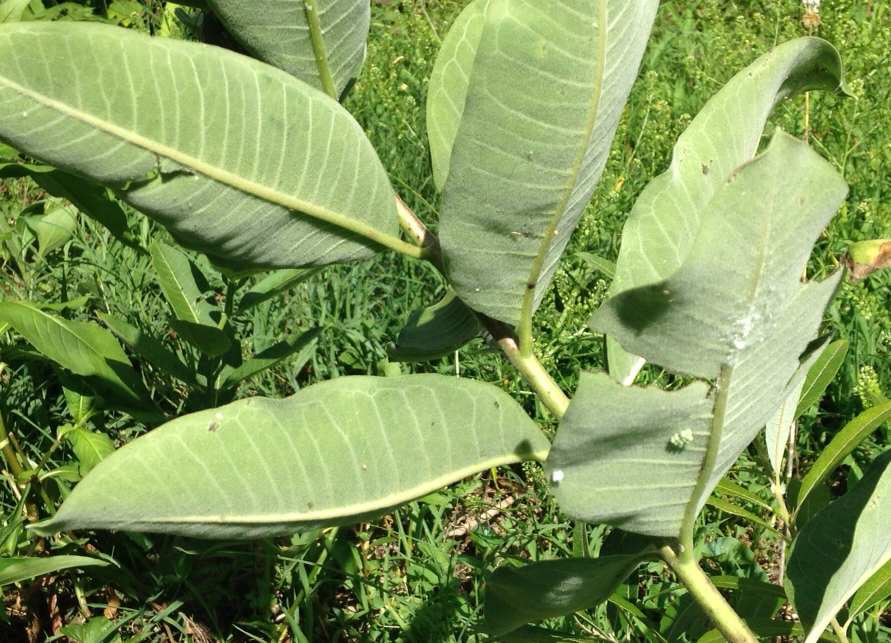
Speaking of common milkweed, does anyone know what this small mass of eggs is? (Lower part of leaf on right)

Eggs on Milkweed

Eggs on Milkweed

My Culver’s Root is very tall this year and is starting to look very lyre-like as can be seen in this rather out-of-focus picture.

Culver's Root

Culver’s Root

Some of my goldenrod is perilously close to blooming.  I say “perilously” because this seems quite early to me.

Goldenrod Close to Blooming

Goldenrod Close to Blooming

Finally, my Eastern Red Cedar is loaded with berries this year.  I can’t wait for the Cedar Waxwings and other birds to find them.

Eastern Red Cedar Loaded with Berries

Eastern Red Cedar Loaded with Berries

News from the Milkweed Patch

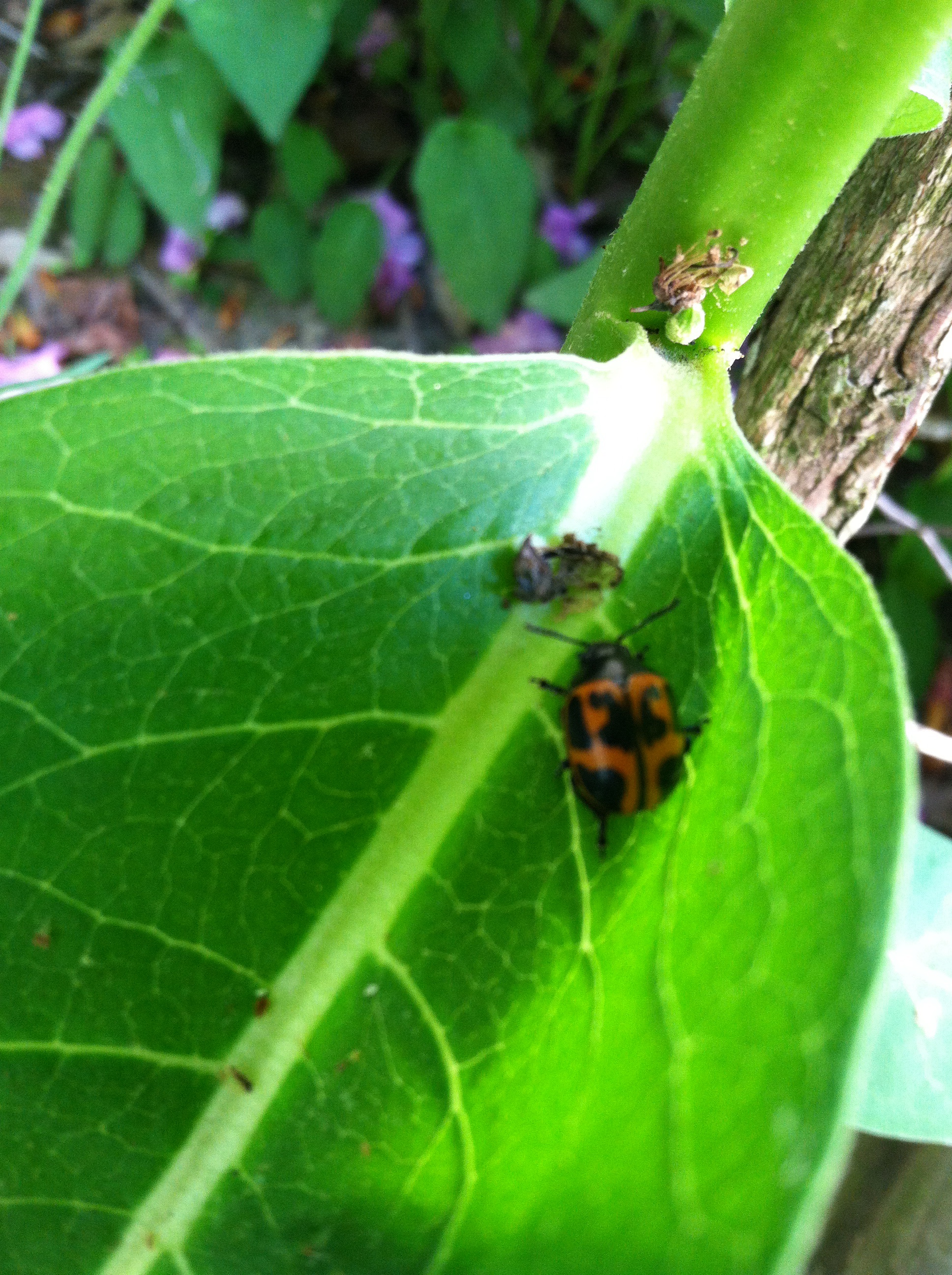
My little common milkweed patch is growing every year, and one of them looks like it is going to bloom.  I think being located on the east side of my house and not getting full sun is why they have never bloomed before.  Monarchs have been sighted here in northern Delaware, and I have noticed milkweed growing all over the place, along roadsides and in fields, which is very encouraging to me.  So now I have started the “milkweed prowl” where I inspect my milkweed every day to see if anything is happening.  Yesterday I found my first milkweed bug of the season!  According to Milkweed, Monarchs, and More: A Field Guide to the Invertebrate Community in the Milkweed Patch, it is actually called a Swamp Milkweed Leaf Beetle (Labidomera clivicollis) and usually prefers swamp milkweed to protect it from its usual predators, but there it was on my common milkweed!  I guess I’d prefer finding monarch eggs, but a milkweed beetle is better than nothing, and at least the milkweed is being used for something by a native insect!

Swamp milkweed leaf beetle

Swamp milkweed leaf beetle

My common milkweed patch

My common milkweed patch

Milkweed blossom forming!

Milkweed blossom forming!

June 1, 2015  News flash!

Yesterday while we were sitting out in the backyard enjoying the hummingbird/house wren show and watching the catbird snatch serviceberries off the tree (you know we have an exciting life!), I suddenly caught a glimpse of something orange and black from the corner of my eye.  It was a monarch fluttering around my little common milkweed patch!  It literally checked out every plant in the patch, then flew around the backyard and the other side of the house before returning to check the plants again.  I felt like Linus hoping my milkweed patch was sincere enough for the monarch!  Eventually, it flew away, but I am so encouraged that if at least one monarch has somehow found my patch, others may also find it. I’ll be checking that patch for eggs every day now for sure!

Some Old Friends

Finally some old friends are showing up.

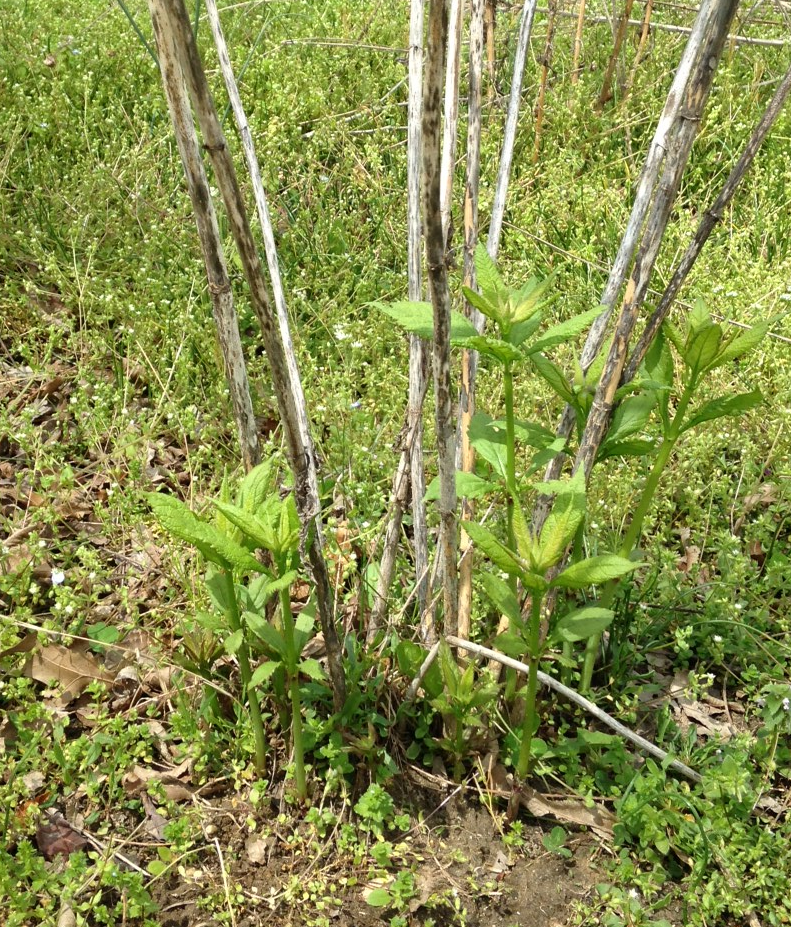
My Sweet Joe Pye Weed has put in an appearance:

Sweet Joe Pye Weed Starting to Come Up

Sweet Joe Pye Weed Starting to Come Up

My common milkweed is suddenly popping up.  As I recall by the end of last year my original one plant had transmogrified into at least 8 plants. I wonder how many there will be this spring.

Common Milkweed Coming Up

Common Milkweed Coming Up

The Penstemon is putting in an appearance:

Penstemon Coming Up

Penstemon Coming Up

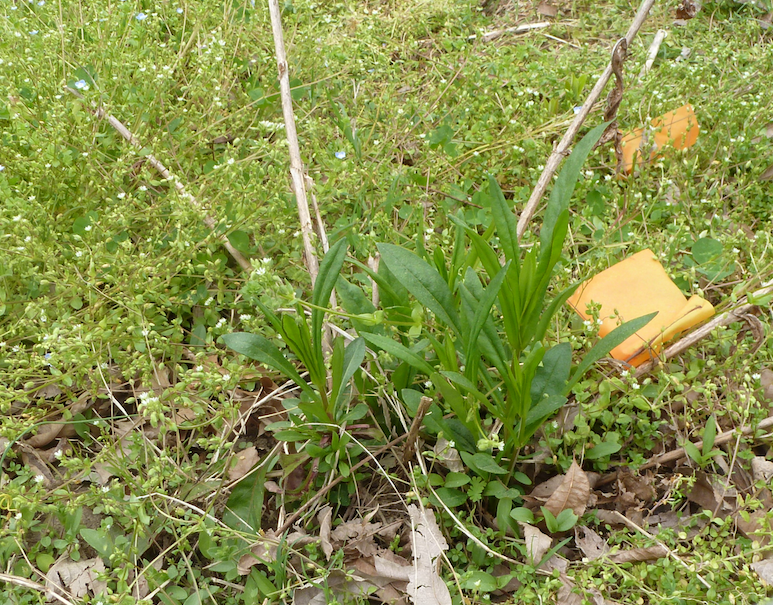
I have several plants that I think may be Butterfly Weed (Asclepias tuberosa).  I’m not positive as I think it is a little early for Butterfly Weed to be this far along.  But at this point I don’t know what else it might be.

Butterfly Weed Coming Up?

Butterfly Weed Coming Up?

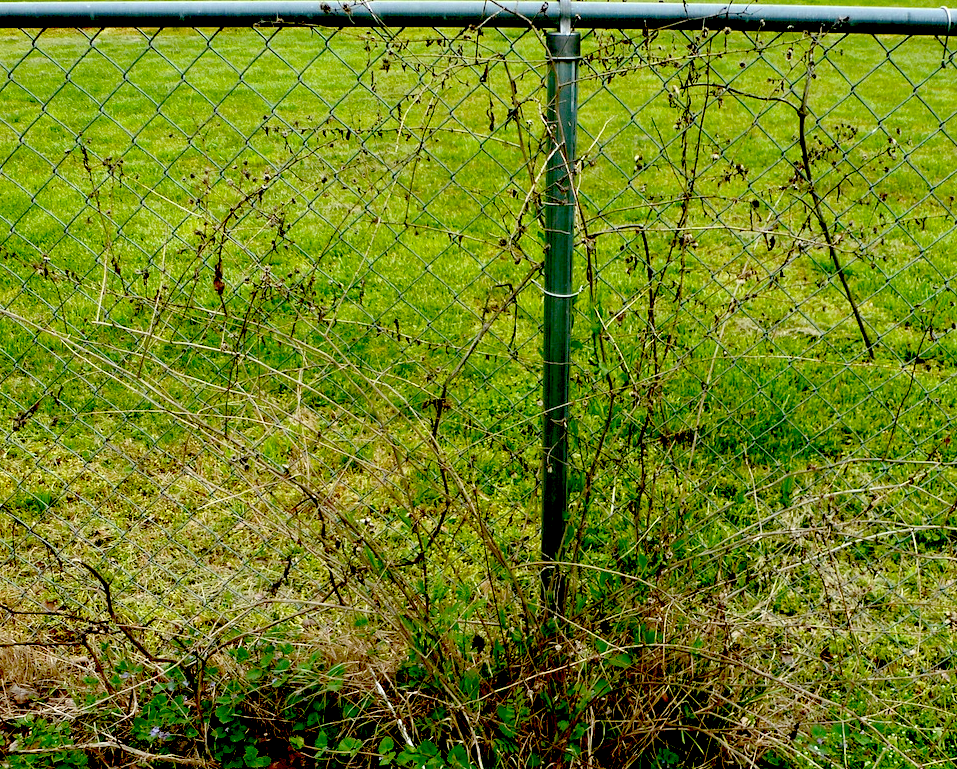
This is the way my Climbing Aster (Aster carolinianus) looks from a distance.  Old dead wood, right?

Climbing Aster from a Distance 04/19/15

Climbing Aster from a Distance 04/19/15

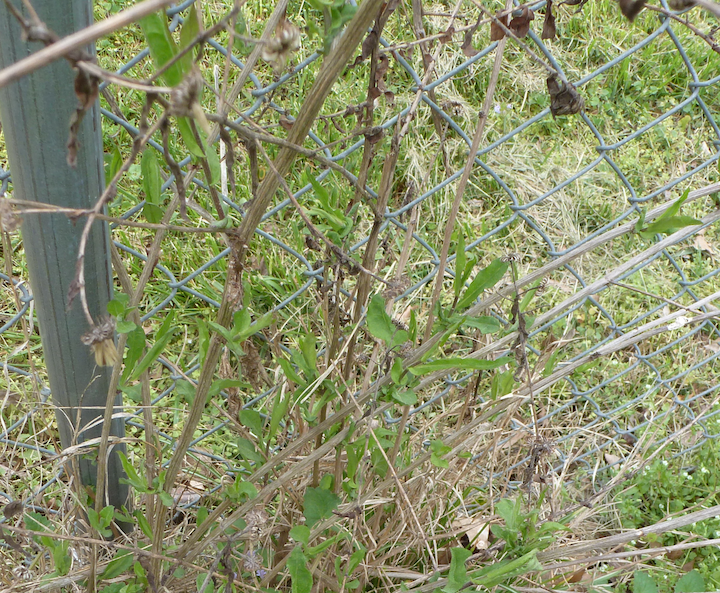
Last year I was “cleaning up” by cutting away this old “dead” stuff, when I realized there were green leaves growing out of it!  This year I know better.  Here’s a view closer up.  If you look closely you can see that there are green leaves growing out of the brown stems.

Climbing Aster Up Close

Climbing Aster Up Close

Finally, I don’t know that these would classify as “old friends” but the inch worms are back this year!  I keep discovering them crawling on the back of my neck after I’ve been out in the yard.  Sorry, they are too small for me to photograph.