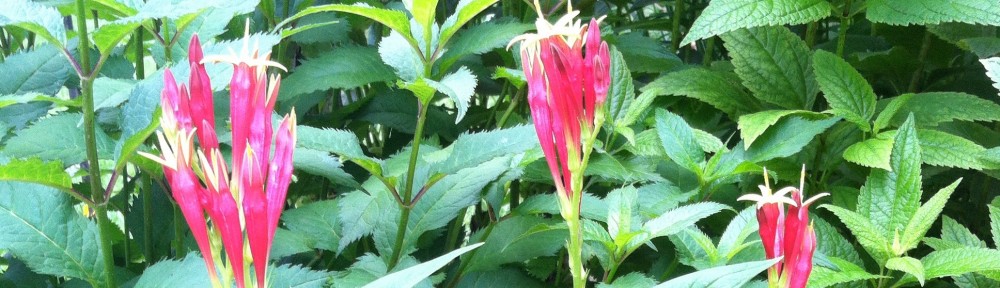
I unfortunately have been unable to “take care” of my native flower garden this year. In fact, today (June 14) was the first day since weed-whacking the entire garden last fall, that I got up the courage to take a look at what has come back up this year. I was pleased to find so many old friends doing not too badly. Hopefully my untended garden will still be a haven for bees and butterflies.
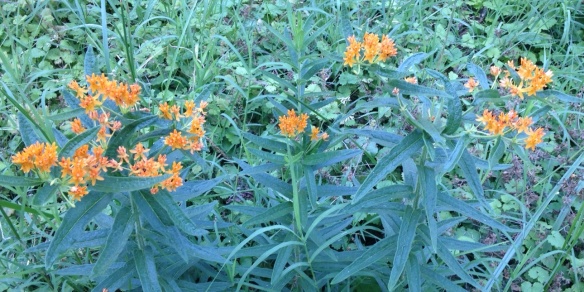
The first thing I noticed was a row of Butterfly Weed.
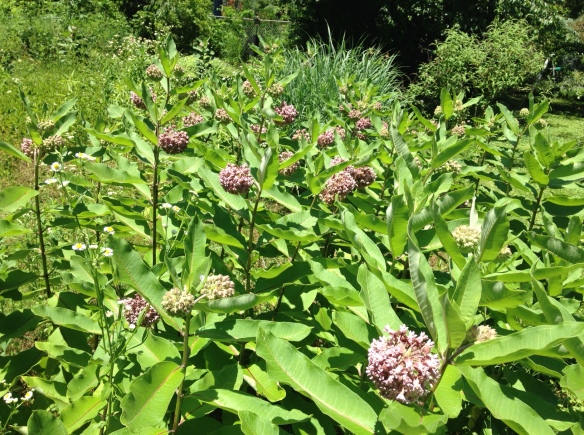
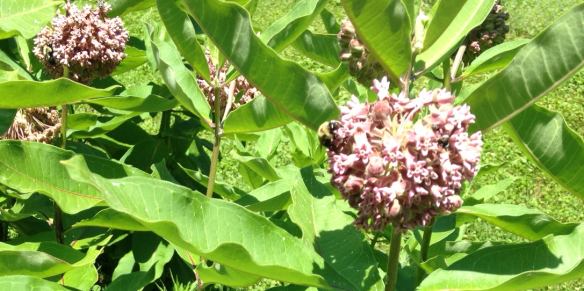
Then I took a look at my Common Milkweed patch. It is definitely thriving, now coming into full bloom with bees all over it.
The Culver’s Root has re-appeared, very tall this year and just beginning to look like Culver’s Root.
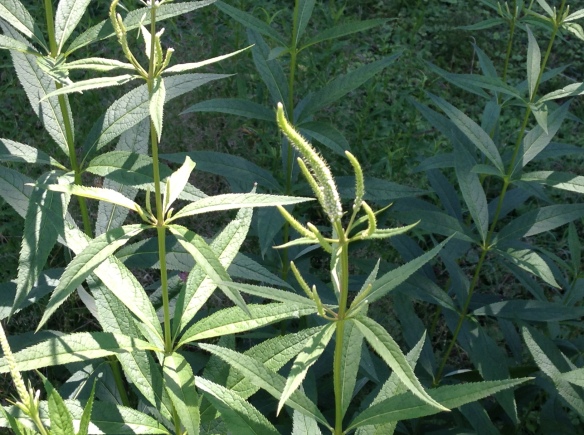
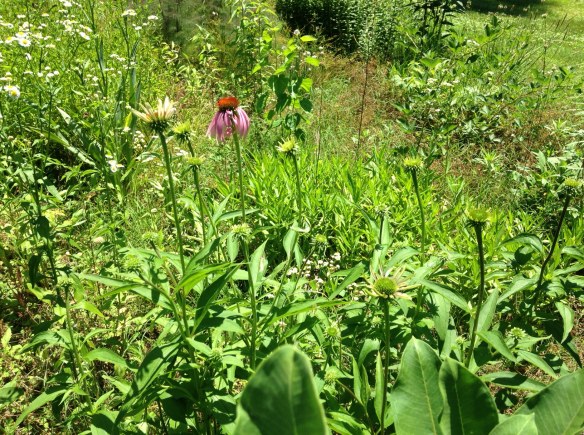
The Purple Coneflowers are just coming into bloom.
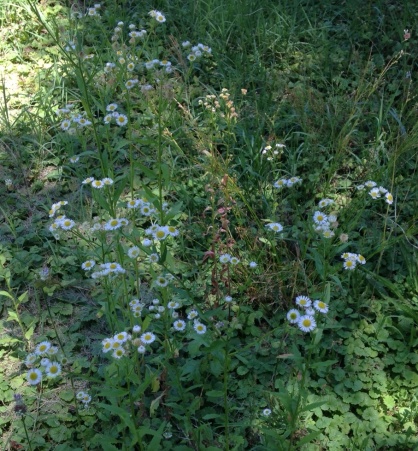
The Daisy Fleabane is pretty much in bloom now.
I THINK this is the New York Ironweed that I planted last year.
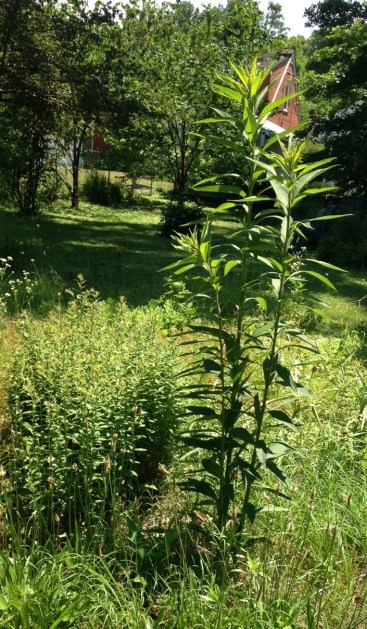
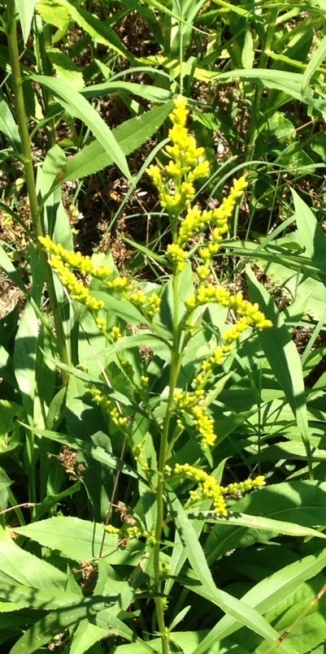
A tiny bit of very early goldenrod is already in flower.
Notably absent or still quite small:
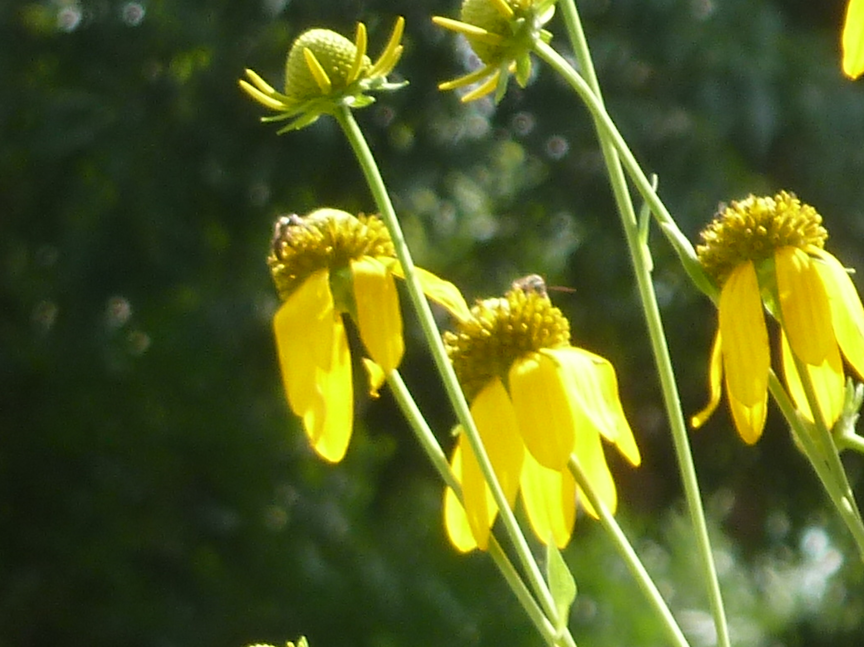
- Green-headed Coneflower (not there at all this year). I miss this plant as it was a great attractor of bees.
- Monarda fistulosa. It seems much smaller than I expected.
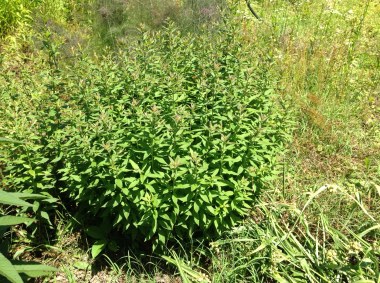
M. fistulosa mid-June 2016
- Sweet Joe-Pye Weed. I may see small amounts of it coming up, but apparently not thriving. This is another one I miss because it attracted so many bees.


 FROM WEEDS TO BEES