Springing Right into Summer

We have had a very cool, wet spring in Delaware, but as usually happens, we have suddenly gone right into summer.  Less than two weeks ago, we still had the heat running in our house, and now for the last four days, the temps have been in the high 80’s!

My flowers have been moving right along, enjoying the moisture while they have it, but now that it has finally gotten warm, they are really growing quickly.  Here are some pictures I took showing their progress:
image

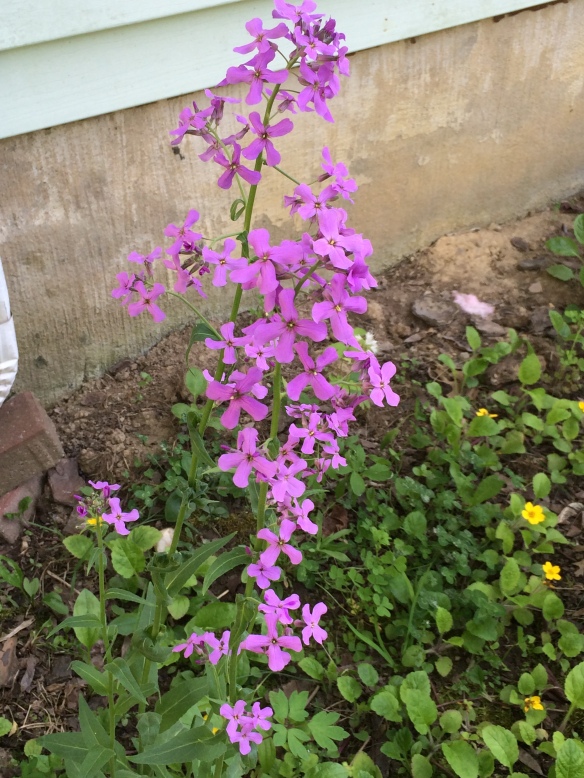
Dame’s Rocket, a volunteer wildflower from a packet of seeds I planted 20 years ago!
 

image

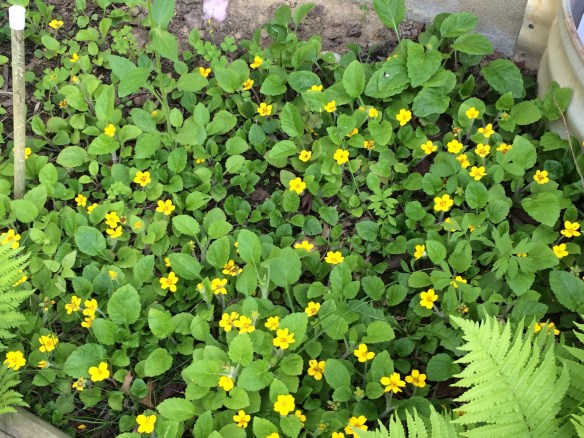
Green and Gold, or chrysogonum, a wonderful ground cover, is in full-bloom
image

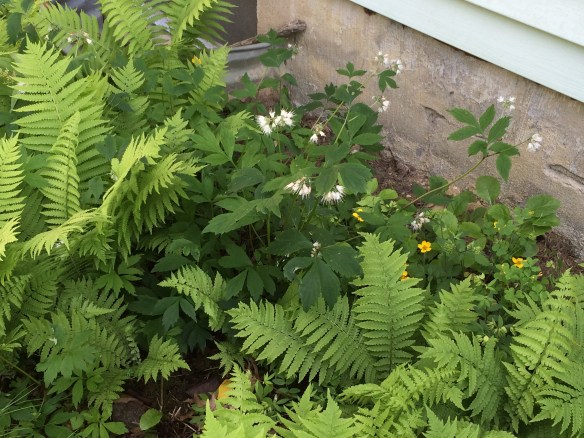
Virginia waterleaf is tucked in among my ferns which have taken off explosively!
image

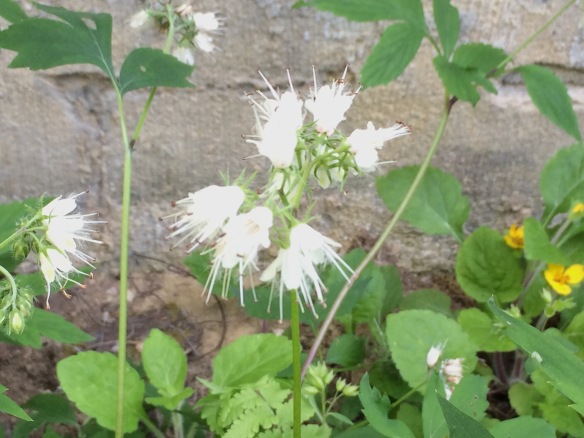
A close-up of my Virginia waterleaf

image

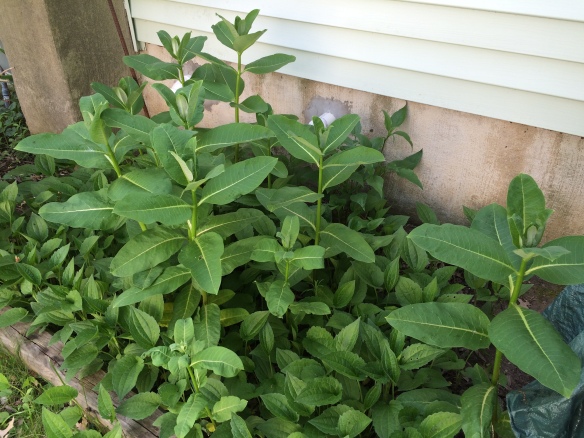
My up-and-coming common milkweed patch! Hopefully, some random female monarch will miraculously find them again this year.
image

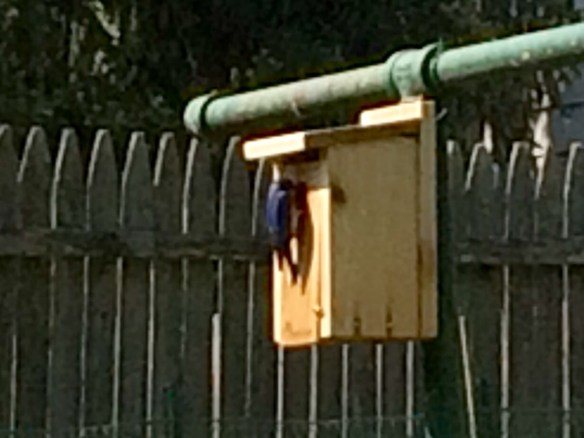
Last, but not least, my bluebird box has five babies in it! Here is Dad delivering a yummy morsel. They are so loud now, I can hear them from my upstairs window!
image

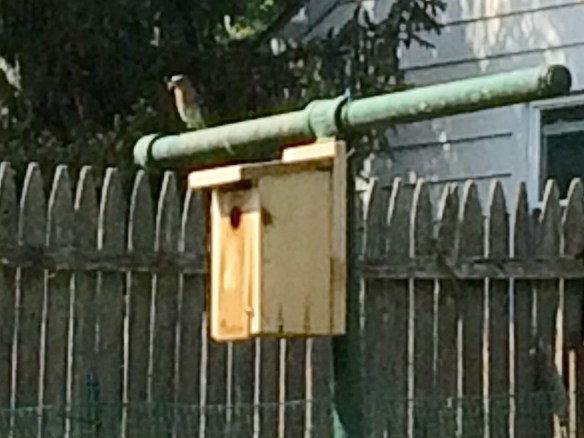
Momma bluebird waiting to make a delivery. She is SO cautious before entering the box.
 

April 1st: Spring’s Coming, No Foolin’!

I am always anxious for spring to arrive, and even though we had a mild winter here in Delaware, and trees and flowers are already starting to bloom, I’m still impatient.  Today I prowled around my yard and took some pictures of some perennials that are starting to grow, and of course, a picture of my beloved serviceberry tree that is getting very close to blooming!  A wonderful surprise was the appearance of three little milkweed seedlings from seeds that I planted last November and left outside over the winter.

image

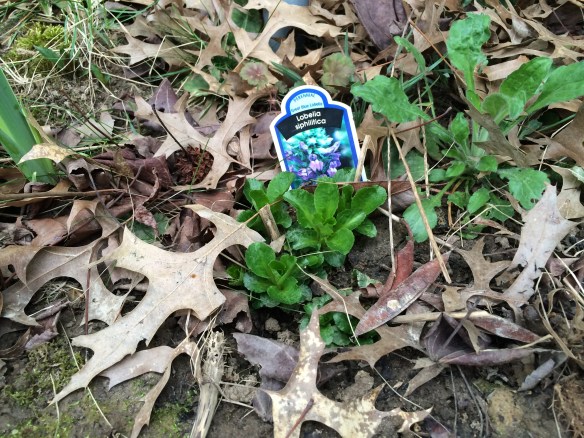
Blue lobelia

image

Cardinal flower

image

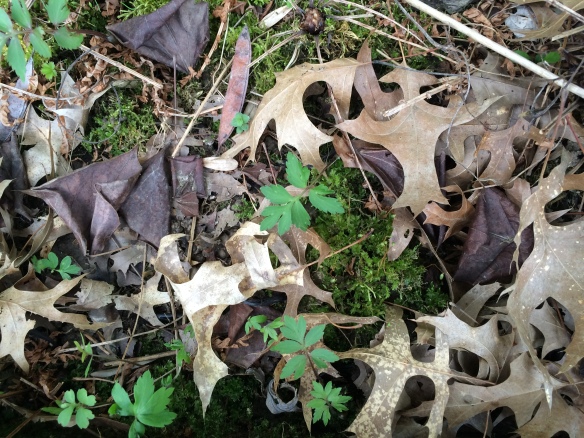
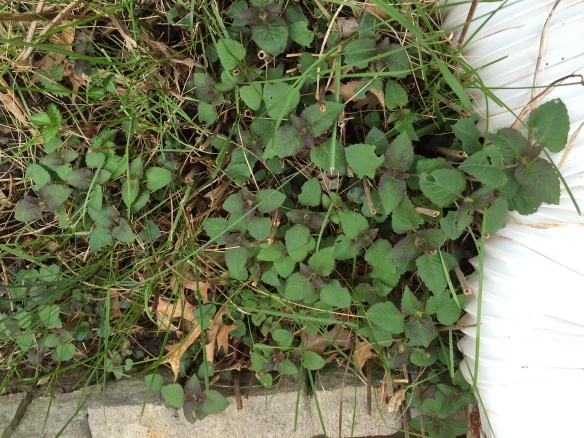
Virginia waterleaf

image

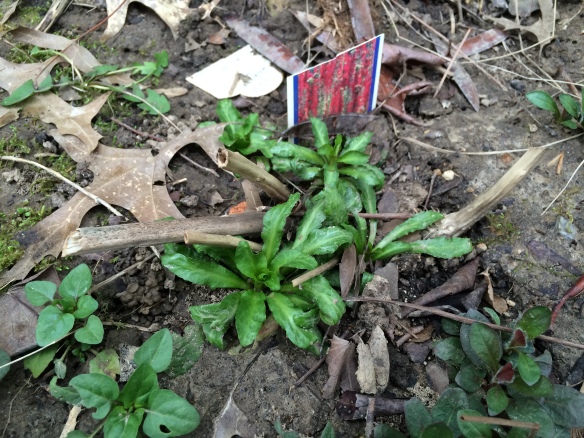
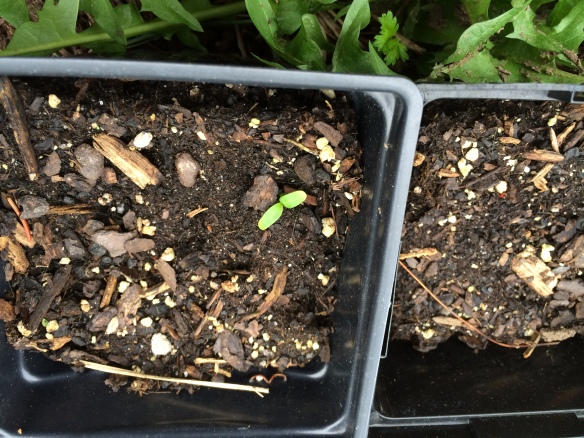
Milkweed seedling

image

Monarda (Bee balm)

image

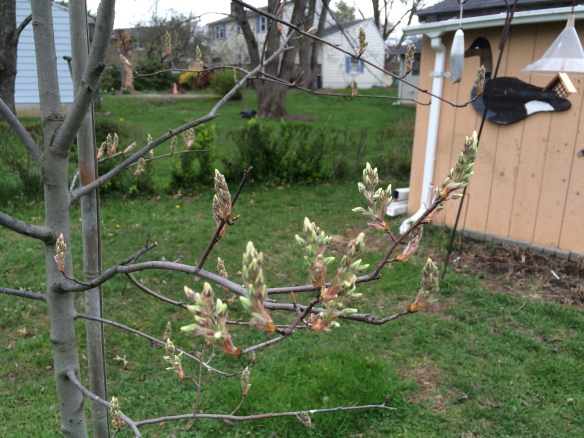
Serviceberry tree, almost in bloom!


A Very Hungry Caterpillar

The two days before my last monarch caterpillar formed its chrysalis, it was easily eating three to four milkweed leaves per day.  Seriously, this caterpillar meant business!  When I went into the laundry room where I had its mesh habitat, I could actually hear it chewing away on the leaves.  Here is a video of my little guy devouring a leaf. Be sure to turn up your volume!

https://youtu.be/YXiy4iWbtiY&rel=0

Not an Empty Nest for Long!

After releasing my three hand-raised monarch butterflies on Aug. 21st at 8:30 AM, I felt very empty and bereft, to say the least.  I cleaned and bleached the plastic container and mesh butterfly habitat that I had used for them and dried them out in preparation for putting them away.  That afternoon at 2:00 PM, I went out to look at my milkweed, and was bemoaning all the aphids all over it and wondering if any female monarch would ever deign to lay any eggs on it, when what to my wondering eyes did appear but a tiny, 1/4 inch monarch caterpillar on one of the leaves!  I couldn’t believe it!  Back in business again after only 5 1/2 hours!  I plucked that leaf right off and ran back into the house to place it carefully in the freshly cleaned out plastic container.  Since it was already about 1/4 inch long, I guessed it was about 1 day old, based on my previous caterpillars’ growth.  I never found any more eggs or caterpillars, so that must be the only survivor of any eggs its mother laid.

Now it is a week old and about 1 1/4 inches long.  It has been happily eating its way through my milkweed leaves, and today I rearranged the butterfly habitat to accommodate a larger caterpillar.  It has occurred to me that this caterpillar might be one of the migratory generation.  Very exciting!

I found this lone 1/4 inch caterpillar the same day I released my first three butterflies!

I found this lone 1/4 inch caterpillar the same day I released my first three butterflies!

The next day, it was already noticeably bigger.

The next day, it was already noticeably bigger.

I finally caught it molting and entering into its 3rd instar (I think!). That is its old skin behind it, and the round black and white object in front of it is its old face!

I finally caught it molting and entering into its 3rd instar (I think!). That is its old skin behind it, and the round black and white object in front of it is its old face!

Approximately one week old today.

Approximately one week old today.

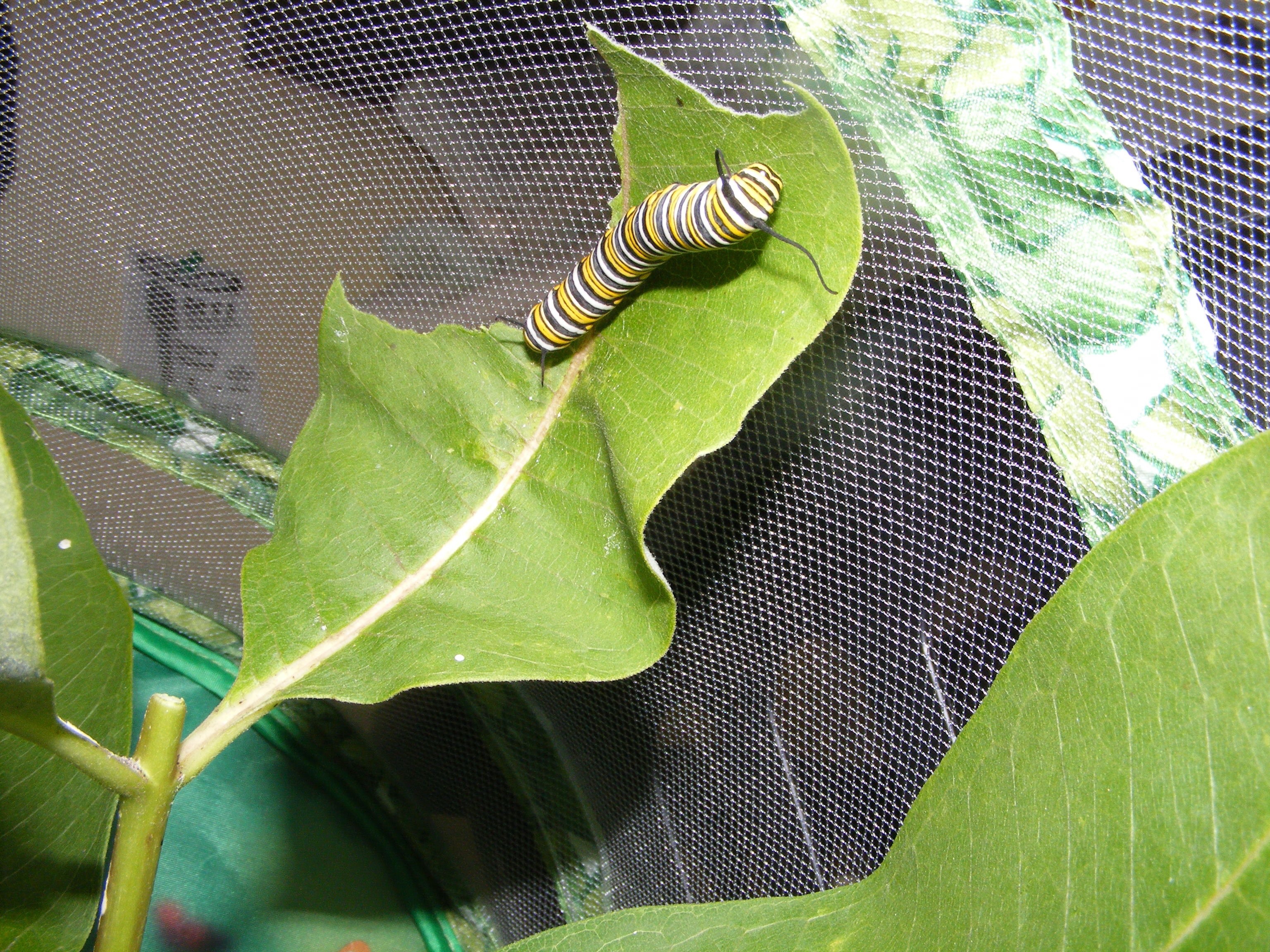
At home in its mesh butterfly habitat with a fresh cutting of milkweed to munch on!

At home in its mesh butterfly habitat with a fresh cutting of milkweed to munch on!

The Monarch Story Continues

In my last post, I told about finding three tiny monarch caterpillars on my milkweed and bringing them inside to raise by hand.  It was astounding how quickly they grew!  By the next day they had doubled in size from 1/8 inch to 1/4 inch long.  Unfortunately, I had to leave on Aug. 1st for twelve days, so I left them in the capable hands of my friend who cat sits for me, henceforth known as my “cat-erpillar” sitter.  I was sorry to miss out on their caterpillarhood, but she faithfully sent me pictures of their rapid growth.  On Aug. 9th, the first caterpillar made its chrysalis, then the other two made theirs on Aug. 10th.  I was home on Aug. 12th, so was able to observe the three chrysalises hanging in their mesh butterfly habitat, and on Aug. 19th, exactly 10 days after making the chrysalis, the first butterfly eclosed!  The second two butterflies eclosed on Aug. 20th.  I missed the emergence of the first butterfly, but made sure I was present for the other two the next day.  What a fun experience to witness right on my kitchen table!

Here are pictures of their growth and development from caterpillar to butterfly.  All three turned out to be males.  Good luck, little guys!

Here is one at about 1.5 inches, enjoying its leaf.

Here is one at about 1.5 inches, enjoying its leaf.

Two inches long now!

Two inches long now!

Family portrait

Family portrait

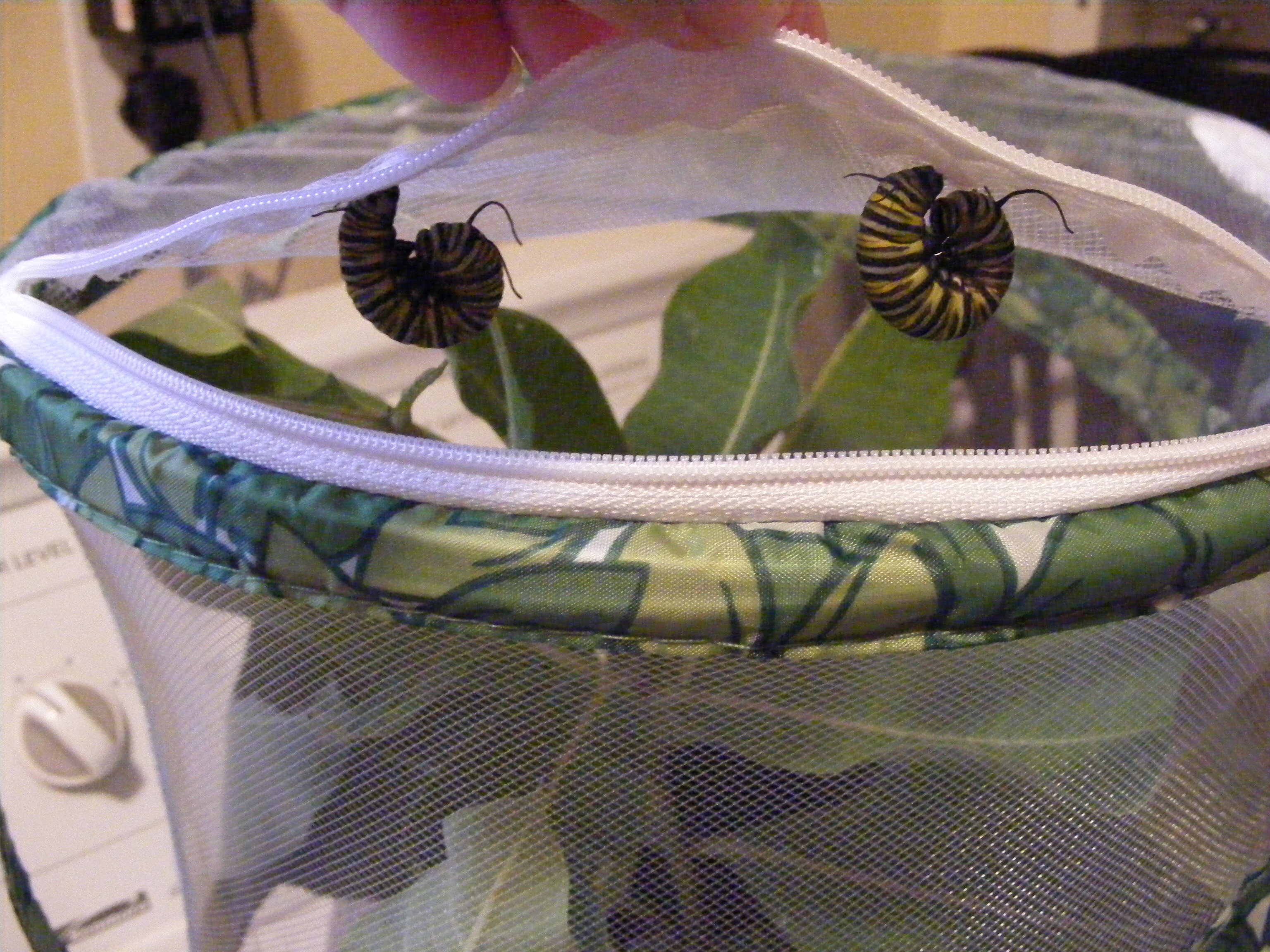
Hanging from the roof of the cage, making their

Hanging from the roof of the cage, making their “J”, just before making the chrysalis.

Two chrysalises, waiting patiently while a miracle is happening inside!

Two chrysalises, waiting patiently while a miracle is happening inside!

Look what happened overnight! The first one has turned dark and the orange and black wings of the butterfly can be seen. The butterfly will eclose in about two hours.

Look what happened overnight! The first one has turned dark and the orange and black wings of the butterfly can be seen. The butterfly will eclose in about two hours.

Ta da!! Just beautiful!

Ta da!! Just beautiful!

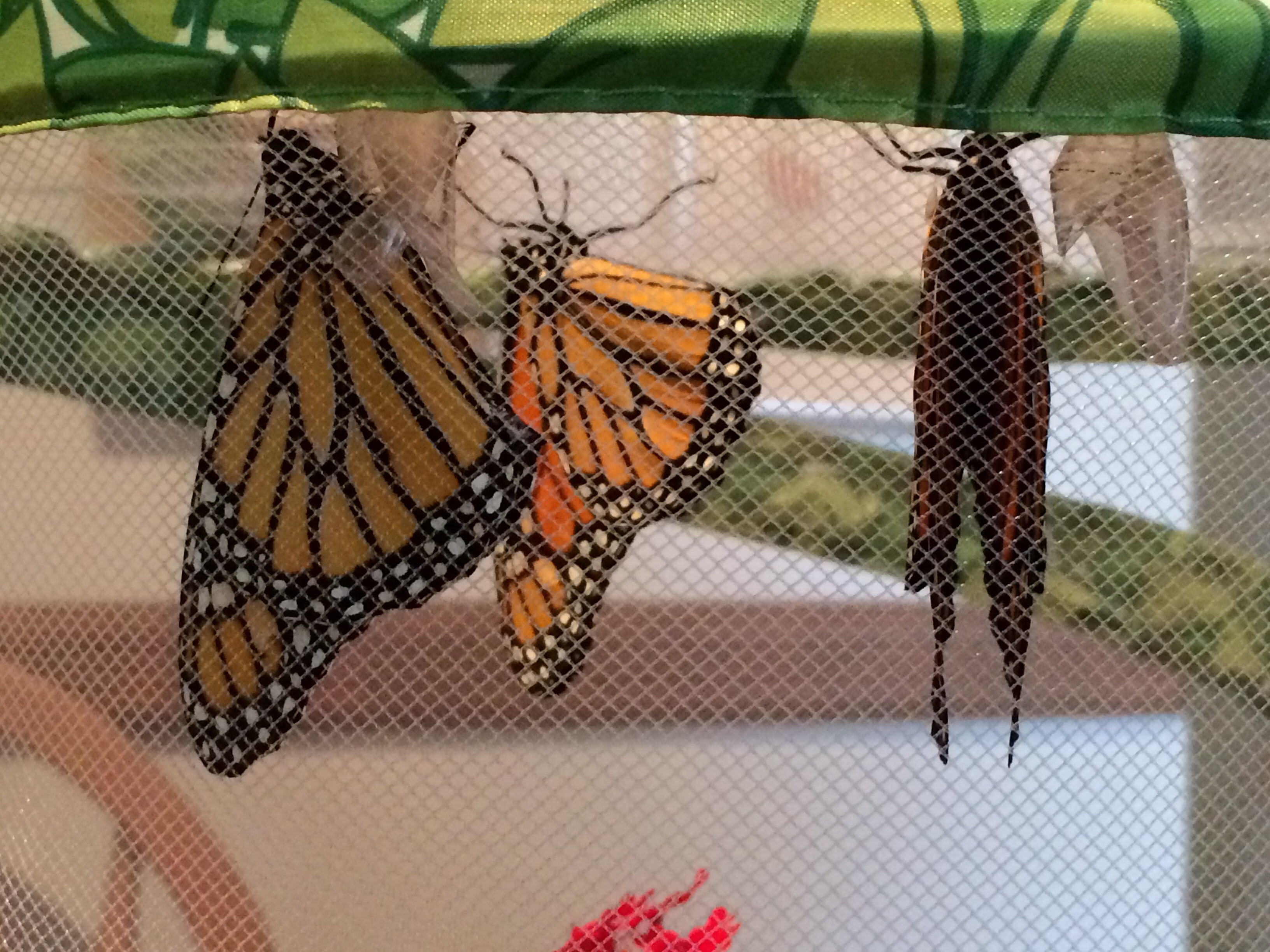
The other two eclosed the next day. The first one came out exactly 10 minutes before the second. What a difference in 10 minutes!

The other two eclosed the next day. The first one came out exactly 10 minutes before the second. What a difference in 10 minutes!

Here are all three in their glory!

Here are all three in their glory!

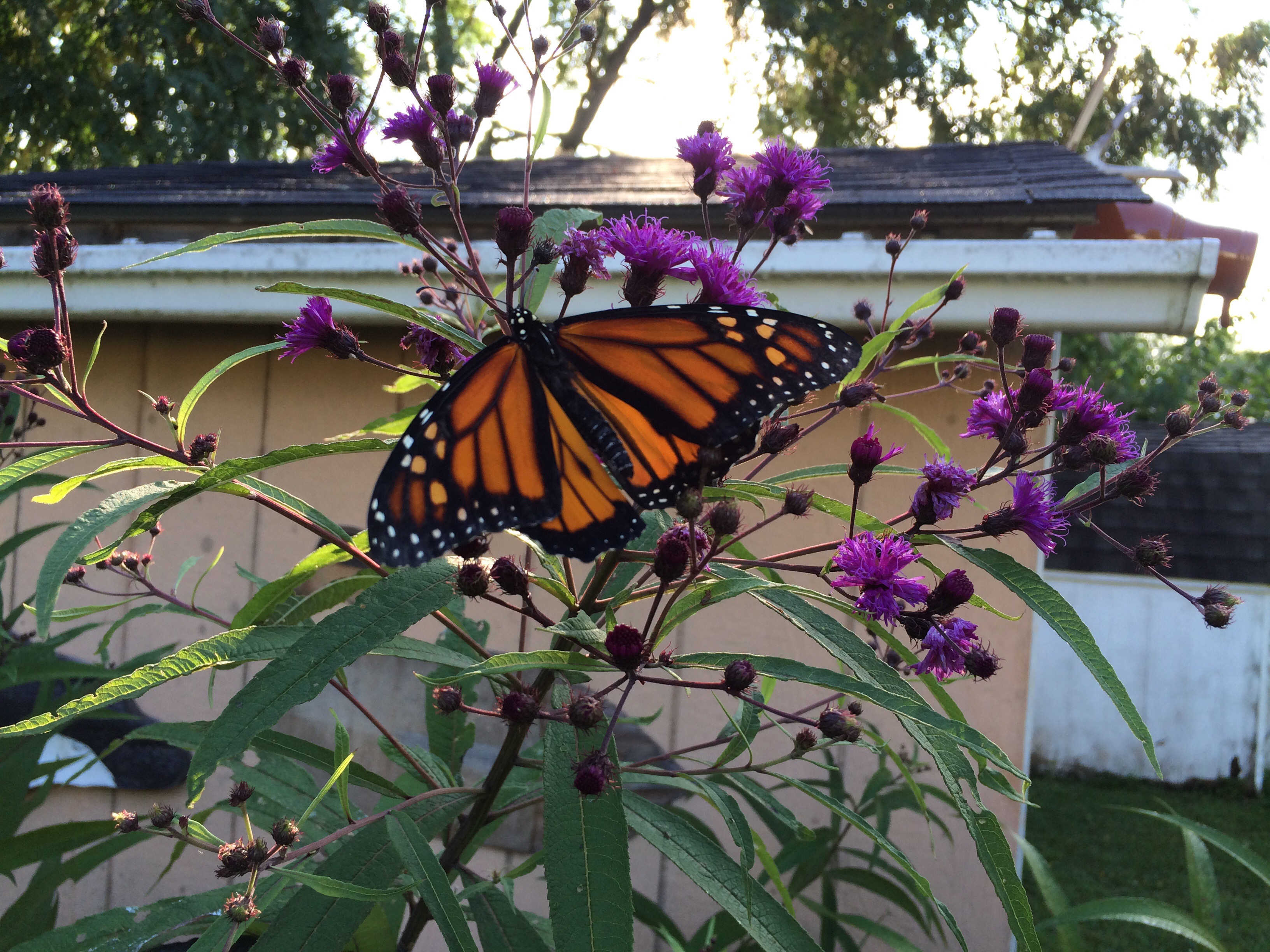
I released them on Aug. 21 on my New York Ironweed. The oldest one took off immediately for my neighbor's oak tree, but the other two hung around for about 20 minutes before flying off.

I released them on Aug. 21 on my New York Ironweed. The oldest one took off immediately for my neighbor’s oak tree, but the other two hung around for about 20 minutes before flying off.

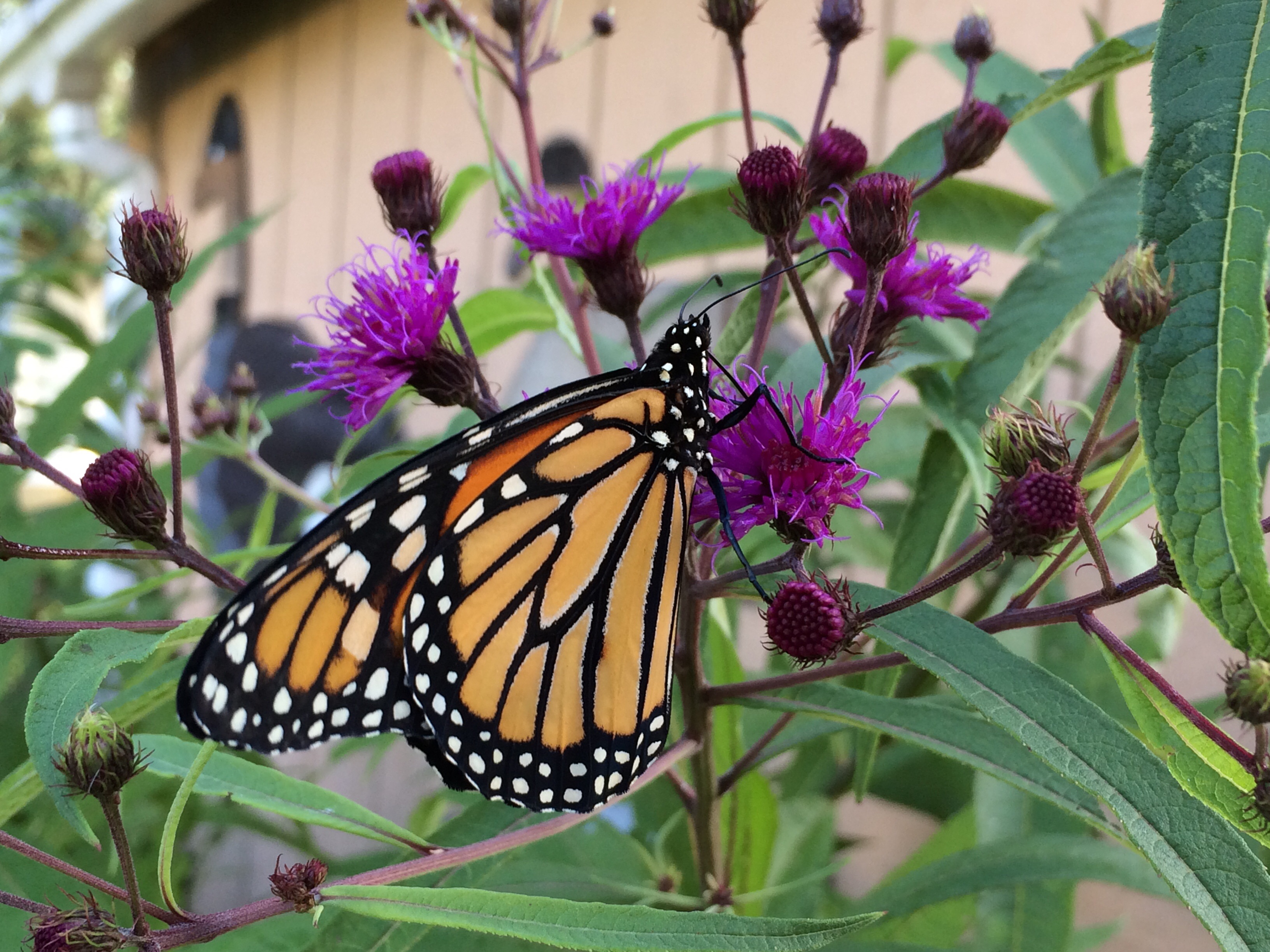
One of them is having a sip of nectar!

One of them is having a sip of nectar!

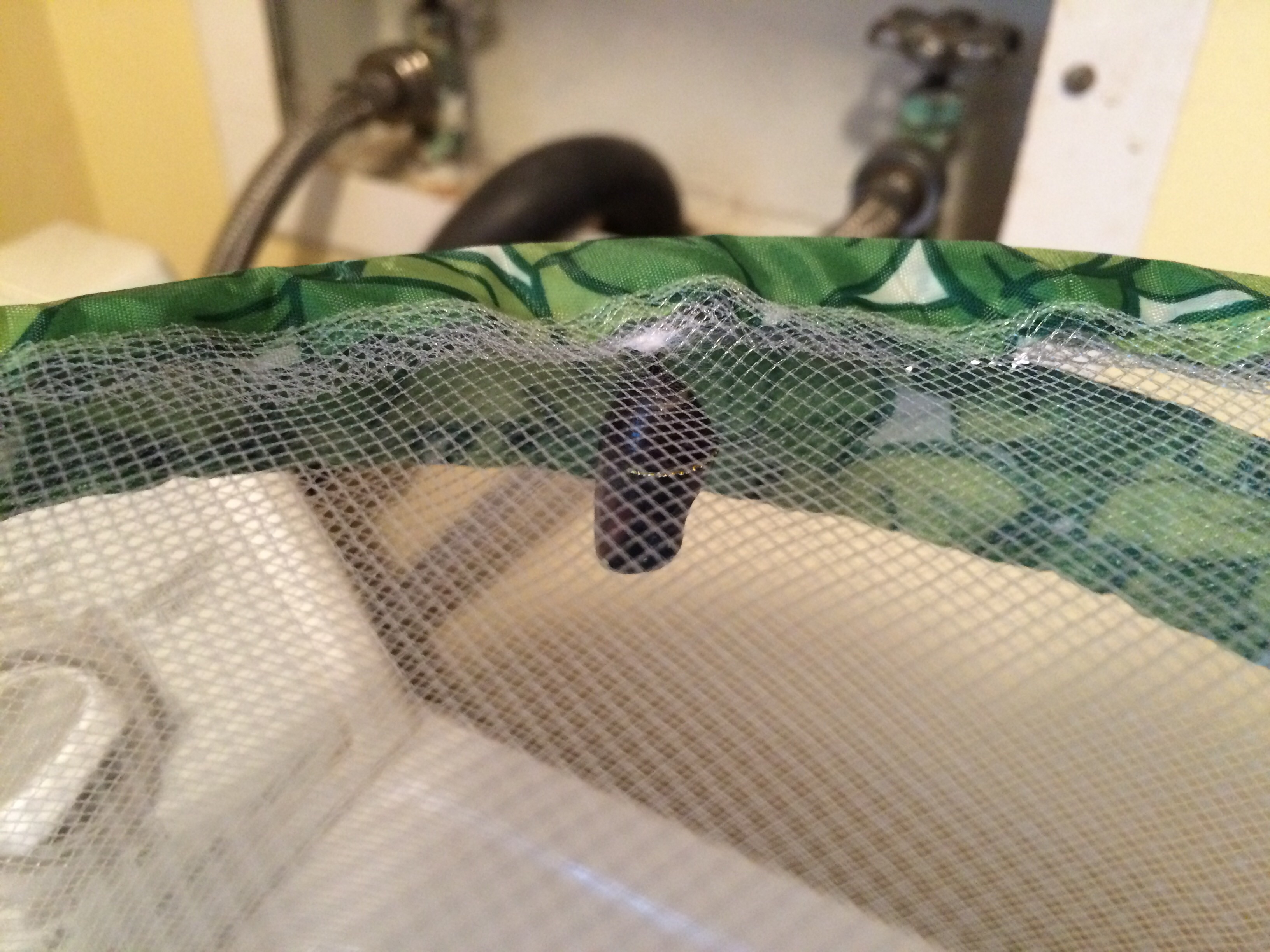
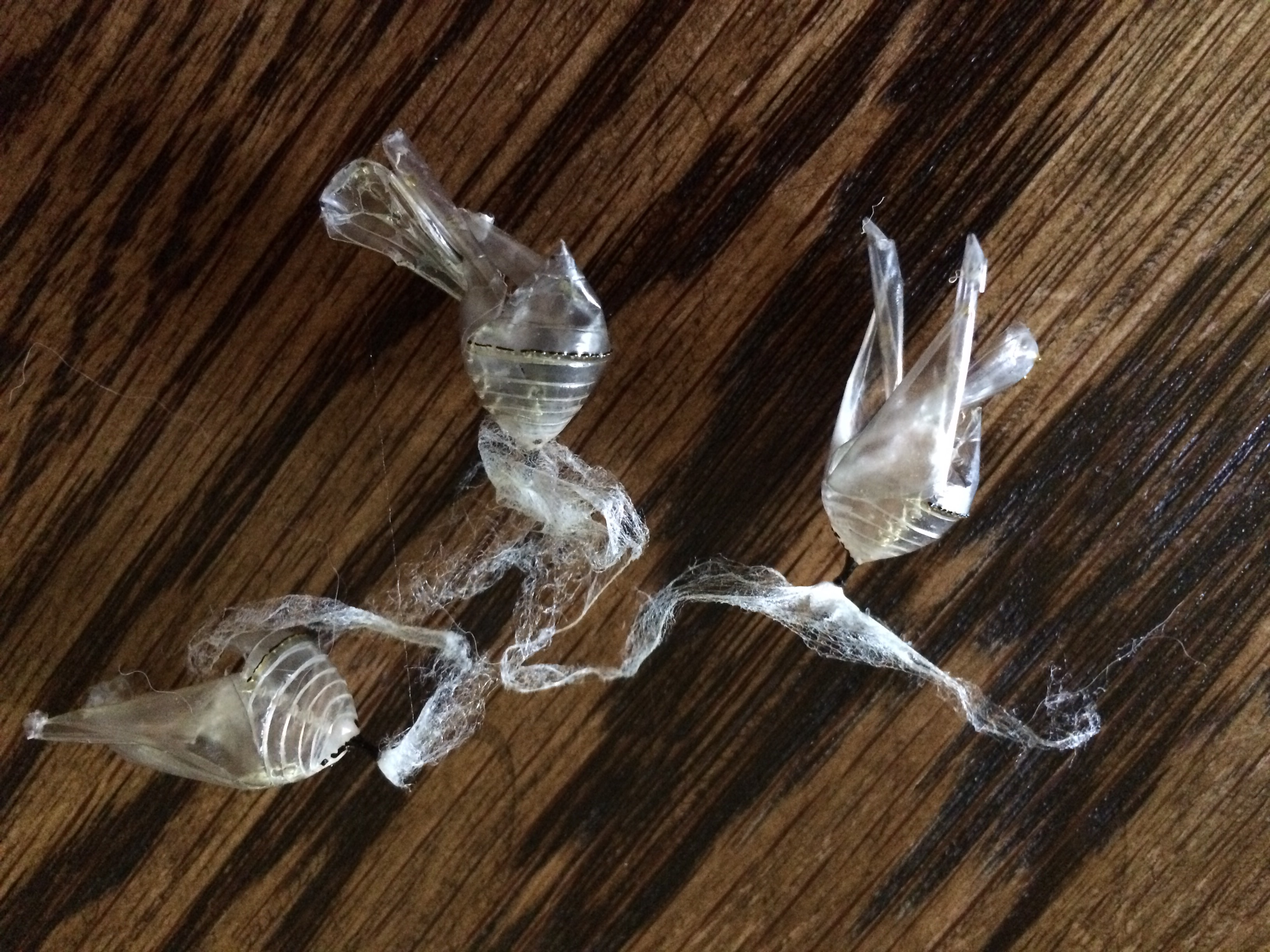
Now I have an empty nest...here are the three empty chrysalises. Note all the silk that was used to attach them to the roof of the cage.

Now I have an empty nest…here are the three empty chrysalises. Note all the silk that was used to attach them to the roof of the cage.

They Hatched!!

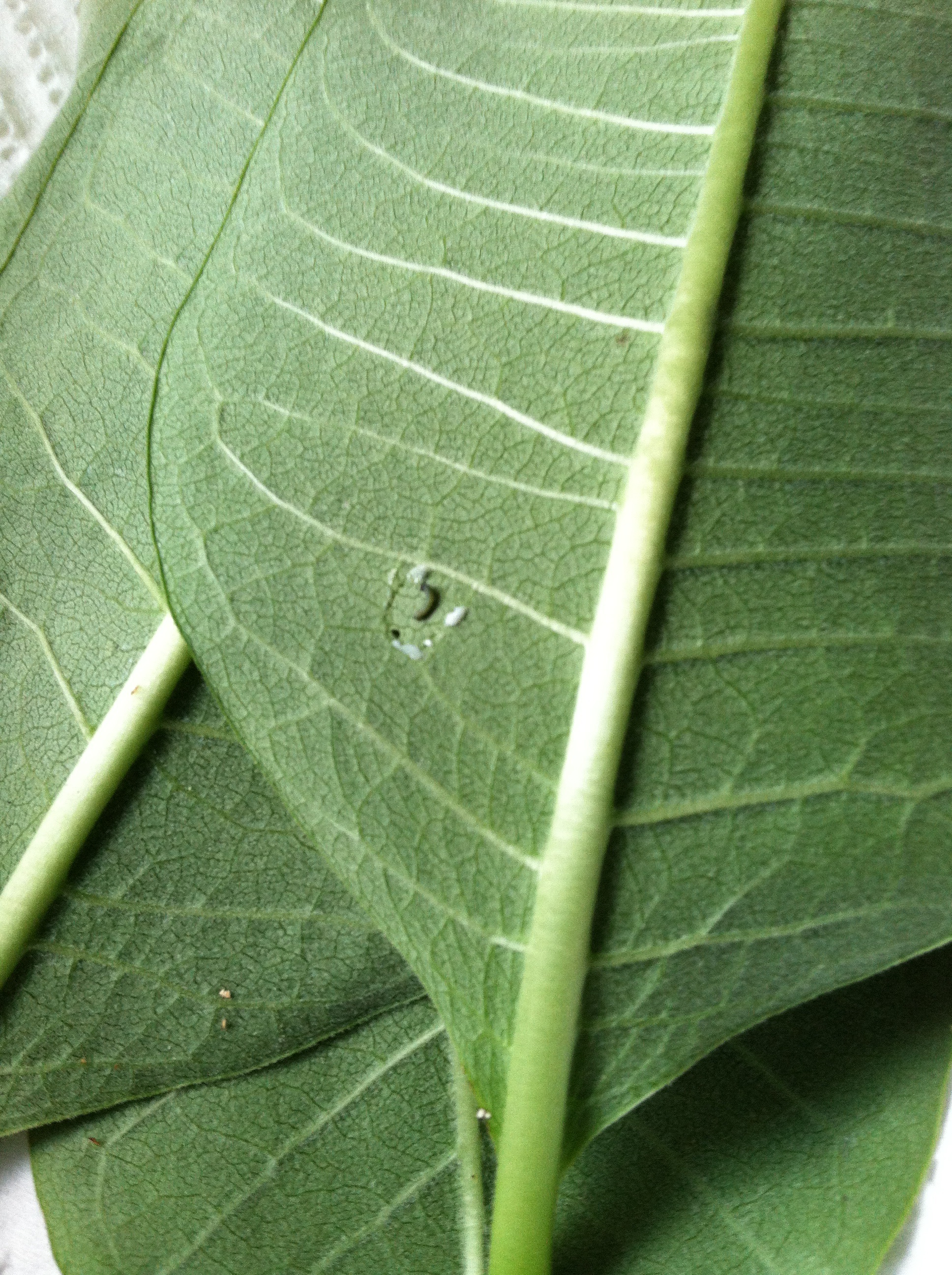
I am now the proud foster parent of three tiny monarch caterpillars!  After watching a female monarch butterfly laying eggs on my milkweed on Friday, I started looking for eggs and found four possibilities.  On Tuesday morning, I went out again to check the eggs and found that one had hatched!  There under a milkweed leaf with a little crescent-shaped hole cut around it was a tiny, tiny caterpillar! Now what to do??  I googled how to raise monarch caterpillars in a plastic container with a lid.  Give them milkweed leaves to munch on,  keep it clean by removing the frass, and let them grow.  As they get bigger, they can be moved to a mesh butterfly habitat with LOTS of milkweed and eventually they will make their chrysalis and emerge as adults.  So I set up a suitable plastic container, picked off the milkweed leaf the caterpillar was on, and set it up on my dining room table. The next day, Wednesday, I went out to look at the other possible eggs and found two more caterpillars!  So now I have three rapidly growing monarch caterpillars chowing down on my milkweed.  At this point, they are still working on their first leaf, but as they get bigger they will need much more milkweed.  I sure hope my milkweed supply is ample enough!

My first freshly-hatched monarch caterpillar! The crescent cut in the leaf is a telltale sign to look for.  The caterpillar was barely 3 cm long!

My first freshly-hatched monarch caterpillar! The crescent cut in the leaf is a telltale sign to look for. The caterpillar was barely 3 mm long!

Family portrait!  They are about 1/4 inch long now. One is at the bottom, one is near the center, and one is at the upper right.

Family portrait! They are about 1/4 inch long now. One is at the bottom, one is near the center, and one is at the upper right.

Maybe My Milkweed Patch Is Sincere Enough!

Last Friday, July 24th, I went out into my backyard with a brick of suet for my suet feeder.  Something fluttering caught my eye, and it was a monarch butterfly coming around from the side of my house into my backyard!  I was transfixed, and watched in awe as it investigated my butterfly garden and swamp milkweed in the back.  Then I followed it around my house as it literally checked and rechecked every milkweed plant I have in the yard!  I must have circled the house 4 or 5 times, suet cake in hand, and NO CAMERA.  As I’ve said many a time, my neighbors must think I’m batty, and one did actually stop her car as she drove by and asked me what I was looking at, and then she spotted the monarch for me as it circled around from the back of the house again to my side yard. I was able to get a good enough look at it to determine that it was a female, and she landed on the underside of several of my common milkweed plants before finally settling down on a butterfly weed in bloom for a bit of a drink before taking off for good.

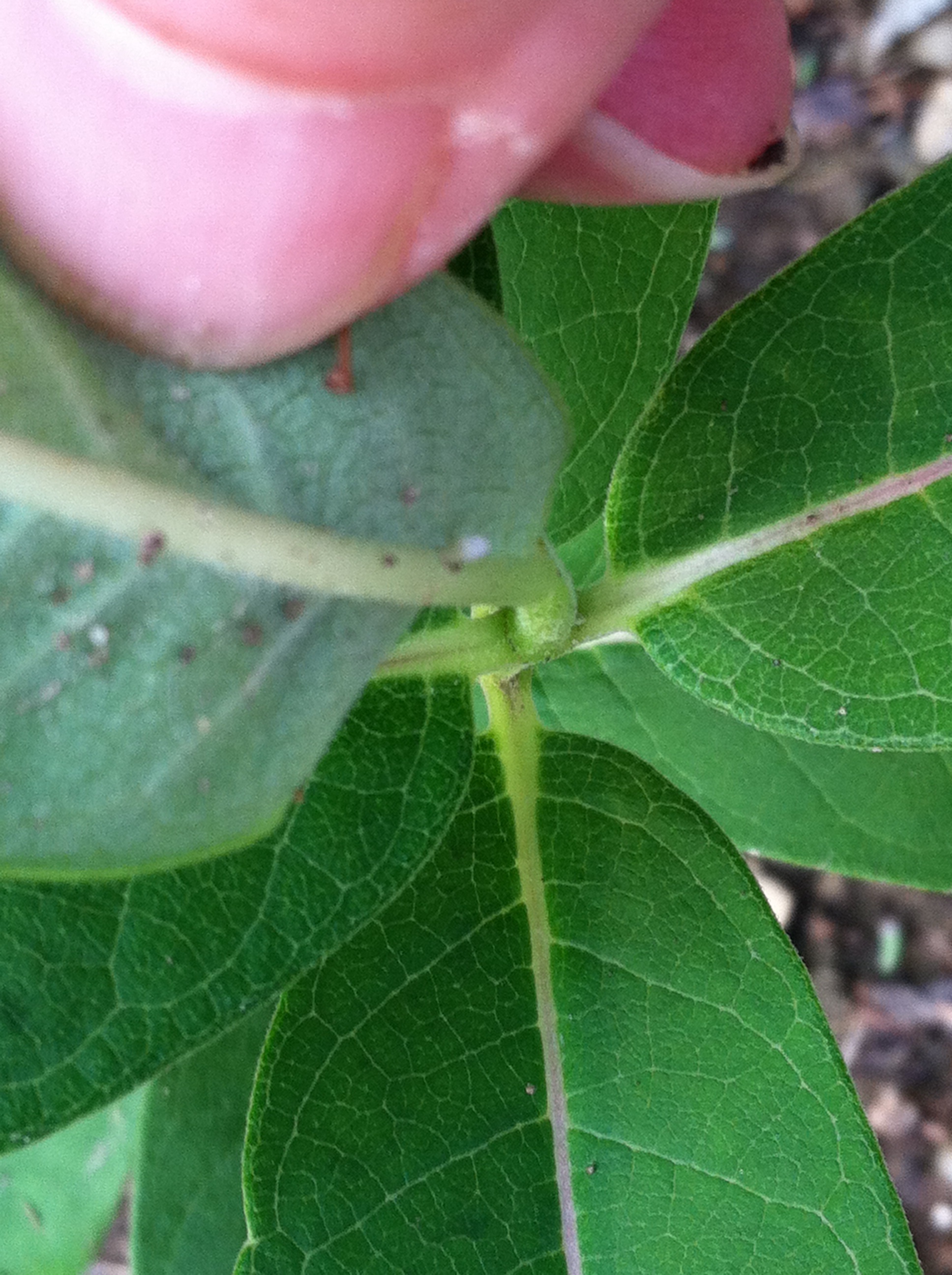
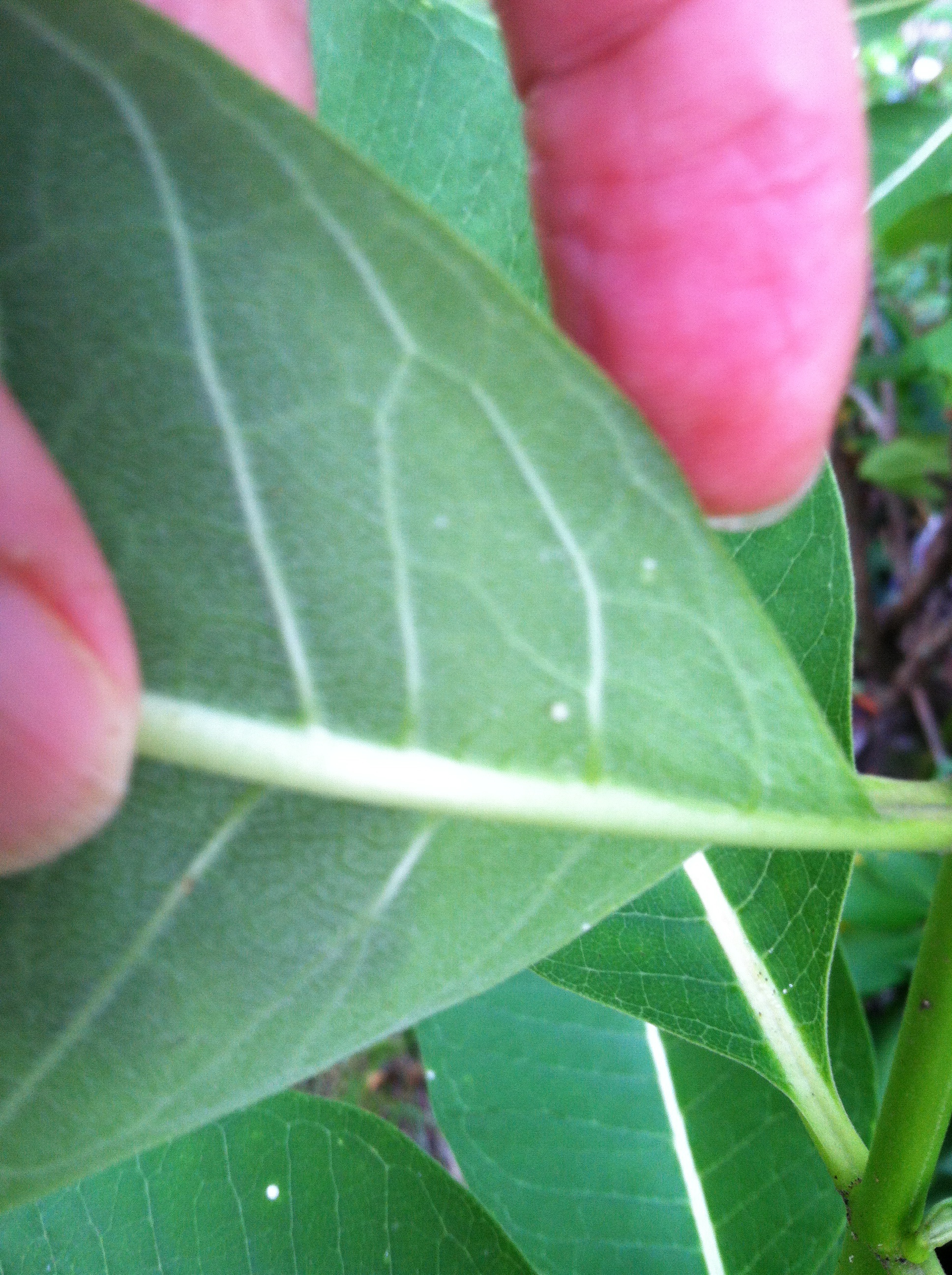
That evening I started checking my milkweed plants for eggs and found what could be one egg, and then yesterday I found another, then two more today, all on common milkweed.  They are all on leaves where I saw her land, ever so briefly.  It is so hard to tell the difference between a monarch egg, which is ridged and pointed, and milkweed latex, which is a round drop, so I’m reluctant to call them all eggs, but they certainly could be.  If they are eggs, they should hatch by the end of the week. Time will tell!

Here are some pictures I took with my phone, but they are a little blurry because the camera couldn’t focus well that close:

Possible monarch egg near the center of the picture

Possible monarch egg near the center of the picture.  It looks a little pointed.

Another possible egg

Another possible egg

Side view of another egg. Note how it is slightly pointed.

Side view of another egg. Note how it is slightly pointed.

Fourth possible egg!

Fourth possible egg!

Early Summer, Delaware-Style

The 4th of July has come and gone, and my summer flowers are starting to ramp it up.  The early-bloomers are humming with bees, and the late-bloomers are finally having a growth spurt after hanging back and letting the other ones go first.  My wrens fledged a few weeks ago, causing quite a ruckus in the backyard for about two weeks, then Mr. and Mrs. Wren decided to get in the “family way” again, so now she is sitting on eggs and he is still proclaiming his territory and keeping a close eye on the box.  After a brief hiatus in hummingbird activity while they were nesting, the hummers are back again in full force, and I am having a hard time keeping up with them so the feeder doesn’t run dry!  So here are some pictures showing what is going on:

image

My Indian Pink was especially beautiful this year

I finally got a blossom on my common milkweed and the bumblebees found it right away!

I finally got a blossom on my common milkweed and the bumblebees found it right away!

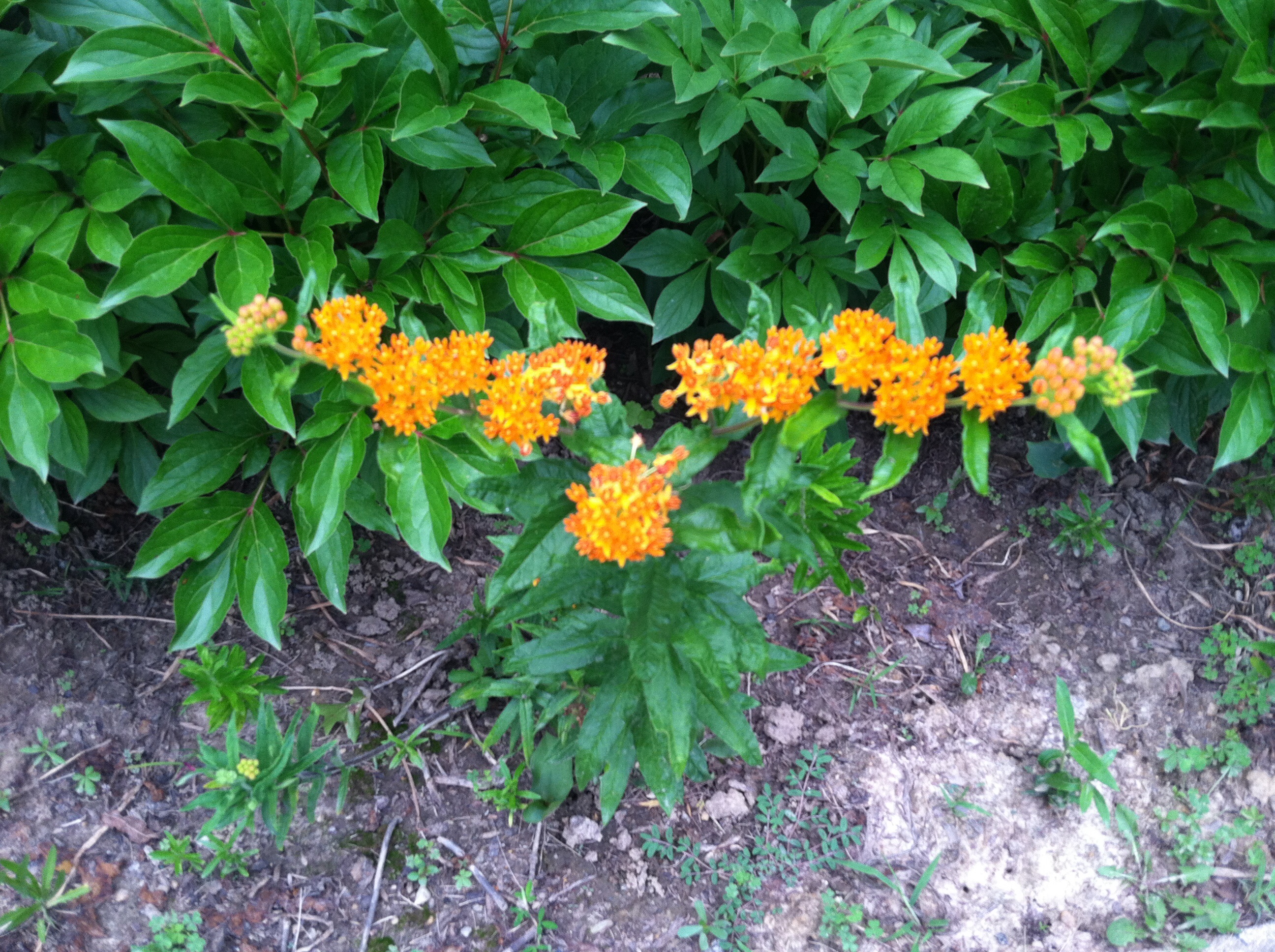
The butterfly weed in my hot, front garden is pretty happy

The butterfly weed in my hot front garden is pretty happy, and I actually saw a hummingbird visiting it last week!

Butterfly weed

Butterfly weed

The bee balm bloomed extravagantly and the bumblebees and hummingbirds have loved it!

The bee balm bloomed extravagantly and the bumblebees and hummingbirds have loved it!

Close-up of a bee balm flower

Close-up of a bee balm flower

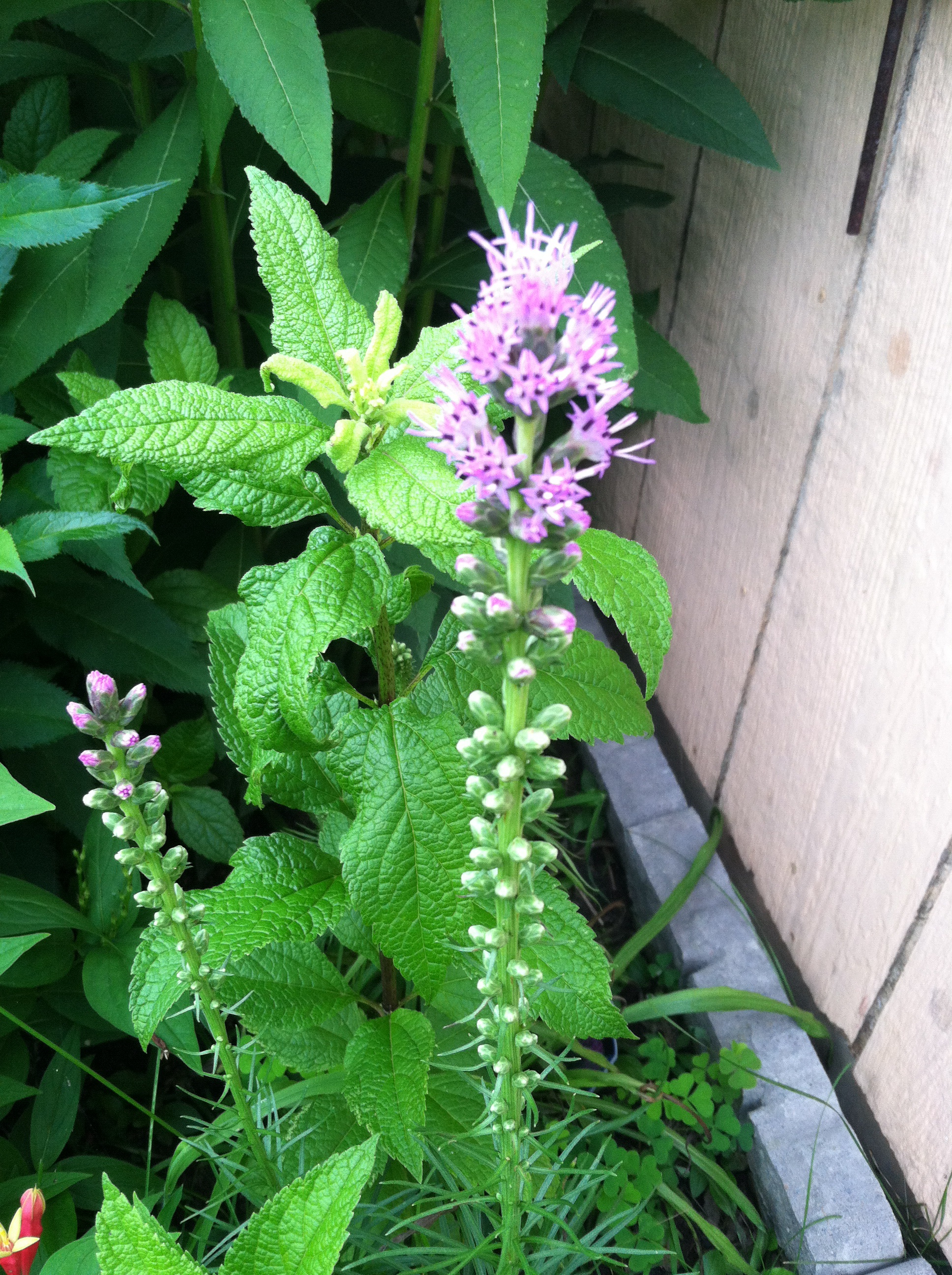
My liatris is blooming very nicely after all the rain we've had this summer

My liatris is blooming very nicely after all the rain we’ve had this summer

I planted this little beautyberry bush last fall, expecting it to die over the winter, but it has done really well, even putting out a few blossoms, which a VERY tiny bee has found!

I planted this little beautyberry bush last fall, expecting it to die over the winter, but it has done really well, even putting out a few blossoms, which a VERY tiny bee has found! Click on the picture to enlarge it.
image

Tiny bee, about 1/8″ long, in the center

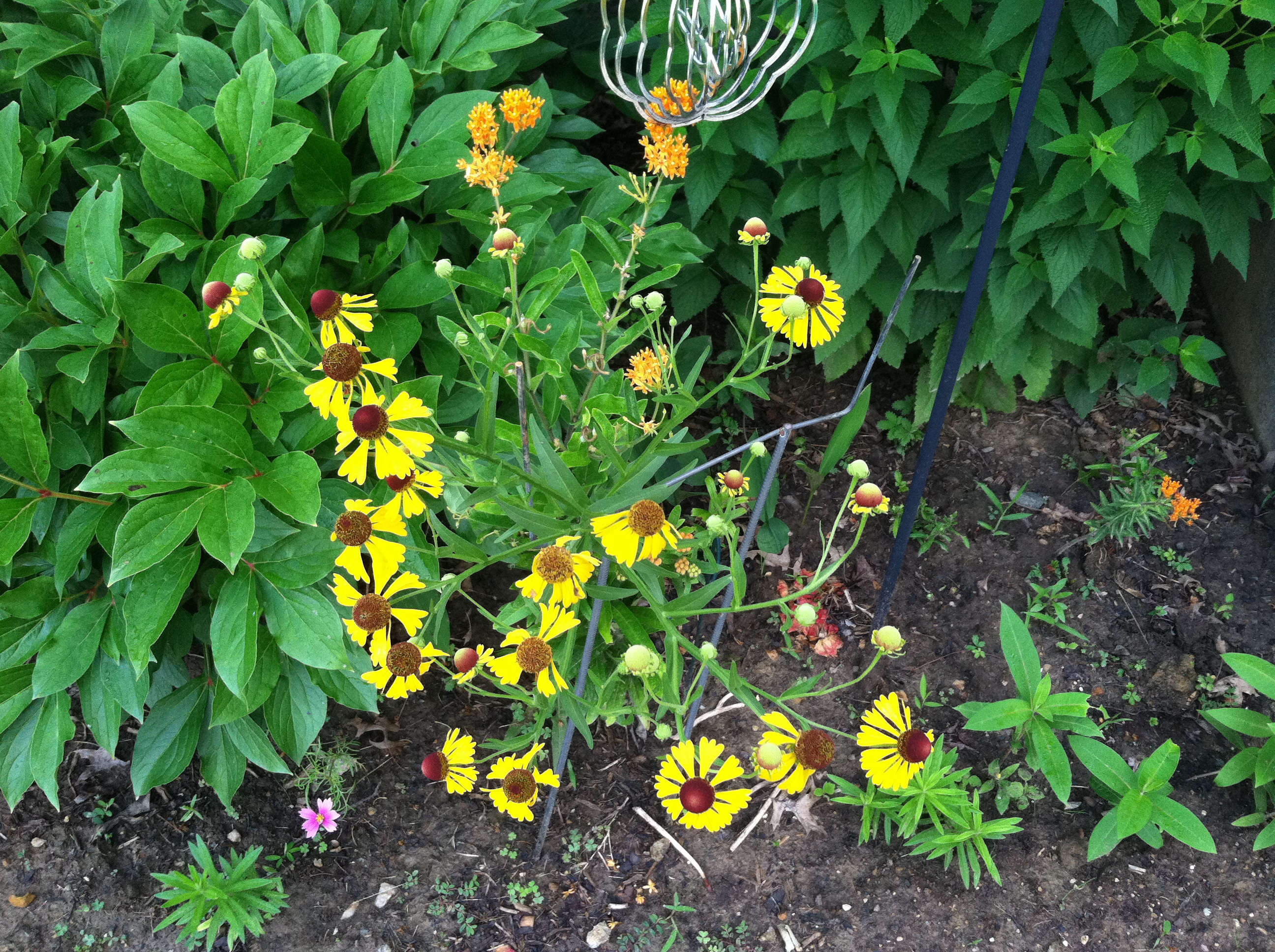
My common sneezeweed, inappropriately named, finally decided it could survive in my hot garden!

My common sneezeweed, inappropriately named, finally decided it could survive in my hot garden!

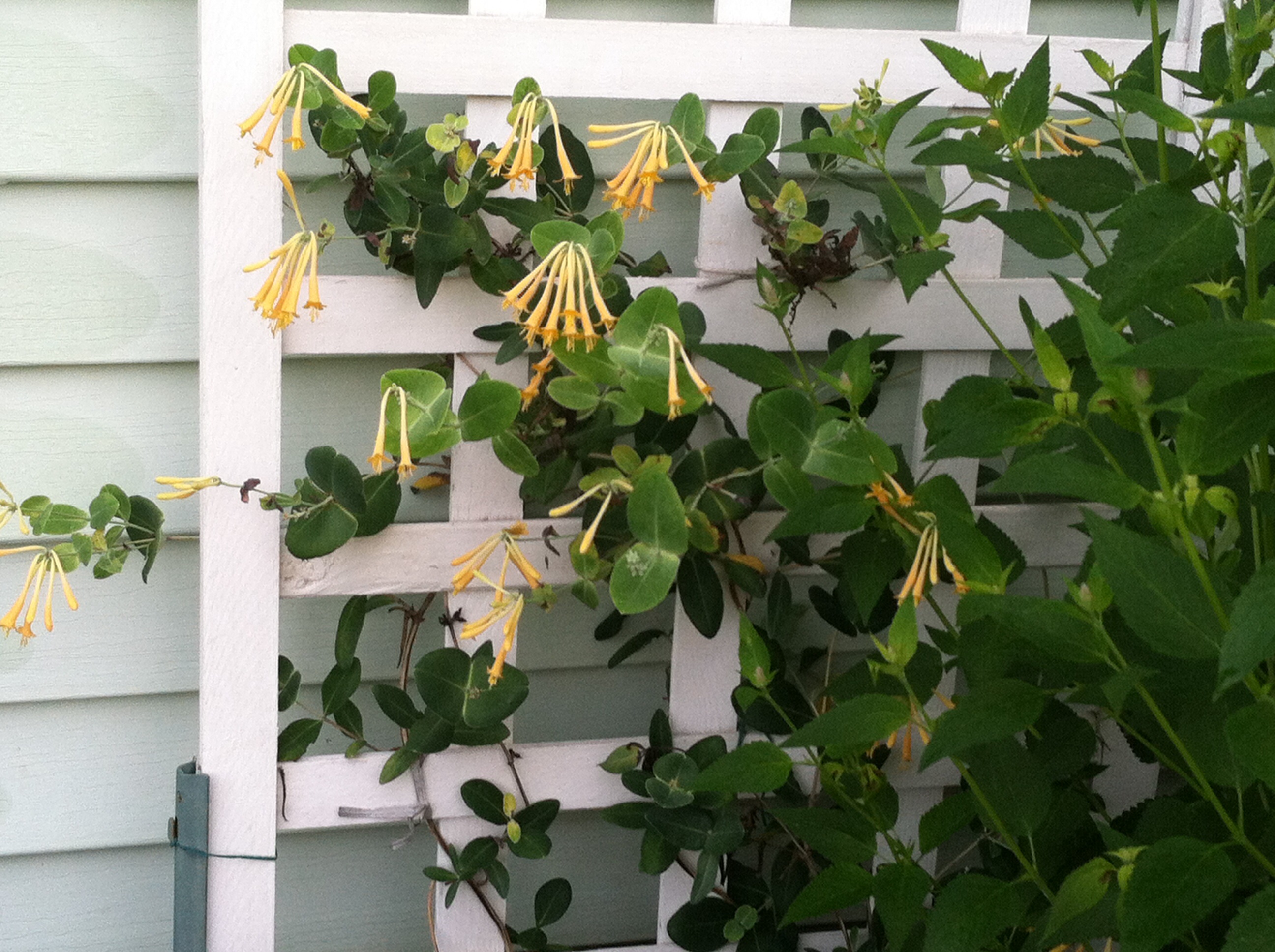
Native honeysuckle.  This is its second time blooming since spring.

Native honeysuckle. This is its second time blooming since spring.

Surprise visitors to my backyard!  I have been hearing red-shouldered hawks screaming all spring and summer in my neighborhood, so I figured there was a nest nearby.  This sight greeted me when I came down for breakfast last weekend--a young hawk sitting above my wren box, an adult on the fence, and a mockingbird harassing the adult!

Surprise visitors to my backyard! I have been hearing red-shouldered hawks screaming all spring and summer in my neighborhood, so I figured there was a nest nearby. This sight greeted me when I came down for breakfast last weekend–a young hawk sitting above my wren box, an adult on the fence, and a mockingbird harassing the adult!

And finally, my pokeweed is flourishing this year, practically looking like a tree!  I harvested the berries last year (the ones the birds didn't get first!) and took them in to TriState Bird Rescue for the birds to eat over the winter.

And finally, my pokeweed is flourishing this year, practically looking like a tree! I harvested the berries last year (the ones the birds didn’t get first!) and took them in to TriState Bird Rescue for the birds to eat over the winter.

News from the Milkweed Patch

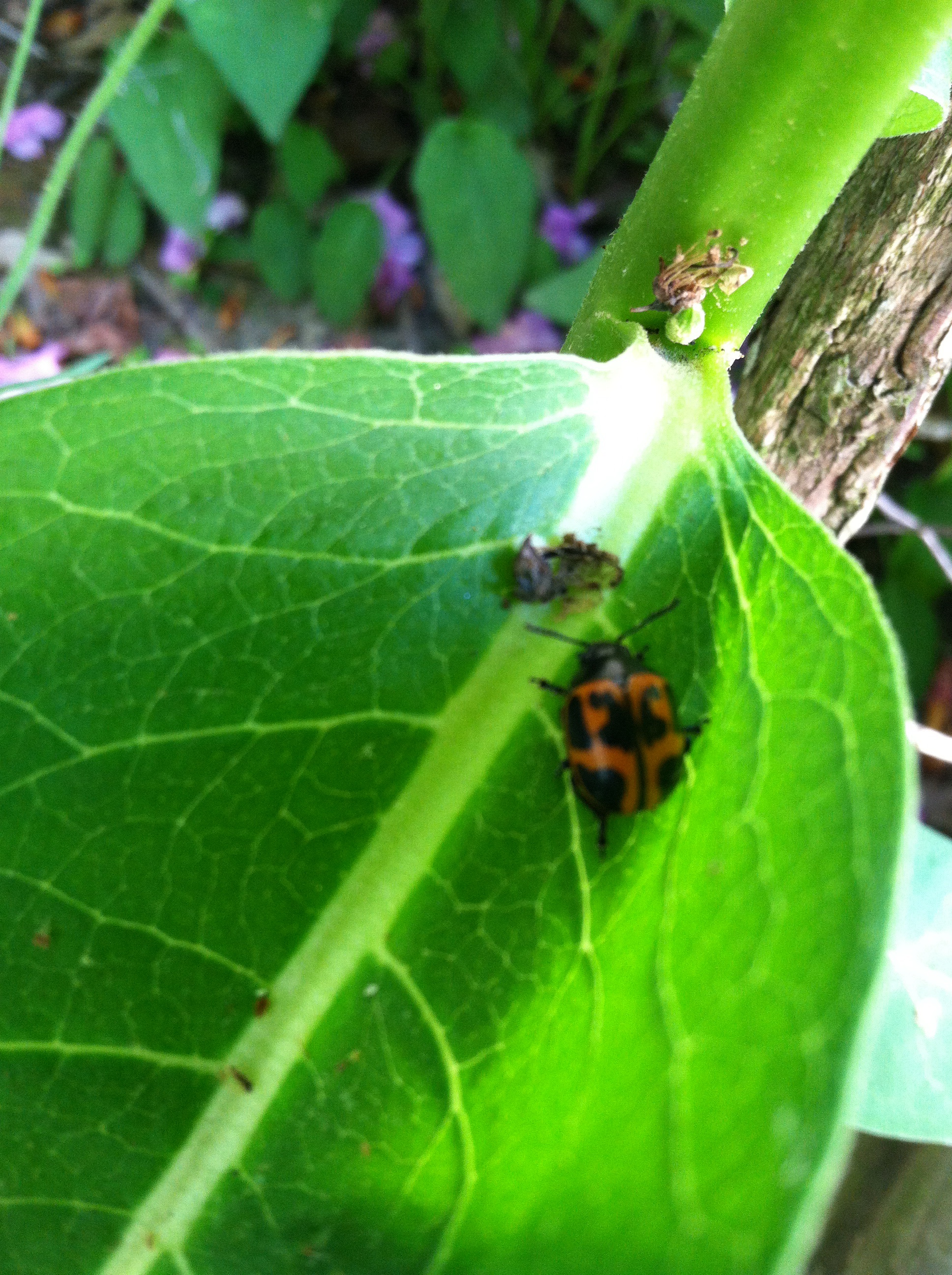
My little common milkweed patch is growing every year, and one of them looks like it is going to bloom.  I think being located on the east side of my house and not getting full sun is why they have never bloomed before.  Monarchs have been sighted here in northern Delaware, and I have noticed milkweed growing all over the place, along roadsides and in fields, which is very encouraging to me.  So now I have started the “milkweed prowl” where I inspect my milkweed every day to see if anything is happening.  Yesterday I found my first milkweed bug of the season!  According to Milkweed, Monarchs, and More: A Field Guide to the Invertebrate Community in the Milkweed Patch, it is actually called a Swamp Milkweed Leaf Beetle (Labidomera clivicollis) and usually prefers swamp milkweed to protect it from its usual predators, but there it was on my common milkweed!  I guess I’d prefer finding monarch eggs, but a milkweed beetle is better than nothing, and at least the milkweed is being used for something by a native insect!

Swamp milkweed leaf beetle

Swamp milkweed leaf beetle

My common milkweed patch

My common milkweed patch

Milkweed blossom forming!

Milkweed blossom forming!

June 1, 2015  News flash!

Yesterday while we were sitting out in the backyard enjoying the hummingbird/house wren show and watching the catbird snatch serviceberries off the tree (you know we have an exciting life!), I suddenly caught a glimpse of something orange and black from the corner of my eye.  It was a monarch fluttering around my little common milkweed patch!  It literally checked out every plant in the patch, then flew around the backyard and the other side of the house before returning to check the plants again.  I felt like Linus hoping my milkweed patch was sincere enough for the monarch!  Eventually, it flew away, but I am so encouraged that if at least one monarch has somehow found my patch, others may also find it. I’ll be checking that patch for eggs every day now for sure!