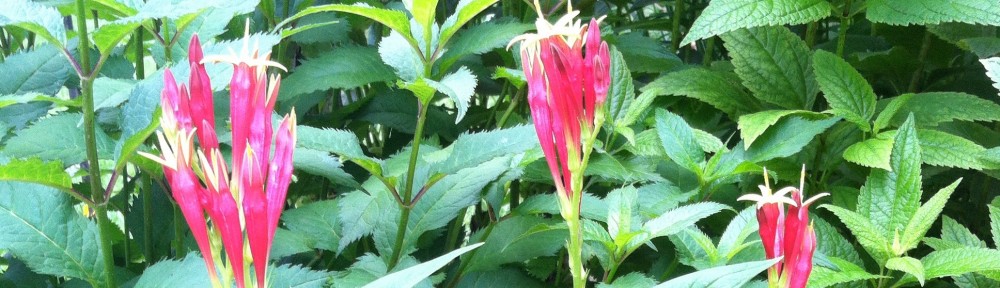
It’s early summer in Delaware. The spring flowers are finished and the spring ephemerals have vanished until next year. Here in my yard, the summer show is just starting. My bee balm is beginning to bloom along with some swamp milkweed called Ice Ballet.
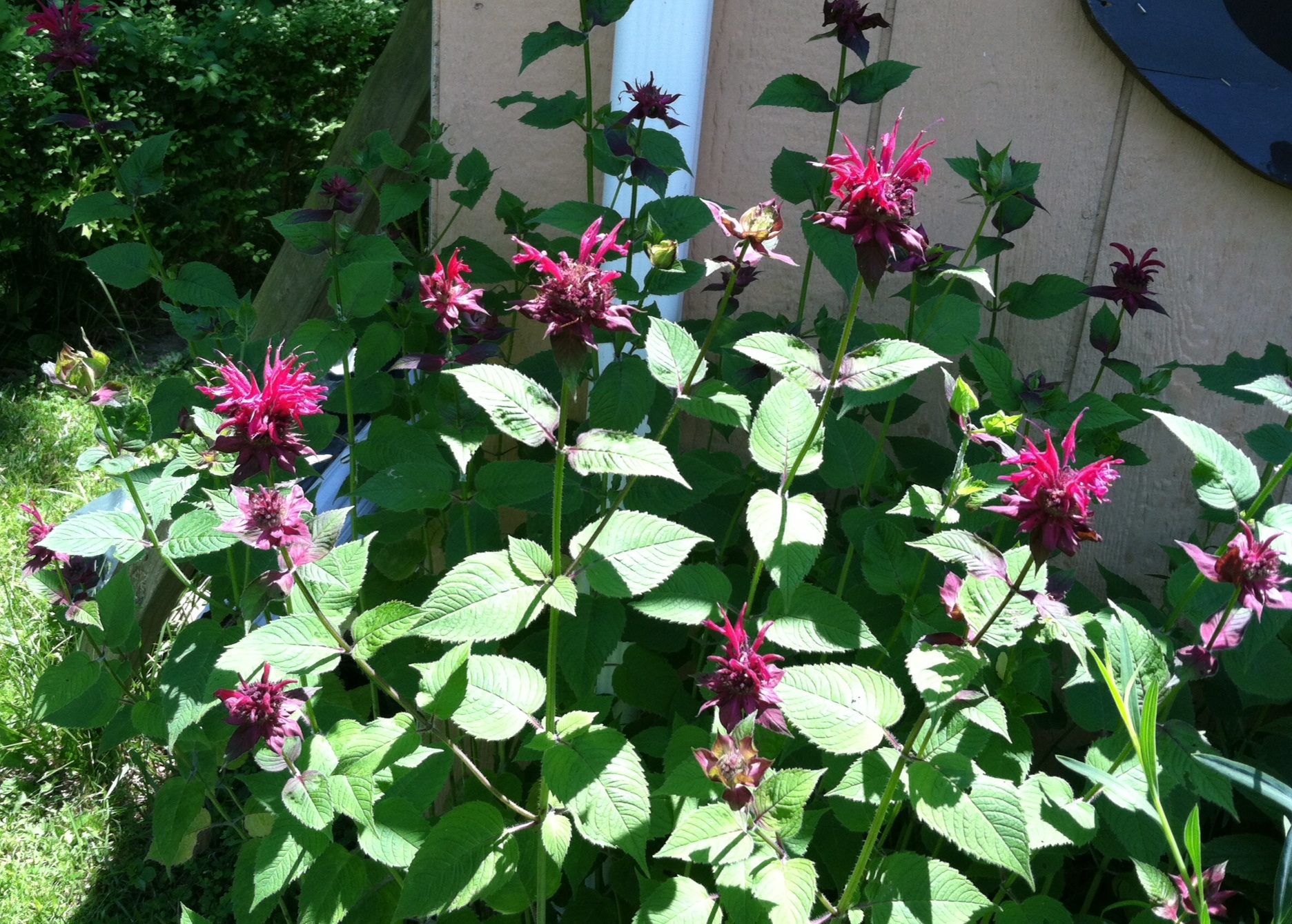
Bee balm coming into bloom
Swamp milkweed “Ice Ballet”
It looks like one of my jack-in-the-pulpits is going to actually make some berries! If all goes well, they should be bright red in the fall.
Jack-in-the-pulpit with berries
The butterfly weed and false sunflower in the front are doing well in the sun, though I think I need to move the false sunflower to a different spot and maybe get some more so it doesn’t look so lonely!
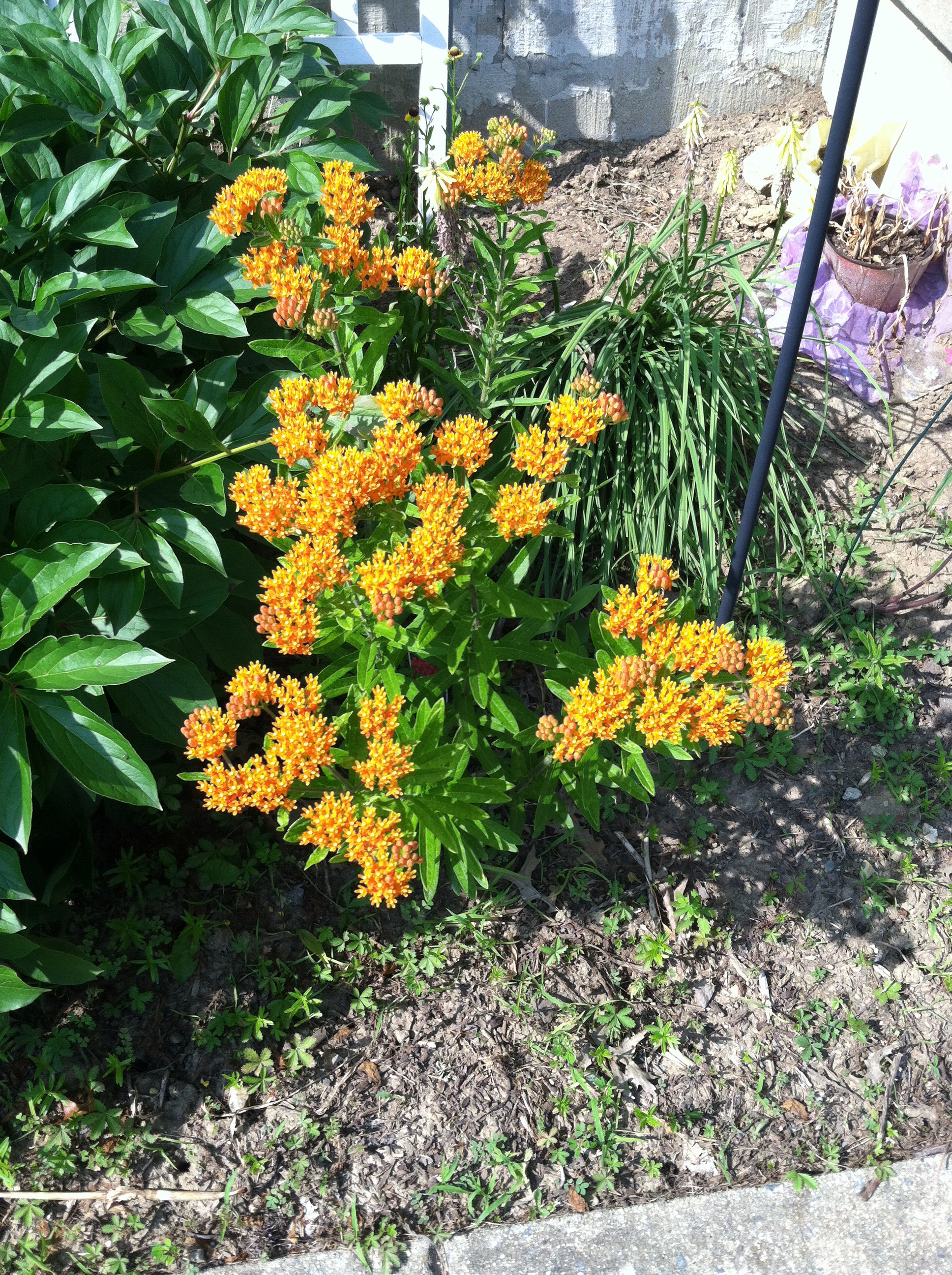
Butterfly weed
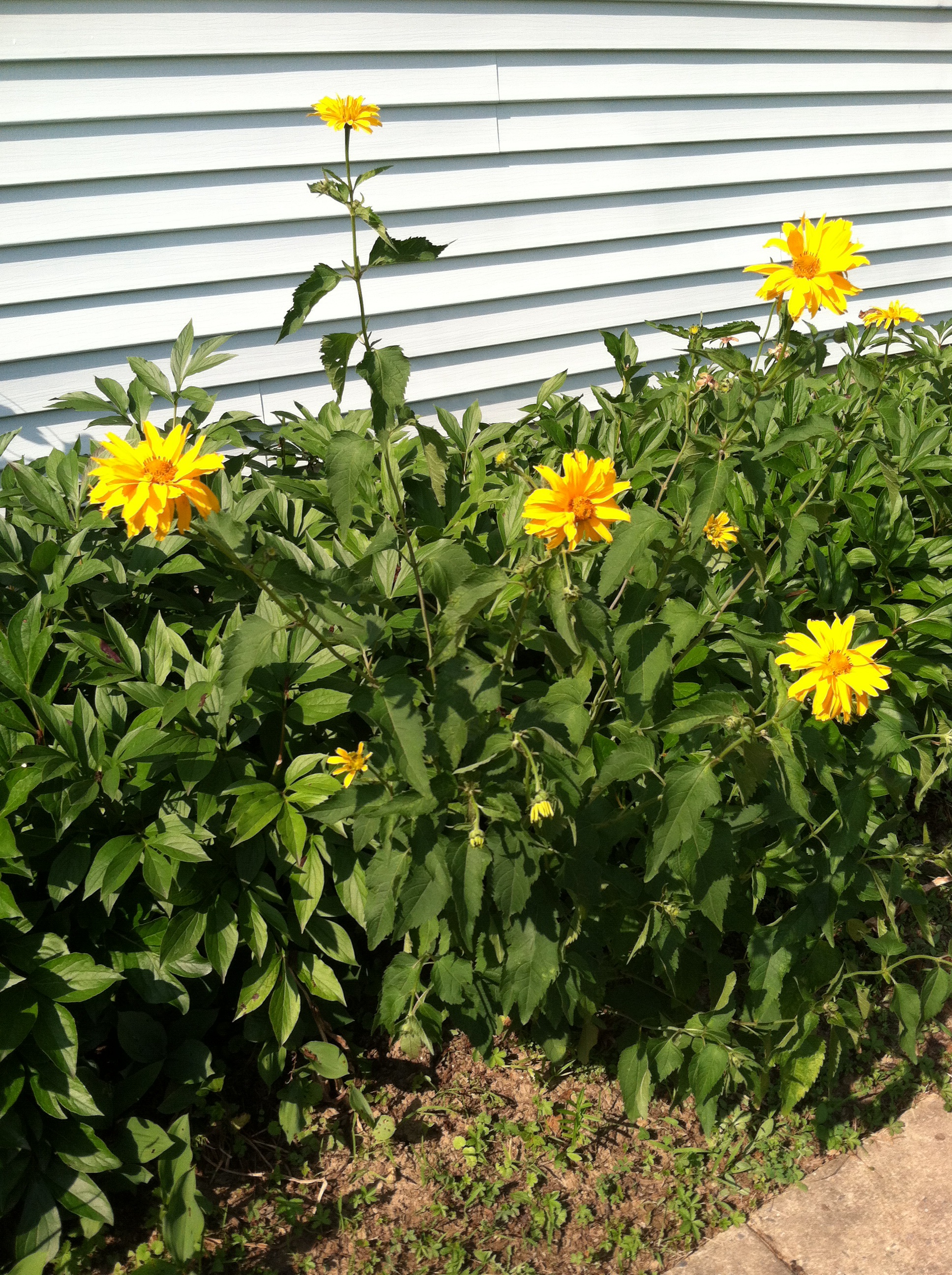
False sunflower
Back on the north side, my ferns are growing lush and full. Isn’t it interesting how they get smaller as they get closer to the northeast corner of my house with more sunlight? They definitely like shade!
So I finally seem to be on the blog, but I am seeing a lot of titles of posts, some of which say they are drafts and can be edited. I don’t want to be editing anyone else’s posts, and I don’t have any pictures to post myself right now. How can I just get to where I can look at what everyone has posted?
Here in Georgia, I have a terrible time keeping four legged eating machines, known to others as deer, out of my yard. I must check deer resistant plant lists before planting anything. All lists first state no plants are TOTALLY deer resistant. As I am a newbie to the world of native plants, I started by checking out three common native plants: milkweed, purple coneflowers and black eyed susans. Milkweed was listed as highly resistant. Yes! Purple coneflowers and black eyed susans were given a “B” on the scale. (Highly resistant plants were given an “A” down to least resistant, given a “D”.) This gives me cautious hope!
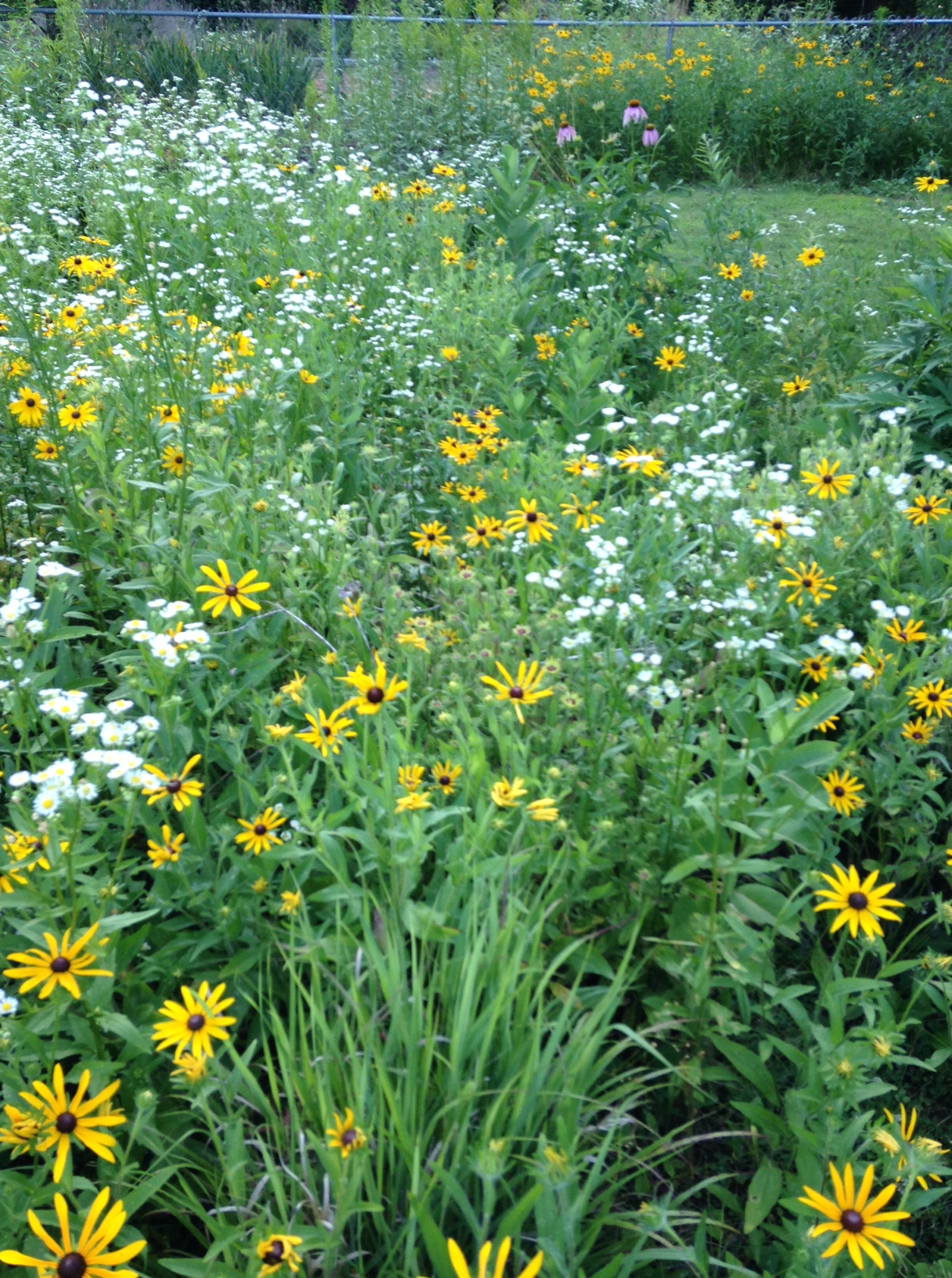
Last year my “garden” sort of limped along but this year everything grew very tall and thick! These pictures show what has come to flower by the end of June.
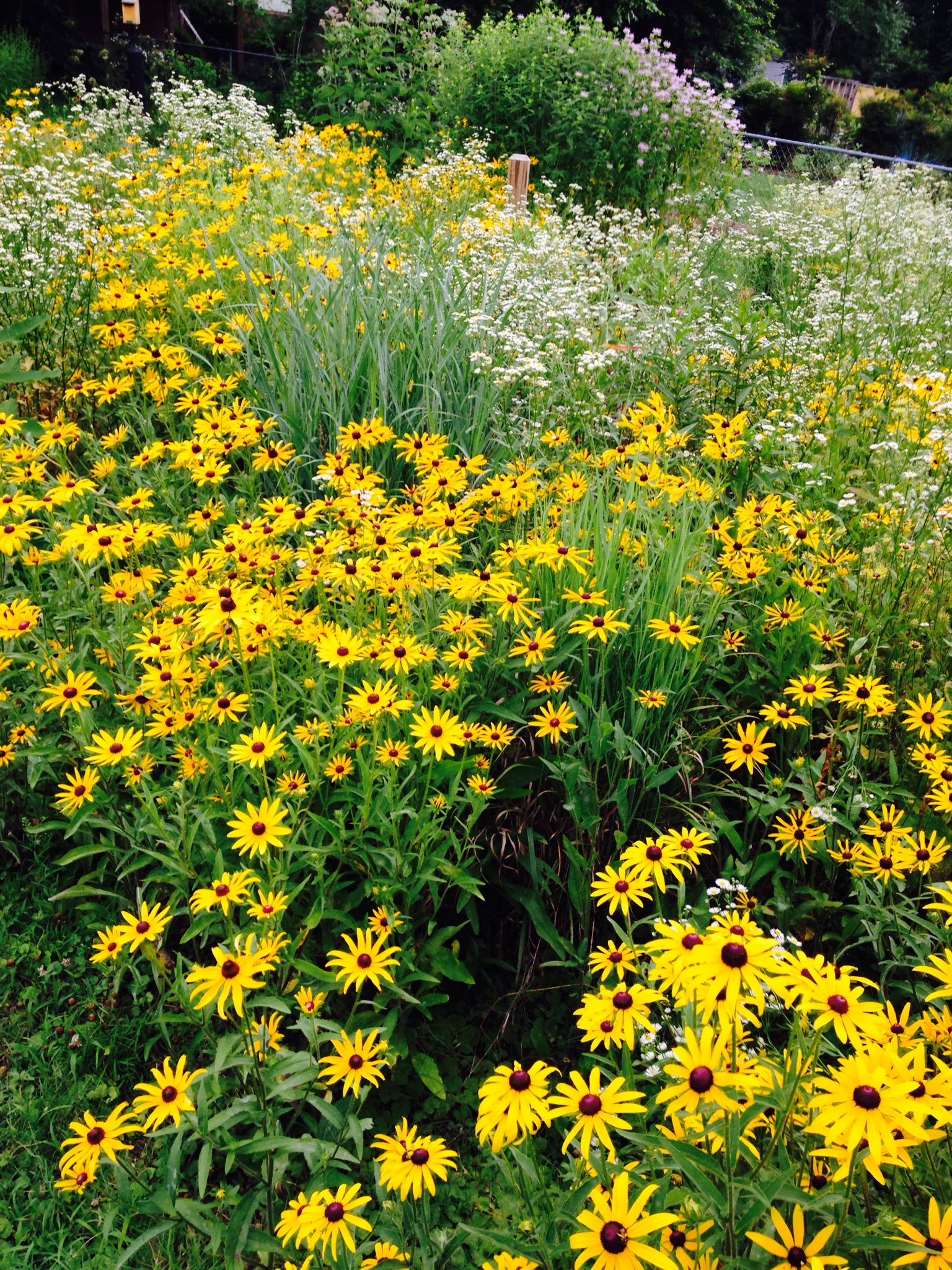
This is my favorite picture of the back part of my “back garden.” Here you can see Daisy Fleabane, Black-eyed Susans, Milkweed and Purple Coneflowers.
Back Garden in June, 2014
Here’s another “long shot” with a different view of the garden.
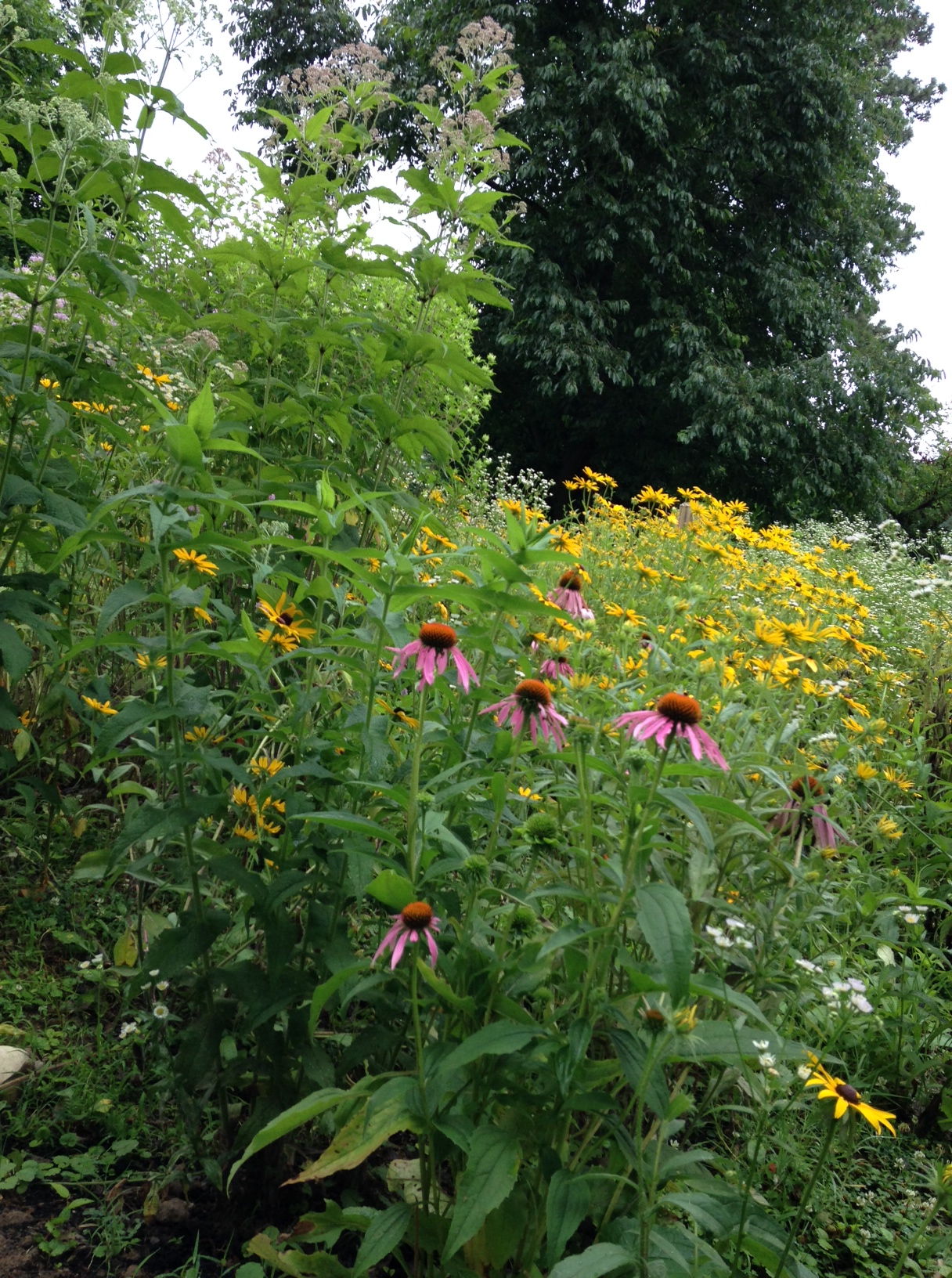
I like this picture because it shows how tall my Sweet Joe Pye Weed (still coming into bloom in late June) has gotten this year:
Sweet Joe Pye Weed with Coneflowers
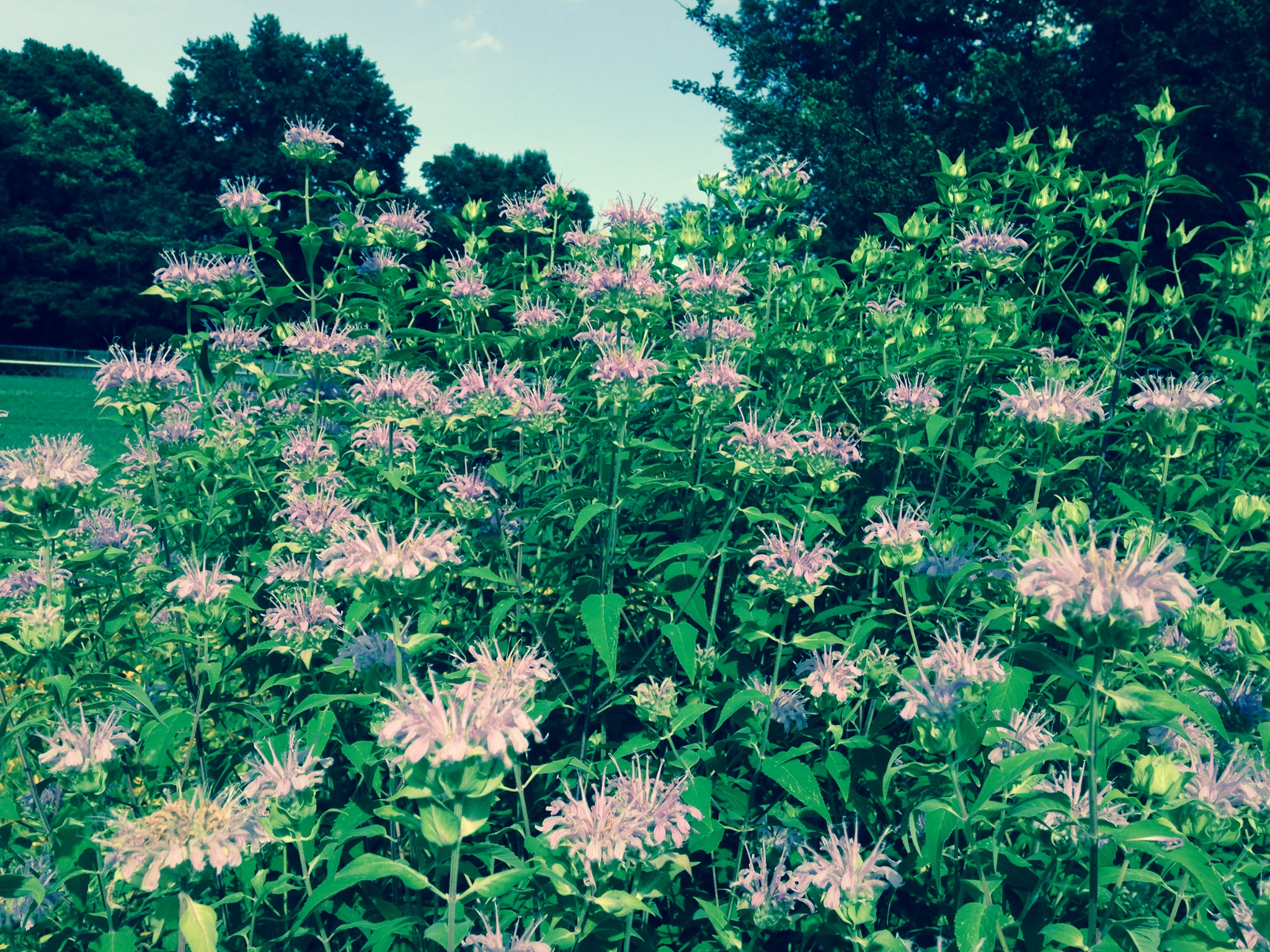
The Monarda fistulosa has gotten really tall this year and swarms with bees but I’ll be darned if I can manage to photograph those bees. They just won’t hold still for me! I plan to publish another post of pictures where I managed to catch a bee on something!
Monarda fistulosa in bloom
BUT here’s a video of Bees on Monarda. I apologize for it’s being “sideways.” I’ll replace it as soon as I can. (Actually, if you’re viewing this on an iPhone, just turn the phone sideways and everything is oriented correctly then,)
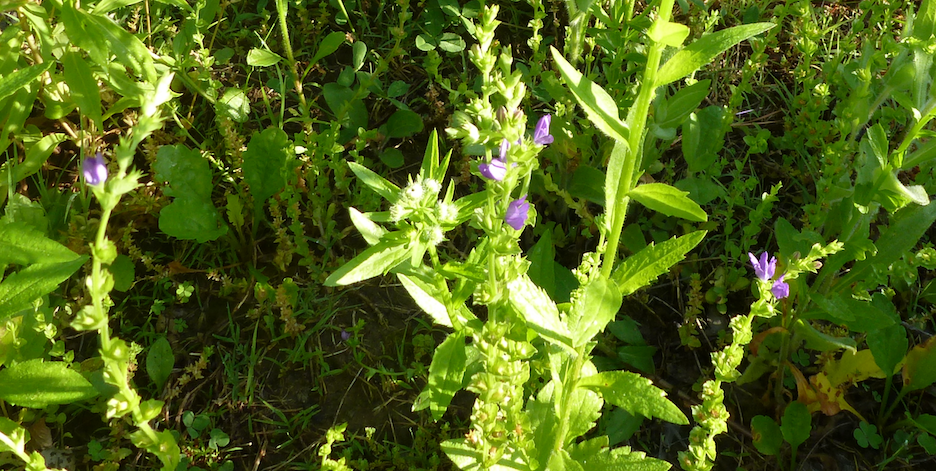
Finally, I was pulling something up that I considered to be a “weed-weed” (I happen to love “weeds”) when it occurred to me it was quite pretty and I didn’t know what it was so why was I pulling it up? My friend Suzette later identified it as “Venus’ Looking Glass.” It’s only about a foot tall. According to the Internet, it’s a native throughout the lower 48 states and serves as a nectar and host plant to many different insects. It supposedly is “aggressive,” but I’m not pulling it up anymore. – Robin
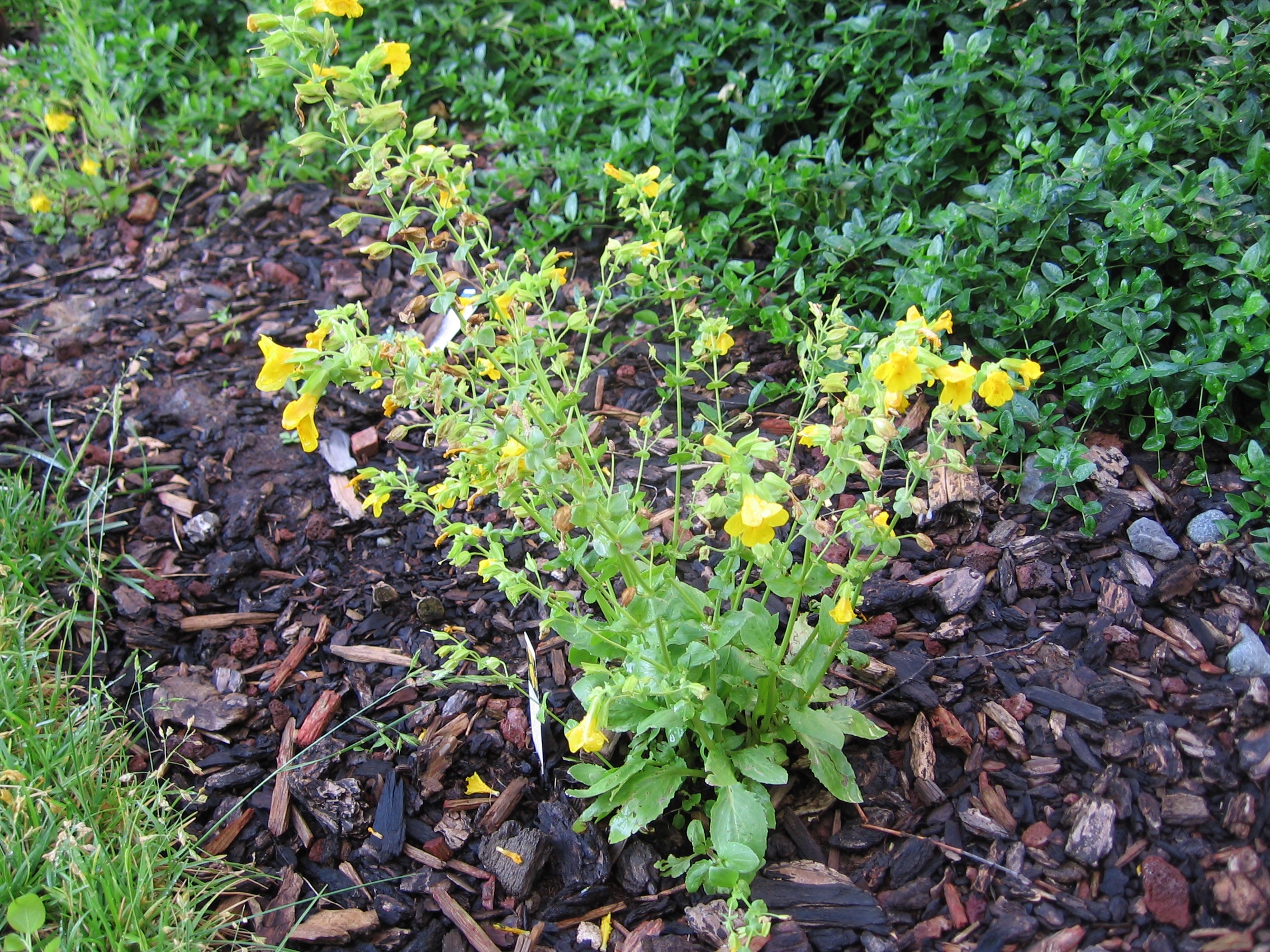
This is a common wildflower that grows along the banks of streams and seeps in western North America. Plants are supposed to grow to be one to three feet tall. This one is in its first year. It has bright yellow snap dragon-like flowers March through August. Leslie
My butterfly milkweed is in full bloom now in my baking-hot front flower garden. I’ve had a hard time finding flowers that will survive in the heat, but these have done well. Now I’m just waiting for some butterflies!
There ARE Spicebush Swallowtail Butterfly caterpillars inside the leaf rolls! (See “Spicebush Leaves are Getting Rolled Already” post below.) A friend helped me unroll a couple of leaves and there they were! We let the leaves roll back up so the little caterpillars were “safe” again. (The caterpillars generate a white sticky substance — you can see it in these pictures — that keeps the rolls closed up.) – Robin
Baby Spicebush Swallowtail Caterpillar inside a Leaf Roll