I have wanted a serviceberry tree for several years, and finally we bought one this past April and had it planted professionally by the nursery. It was near the end of blossoming when we got it, but produced a lot of very tasty berries later on which the birds enjoyed immensely.
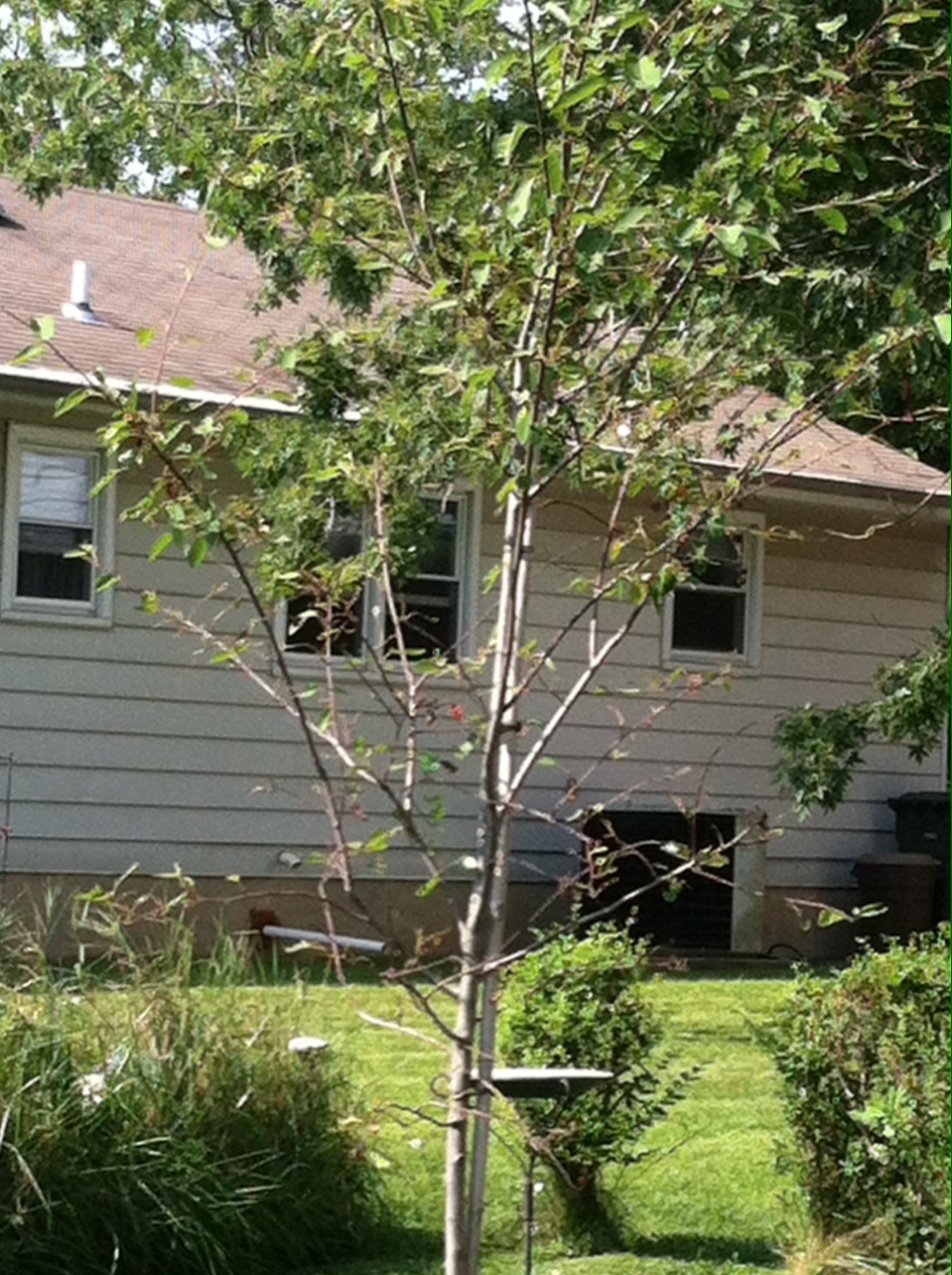
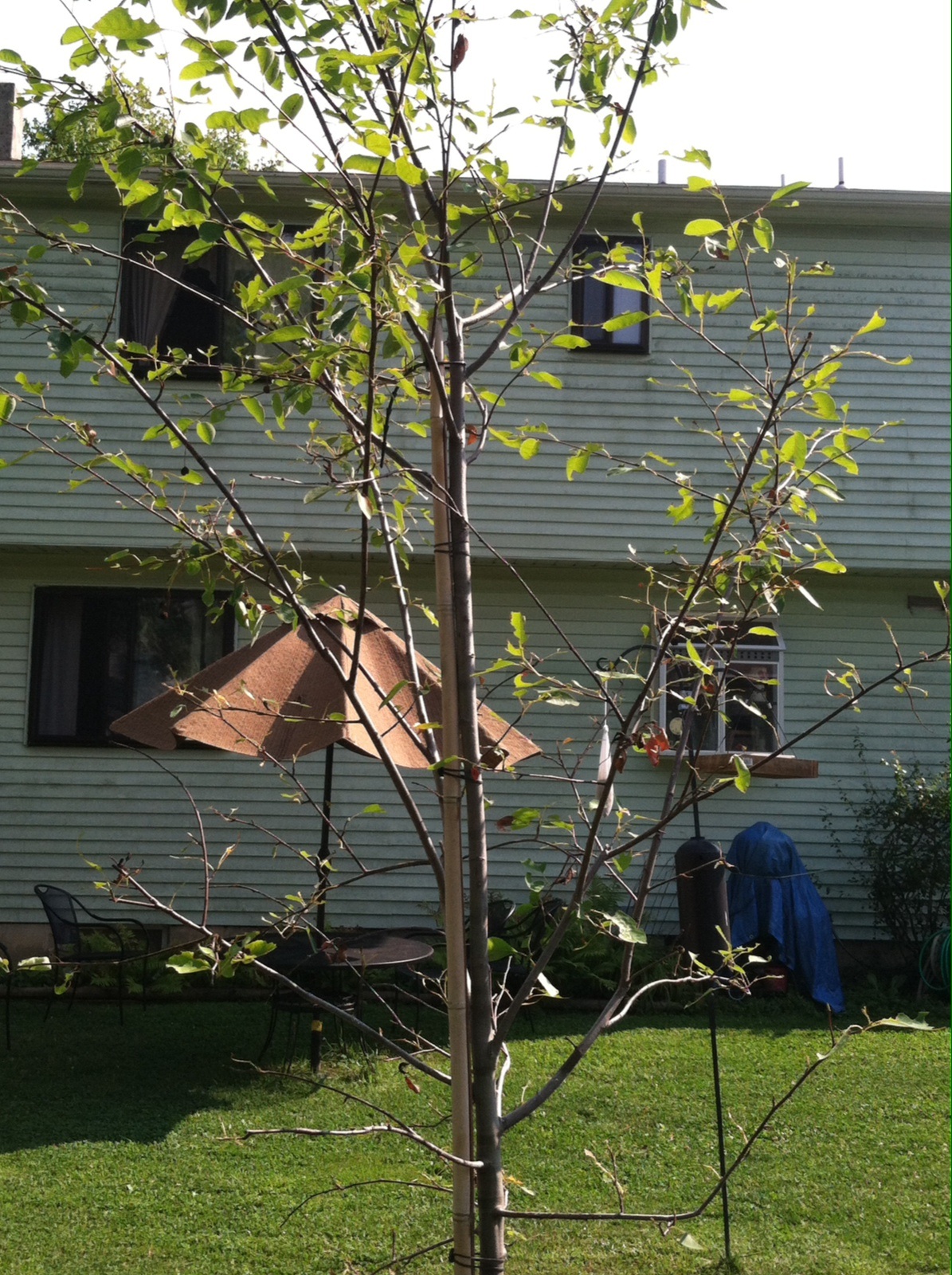
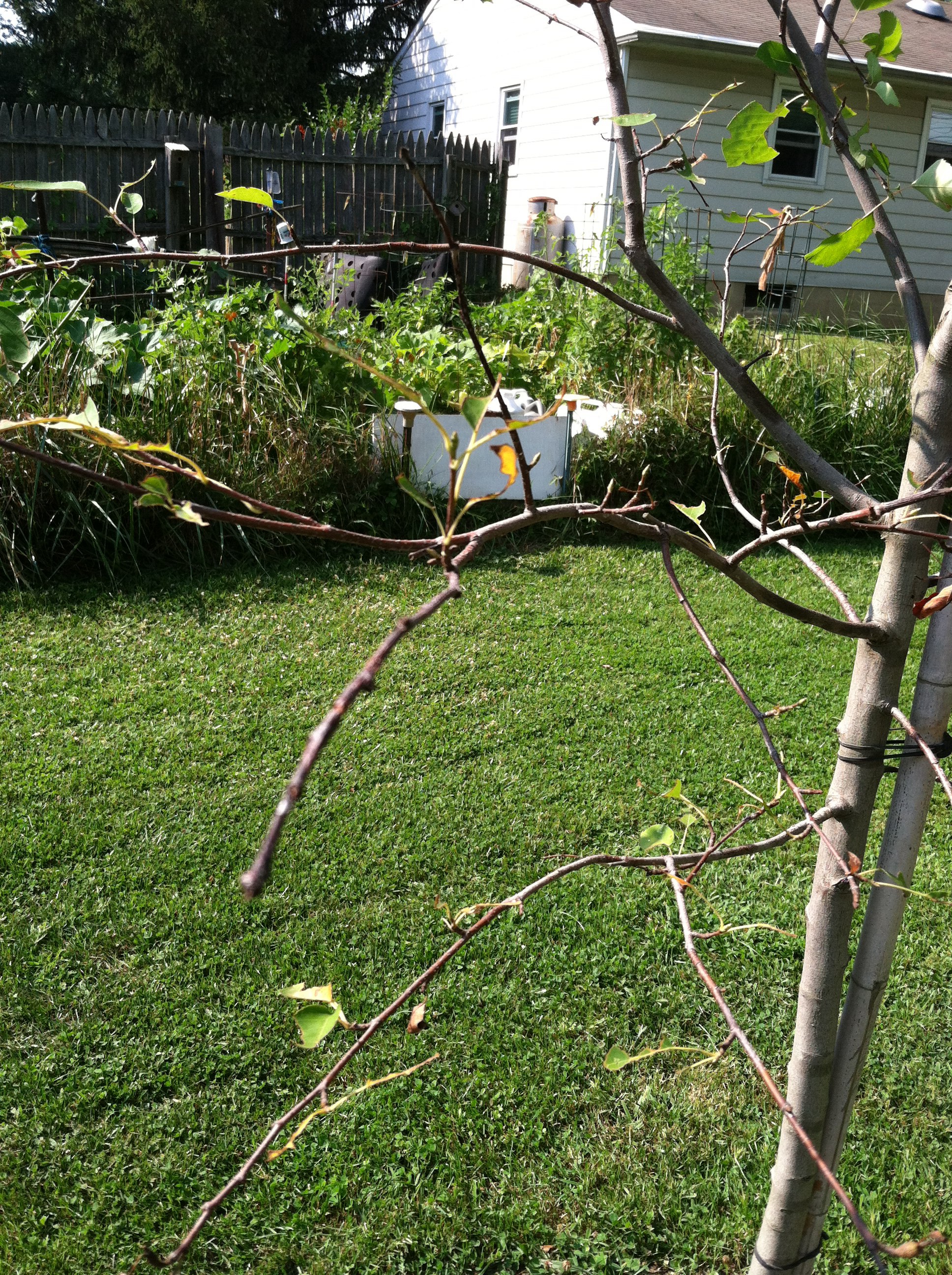
About three weeks ago, I noticed that something was eating the leaves at an alarming rate. The person at the nursery looked at my pictures and thought it might be some kind of caterpillar, though I hadn’t seen anything on the tree at all. She suggested we spray the tree with Neem oil, a topical, organic pesticide. So with some reservations, we sprayed the tree twice, one week apart, but without any effect. Today, the pest expert at the nursery called us and said he thinks it might be a leaf roller wasp, a native wasp that cuts out semi-circles and then rolls her larvae up in them, along with some pollen, to pupate. A larger tree isn’t affected very much by the leaf damage, but it can be significant in a smaller tree like ours. The expert isn’t entirely sure of his diagnosis, so I will be showing him more pictures, and in the meantime we will just hope for the best.
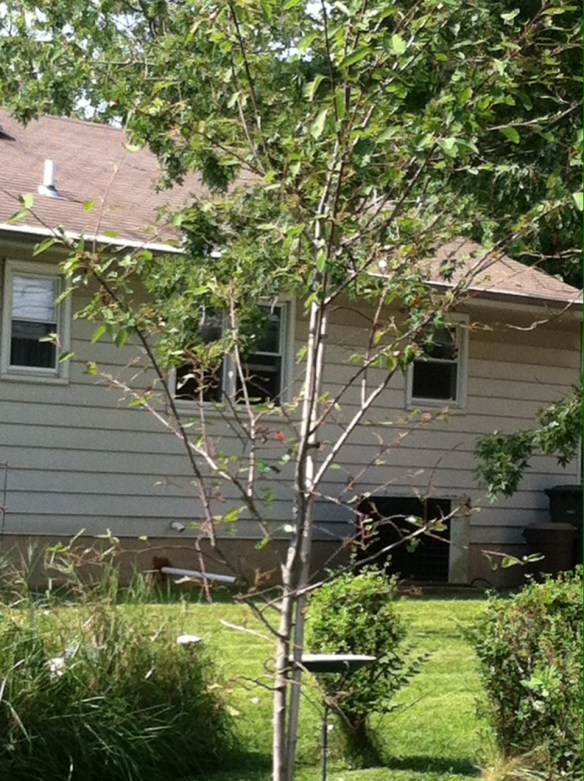
My serviceberry tree is showing some significant damage
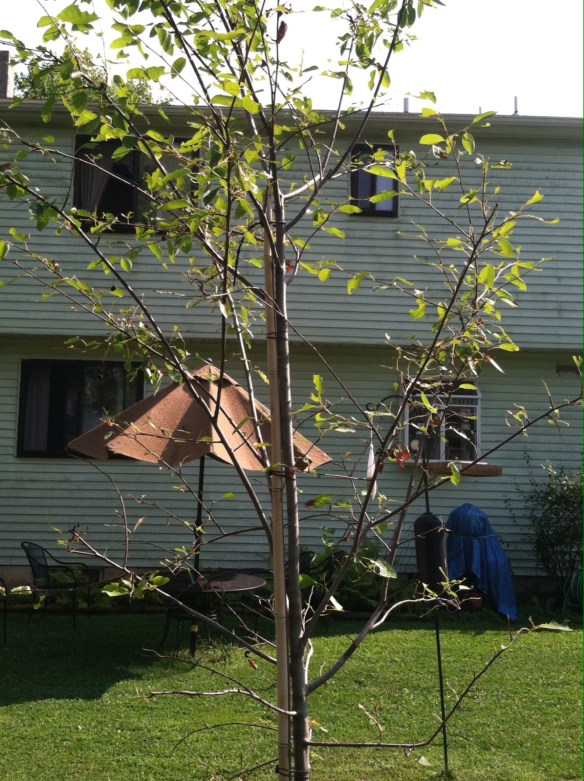
It’s even more defoliated now!

A close-up of the half-moon cuts in the leaves

Bare twigs with only the central leaf veins remaining!

 FROM WEEDS TO BEES