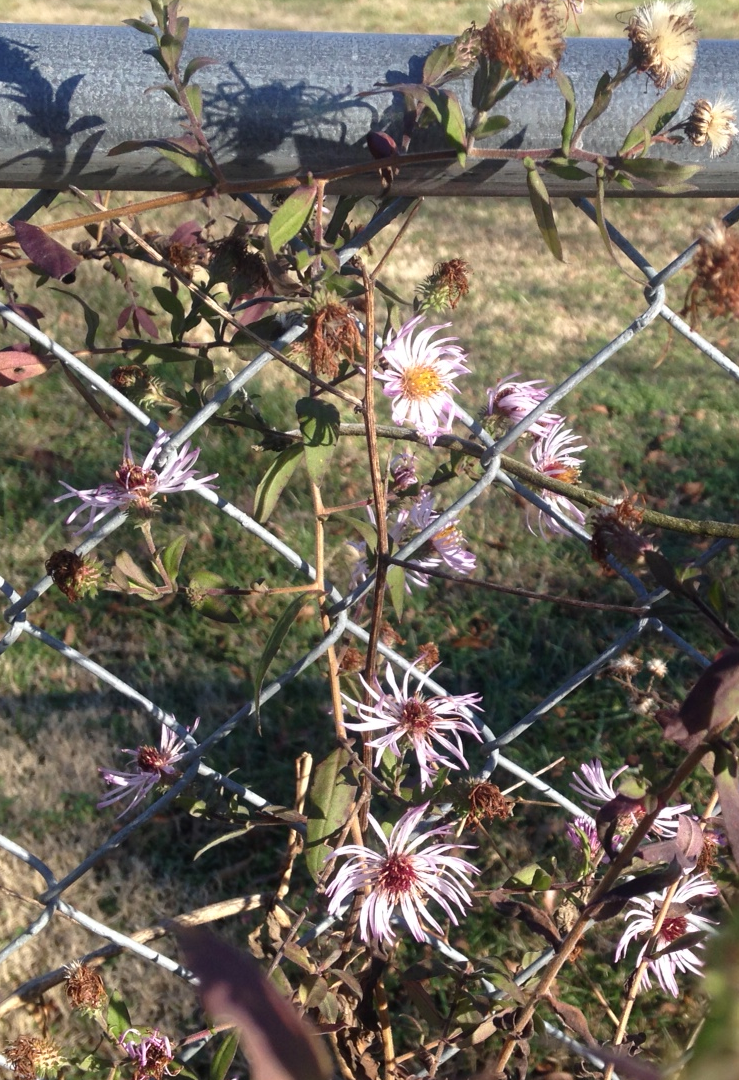
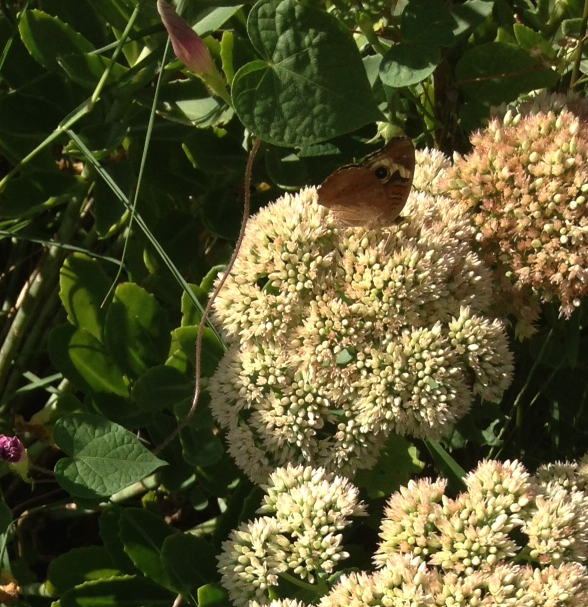
On December 15 I thought I’d do a little “garden cleanup” and happened to look closely at the climbing aster. Amazingly, it had some flowers still blooming! I love this plant!
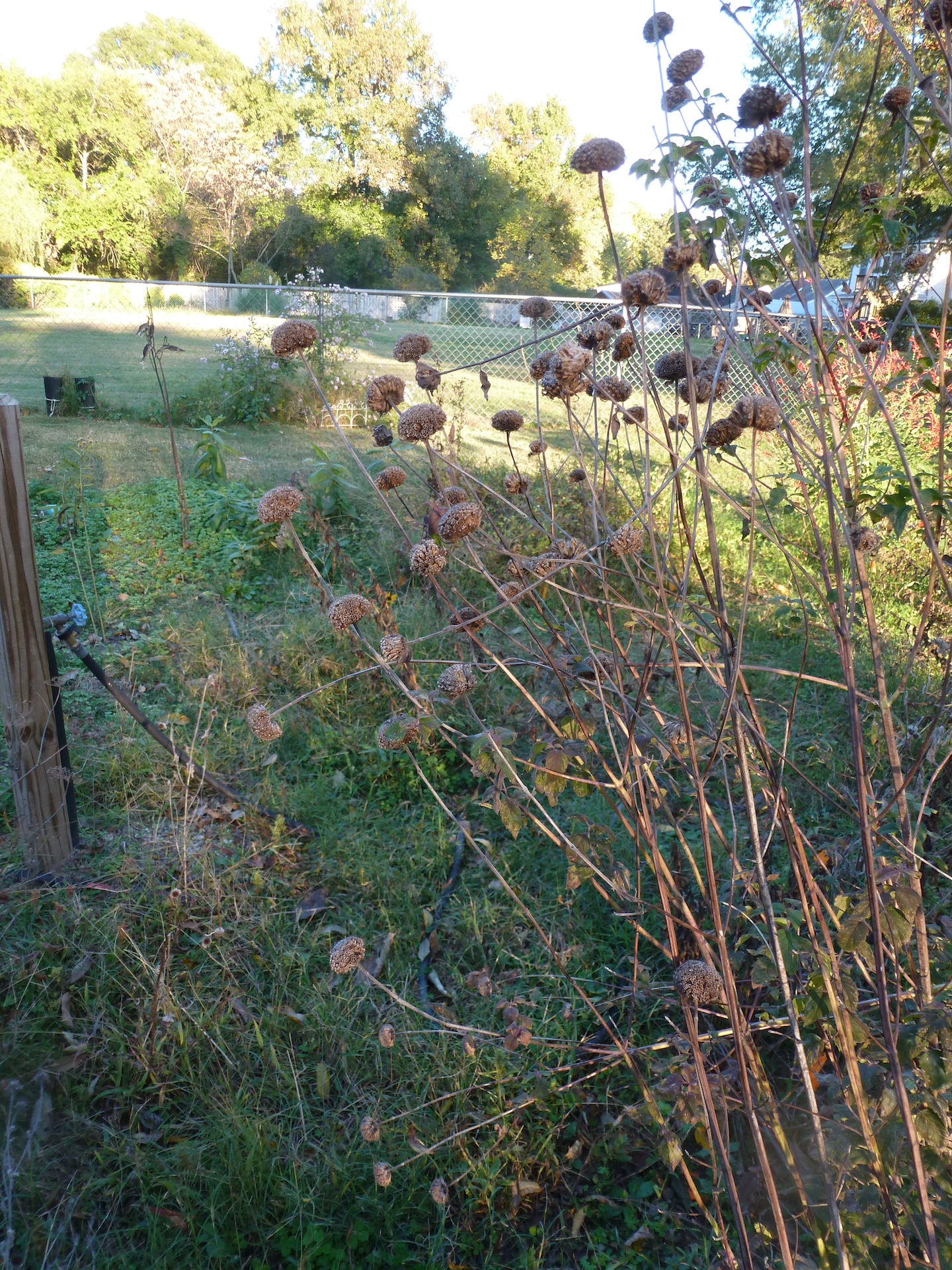
The rest of the garden looks like this:
I thought I’d walk around my garden and take a good look at what it looks like now in late October. I thought the spent flowers and plants might have their own kind of beauty (or not). For this tour I’m including my whole yard, not just the official “garden.”
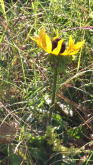
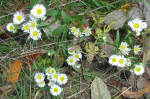
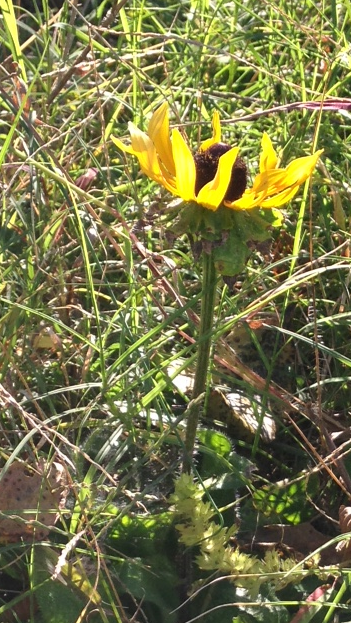
First there actually are a very few “spring” flowers still in bloom. A couple of late black-eyed Susans and some daisy fleabane:
But most plants in the garden are long past blooming.
The green-headed coneflower is long past its glory days. But the green leaves at the bottom show it’s still alive and waiting for spring to come again.
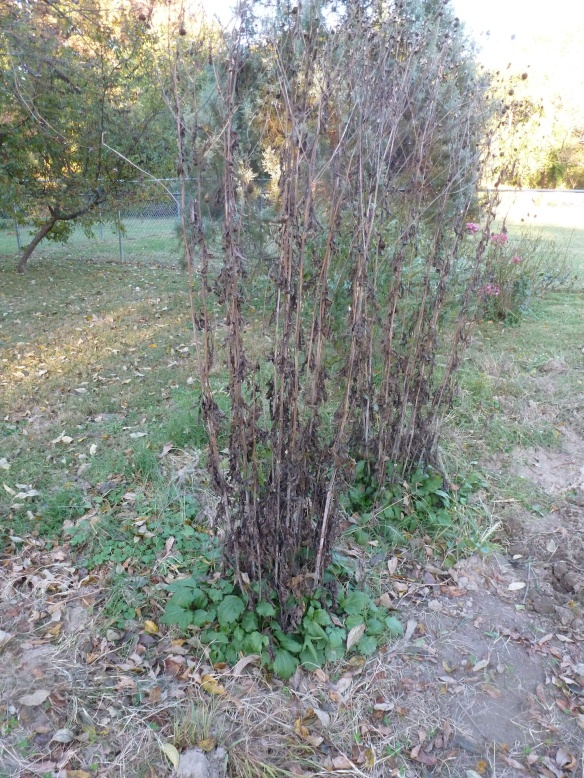
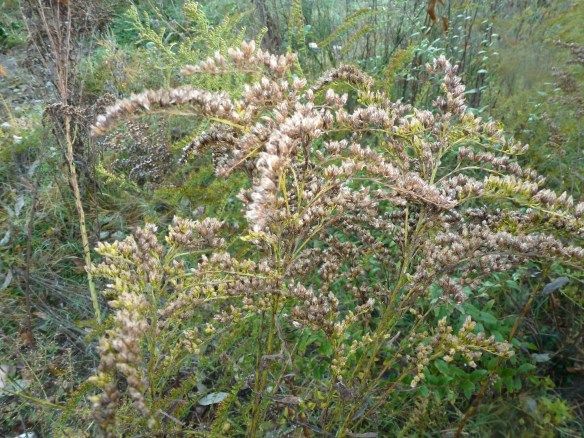
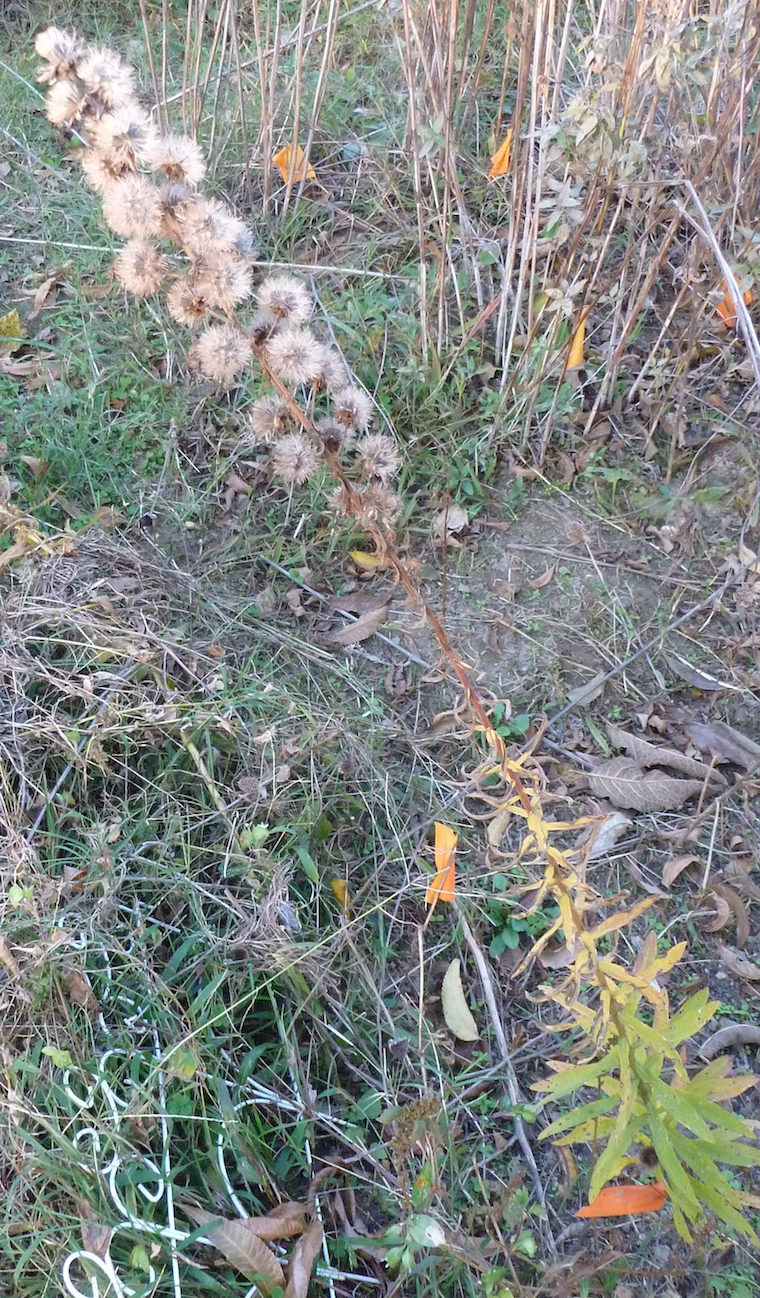
The goldenrod has gone to seed.
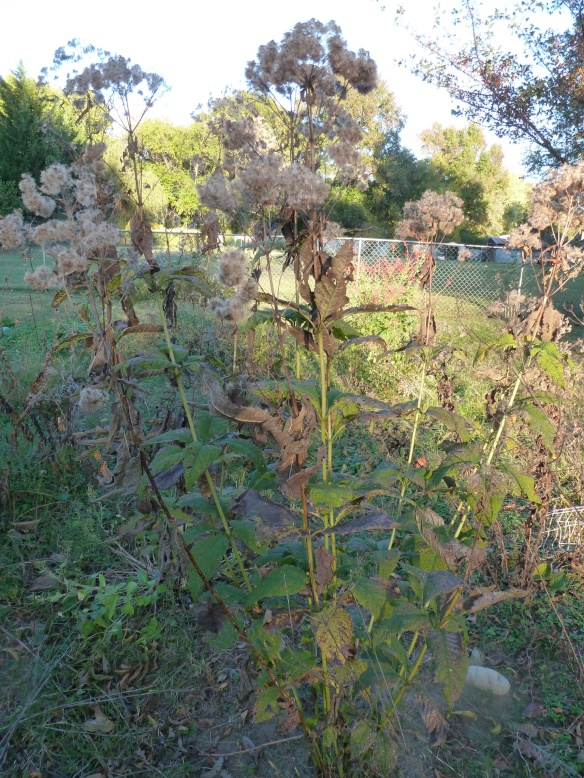
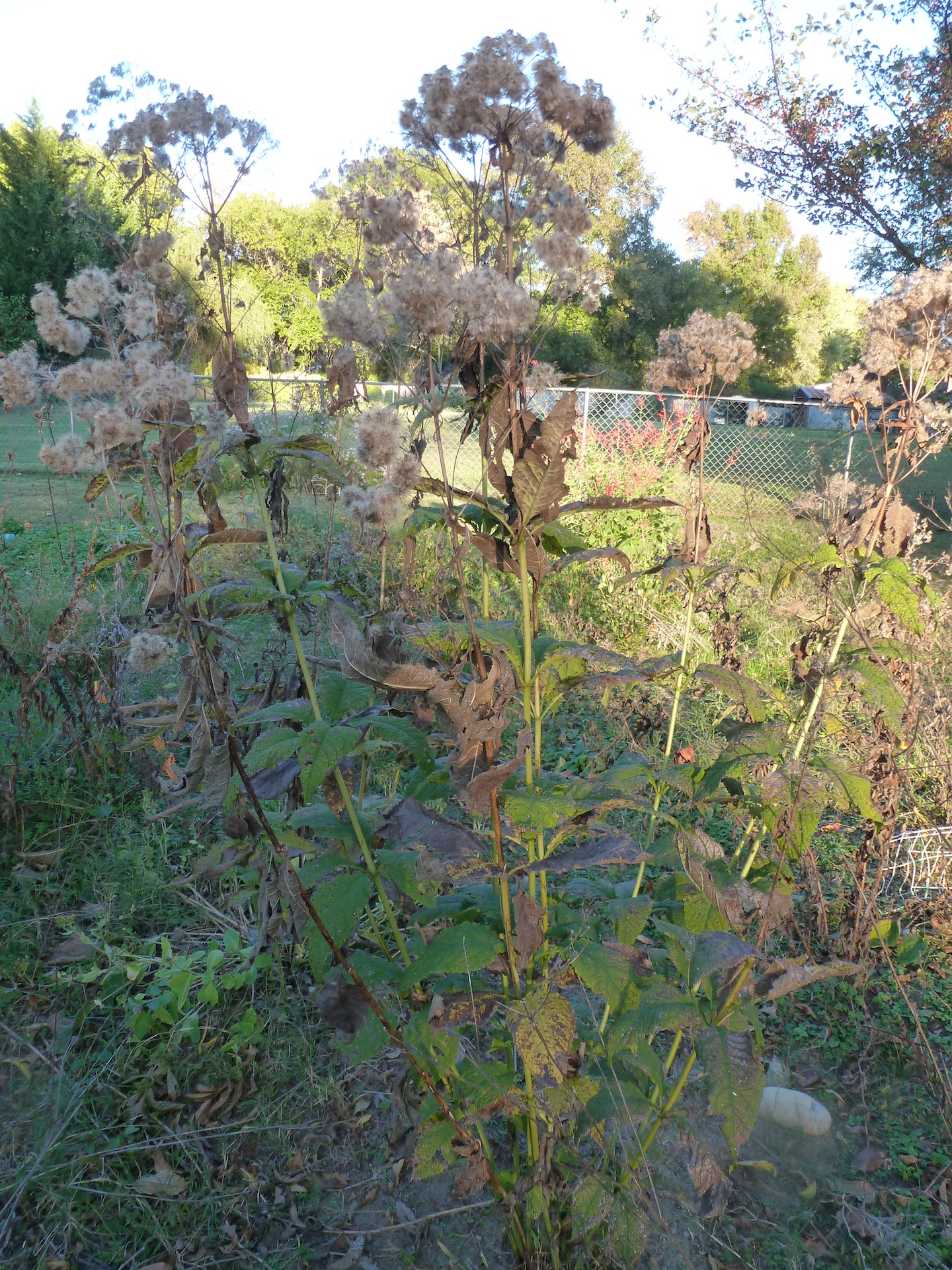
The Monarda fistulosa and sweet joe pye weed are long past blooming but still have some green leaves.
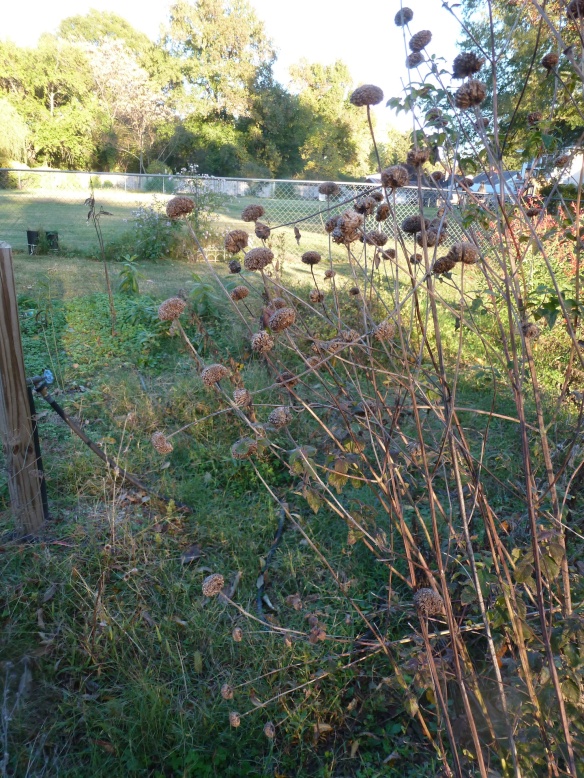
Here’s what the Liatris looks like now:
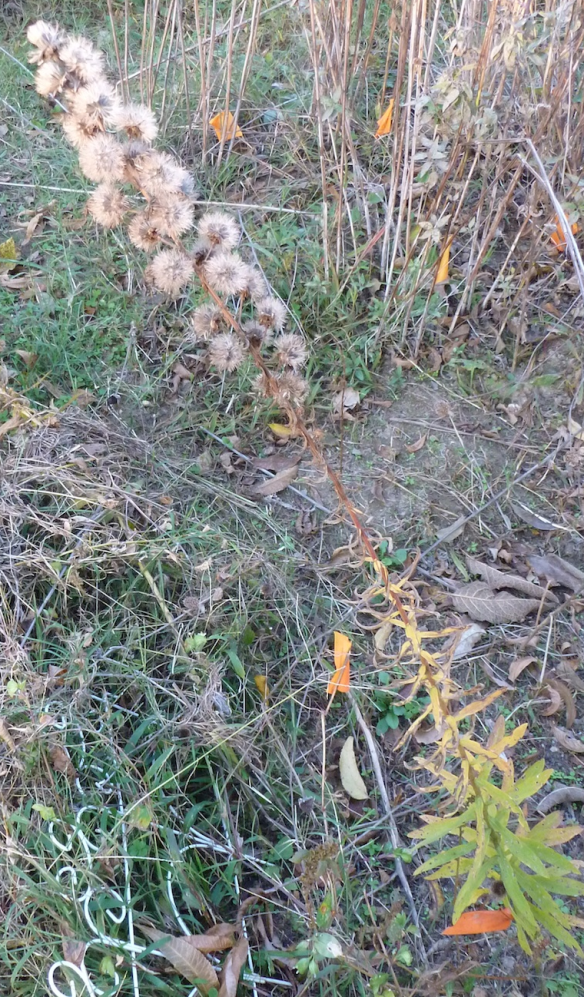
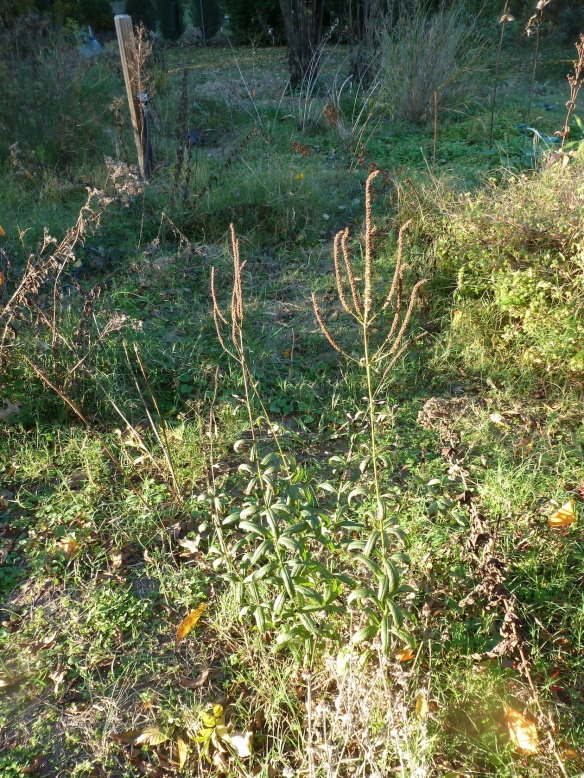
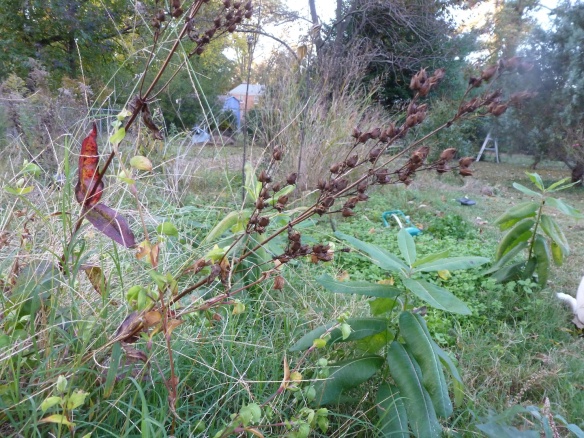
And here are the penstemon and the culver’s root:
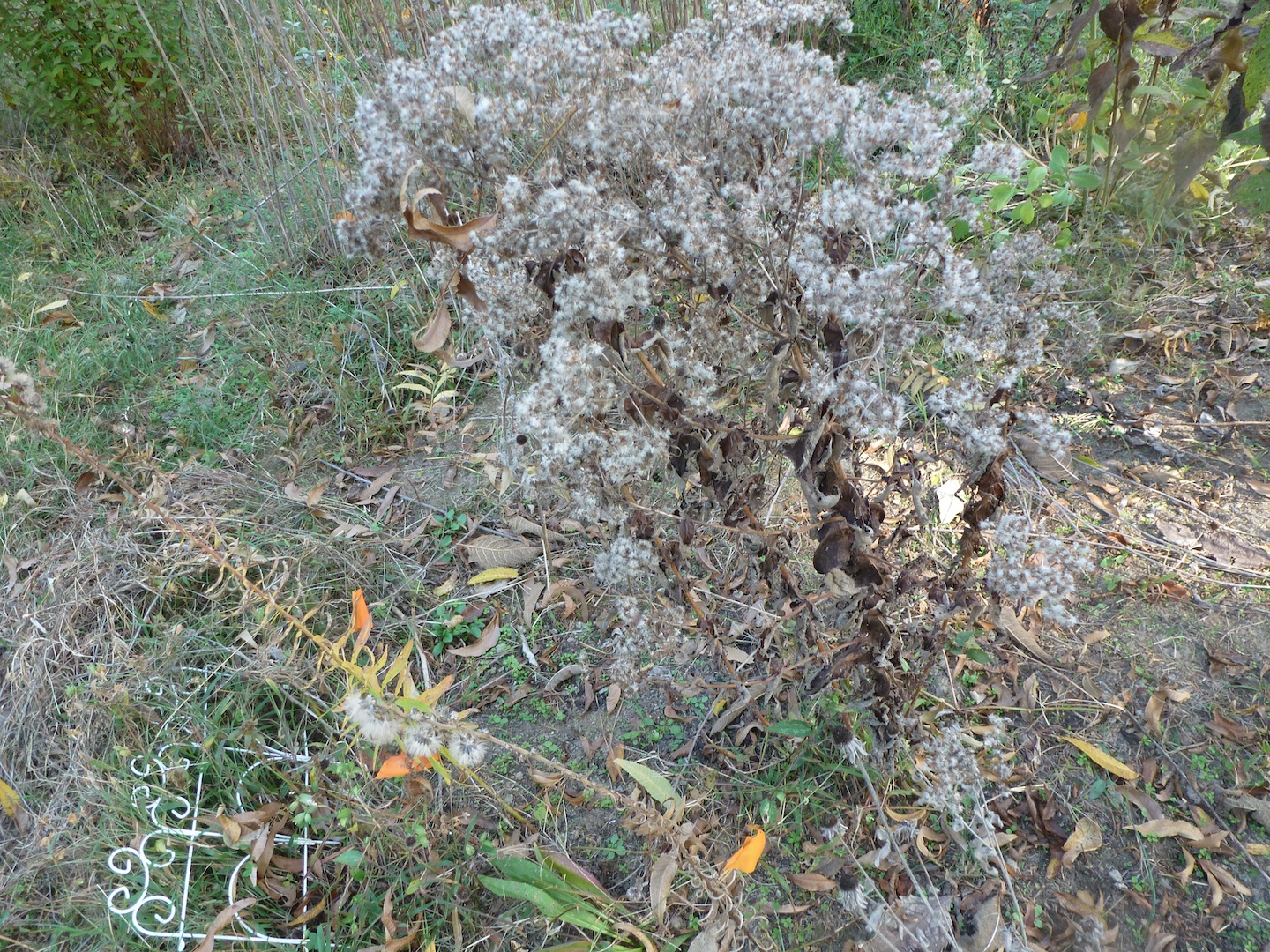
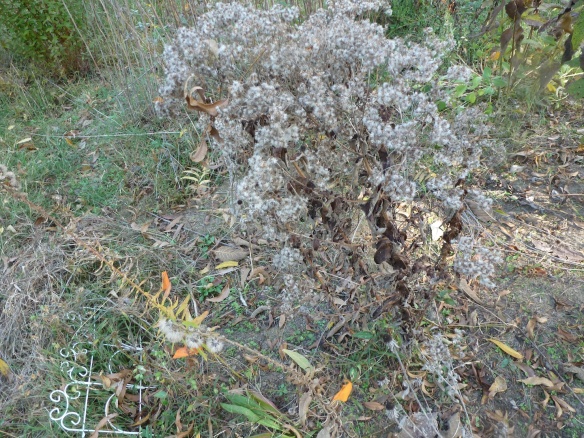
I’m afraid the boneset did not survive the summer’s drought — the plants look too black and just plain dead to me, so I don’t know what will come back next year. It did produce a lot of seed, as in this picture, so maybe it will be able to reseed itself. I’m having to dig up so much wire grass, though — I’m afraid I’m eliminating reseeding.
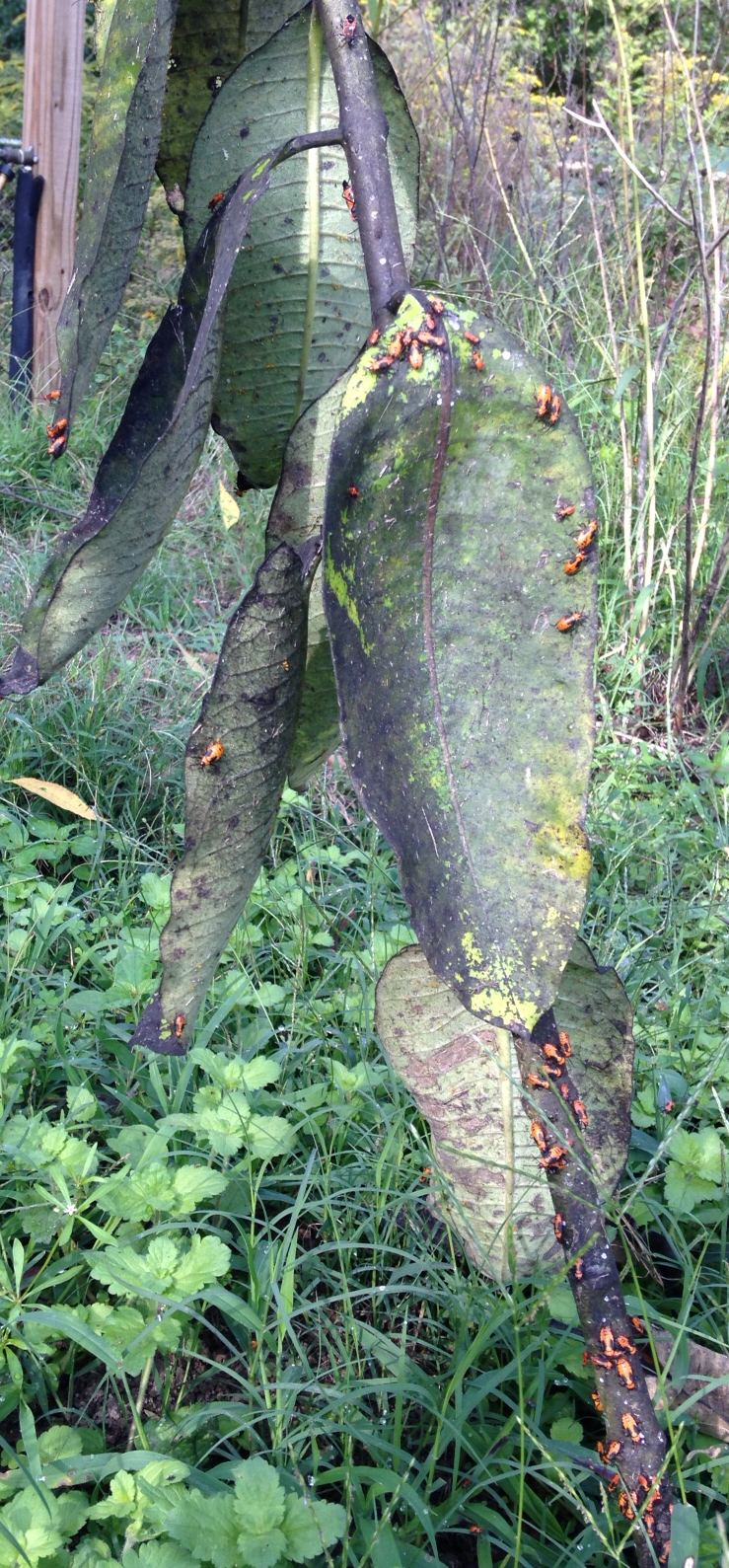
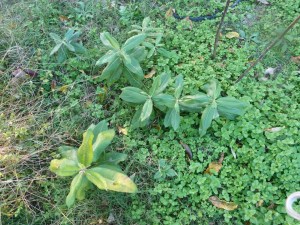
My common milkweed did very well for itself. My one plant transmogrified itself to at least 10 plants at last count. Here are some of them:
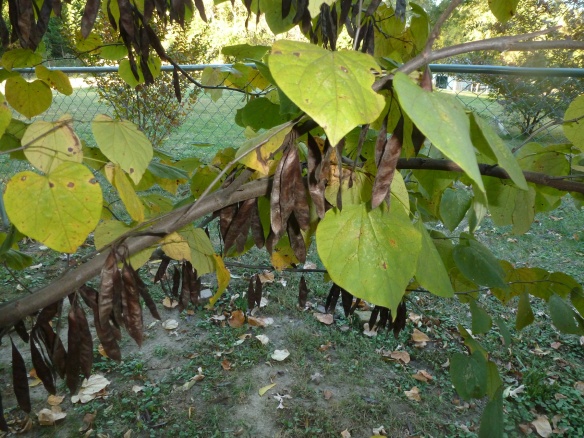
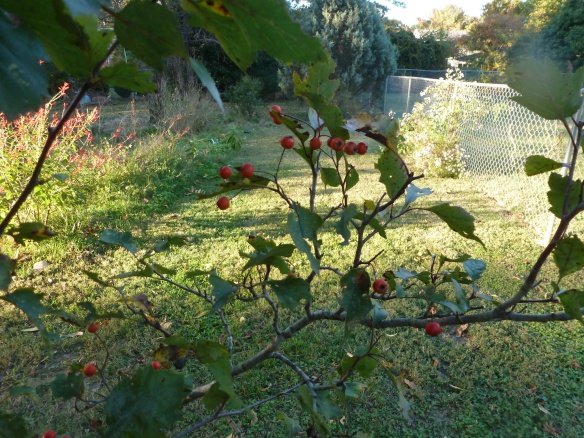
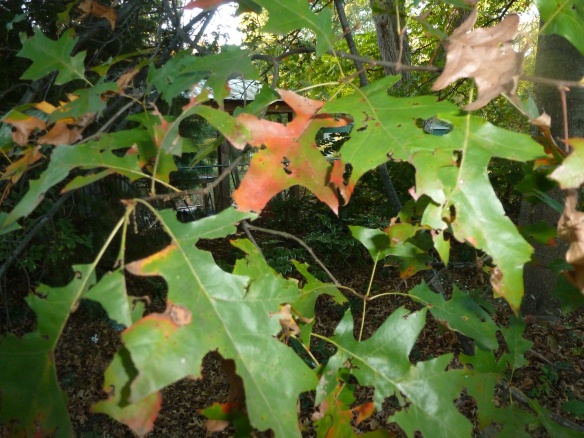
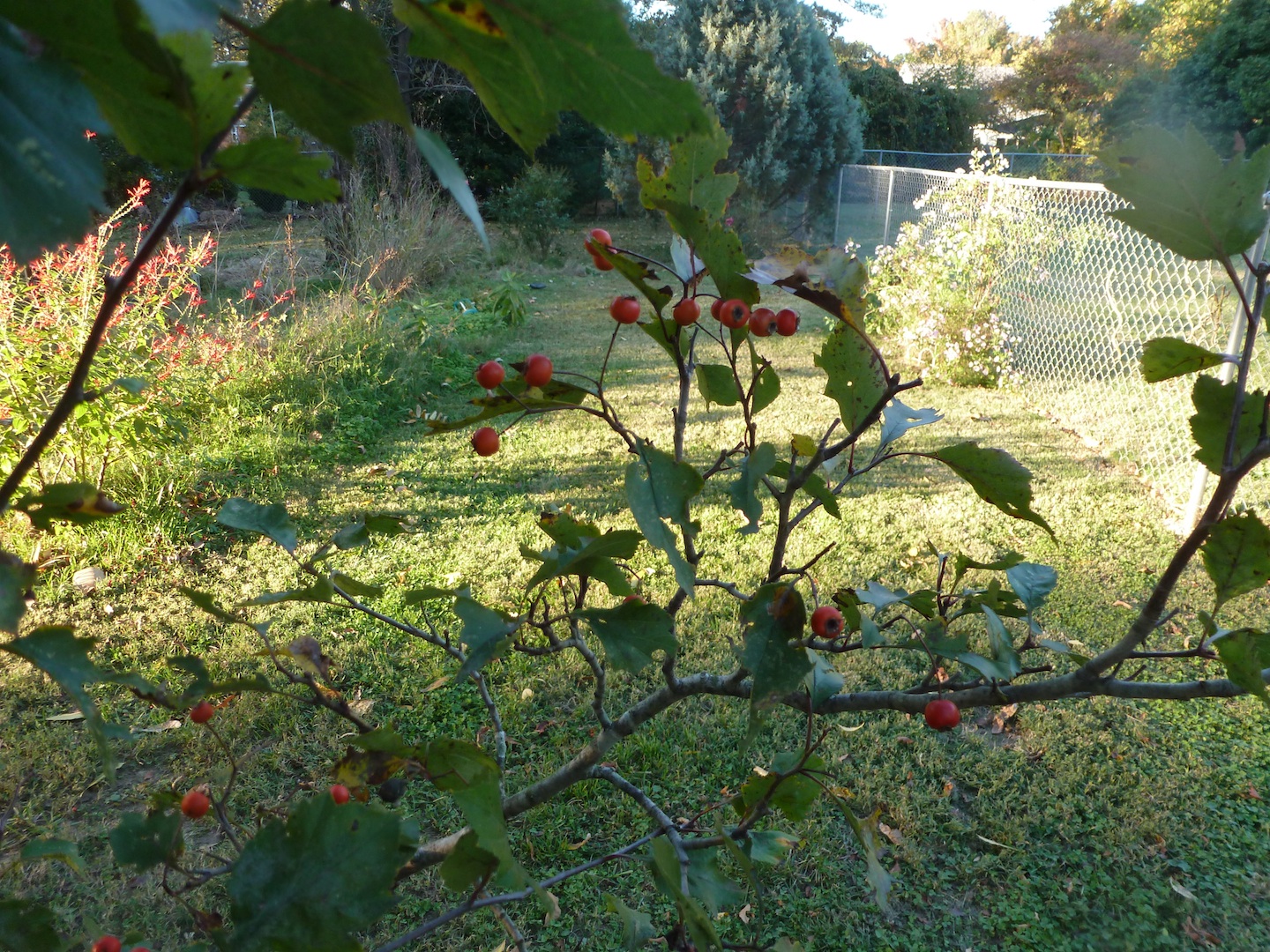
Finally, the trees in the rest of my yard are all looking ready for upcoming winter.
My favorite climbing aster picture. Doesn’t this bumblebee look like it’s found the perfect fit?
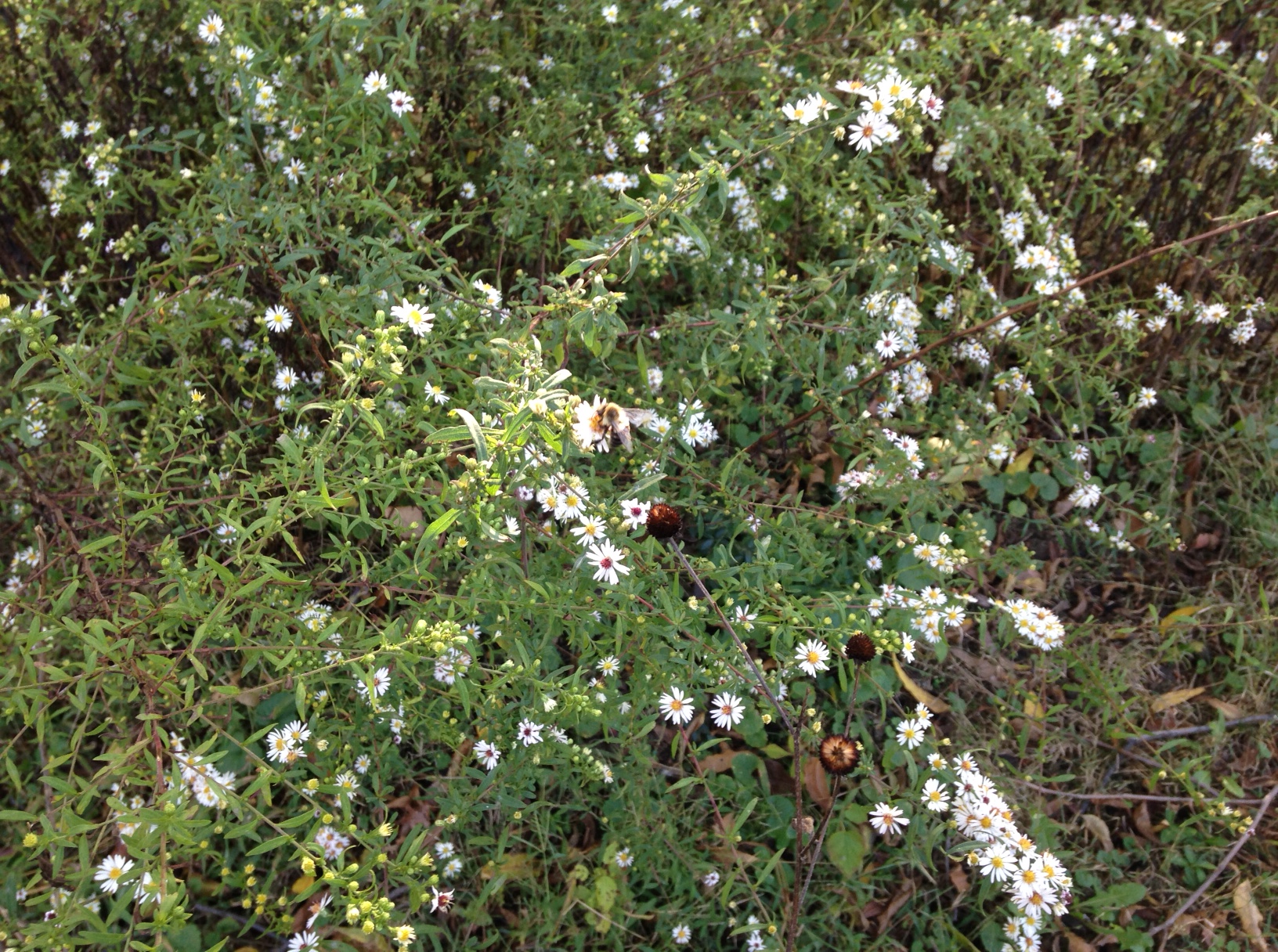
The Small White Asters are now in bloom all over my yard. They are swarming with little bees but getting a photograph of these bees is virtually impossible. While searching this photograph for a visible bee …
… I found that when magnified enough, the picture began to look like a sort of tapestry.
I like this blurry picture better than the original. I feel like it was lurking inside the bigger picture.
On Saturday, I just happened to go outside in the middle of the afternoon and saw that there were TWO MONARCH BUTTERFLIES on my butterfly bush. I must have spent a good 30 minutes trying to get a photograph showing both butterflies at once. This is what I ended up with and submitted with my sighting report to Journey North:
Then, I was at Southampton Elementary School in Richmond on Monday and saw two Monarch Butterflies on THEIR butterfly bush. In this case we were in a hurry so I didn’t I have time to get both butterflies in one picture and you will have to take my word for it that there were two.
SPEAKING OF BUTTERFLY BUSHES … I wouldn’t give mine up for anything even though it’s a non-native. The butterflies love it. Maybe 9/10 of the butterflies I’ve identified in my yard have been on my butterfly bush. (There were a couple of Painted Ladies flitting about on my butterfly bush while the Monarchs were there. This year I’ve seen Painted Ladies only on my butterfly bush.) Some people say they have had their butterfly bushes start to multiply, but mine never has even though I’ve had it for probably 15 years. If it ever did start “to walk” I’d have to reconsider my opinion so I hope it doesn’t. Except for the asters it’s the only thing in full bloom at this date when the Monarchs are still coming through. Even the goldenrods are done blooming by now.
A couple of months ago, the entire north side of the Swansboro Elementary School courtyard garden had to be bulldozed so that repairs could be carried out to the building foundation where water was leaking. We dug up and tried to transplant as many of our perennials as possible. Some of the asters we transplanted at my house next to the front porch. At the time, I thought the plants looked dead and would never make it. But amazingly they DID make it and are now blooming. I just wish I had more of them.
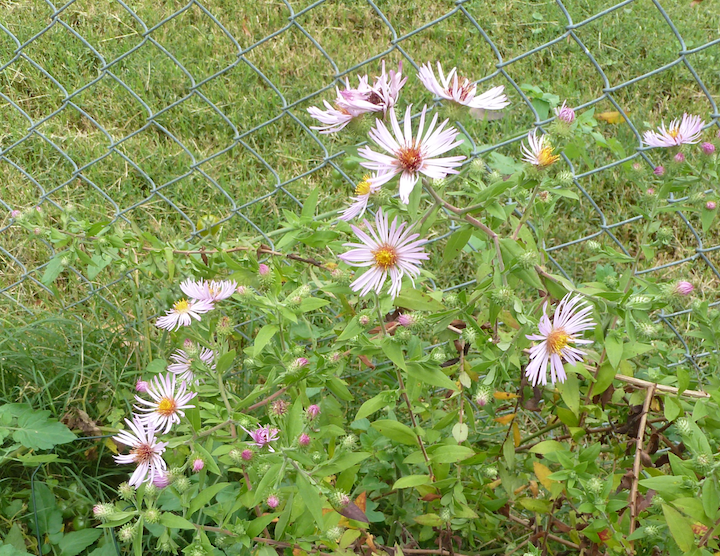
When I first decided a couple of years ago to try to plant a “butterfly garden” in my backyard, my friend Joyce suggested planting a climbing aster, Aster carolinianus, along the fence. It has done well and is now coming into bloom for a second year.
The skippers really like this aster.
Finally, back to the small white asters which are attracting lots of bees. I had a hard time getting this picture because the darned bumblebee wouldn’t stay in one place, so he’s a little fuzzy (photographically speaking as well as in real life).
One of my favorite “freebies:” the Small White Aster (Aster vimineus)
is coming into bloom. I have patches of these all over my yard. You need to know that they’re going to do this come October, so you don’t pull them up earlier in the summer. I had to fight off someone working on my house foundation who would have liked to pull up or trample all the “weeds” growing around my house.
A Closer View:
I’ll start with the “pretty” stuff. I have a late-blooming goldenrod cultivar of some sort that I bought at a nursery last year. I don’t quite trust cultivars but this one seems to be attracting insects like crazy, so I guess it is OK. I think the following picture shows a “Soldier Beetle.” In fact, on looking at the picture more closely, I think there are TWO of them, one on top of the other.
More bumblebees on the Sedum:
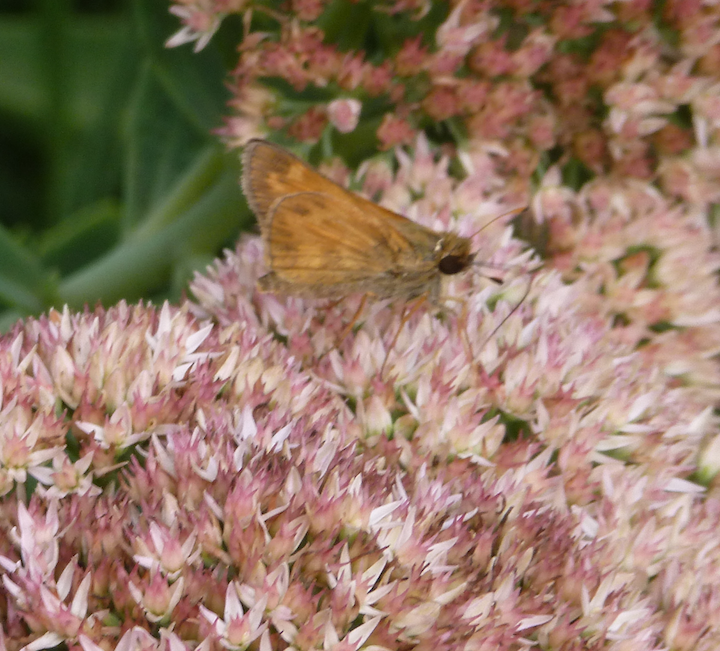
An unidentified skipper on the Sedum?
Finally here’s the not-so-pretty (well, really gross) picture that I took just for you, Wendy.
Look what I found growing among all the weeds in my “garden.” It’s the Obedient Plant (Physotegia virginiana) that I planted last year and thought had just disappeared. For some reason I’ve never been able successfully to grow Obedient Plant (I’ve planted it several times) even though friends of mine call it “Disobedient Plant” because it spreads so aggressively.
I had to pull a few weeds just to get this picture. Believe it or not my intention is to get the whole “garden” weeded by winter.
Even though it’s a non-native, I’ve always had a soft spot in my heart for sedum, because the bees and butterflies love it. It provides a late-summer nectar source. I know there are many different species of sedum but I don’t know exactly what I’ve got. I have 3 different ones in 3 different parts of my yard.
Lately I’ve been seeing more butterflies on my sedum than on my butterfly bush. Here are a couple:
This Common Buckeye refused to keep its wings open long enough for me to get a good photograph, so I had to be satisfied with one with the wings closed:
This Painted Lady was just about as difficult to photograph. I don’t really know if it is a Painted Lady or an American Lady. According to my Life Cycles of Butterflies book, you have to count the number of eyespots on the underside of the lower wing to tell the difference. You can see it’s in the company of 3 different bees and another small butterfly I can’t identify.
Although they are well past blooming and practically all petals have dropped, the green-headed coneflowers are still acting as a food source. Yesterday I tried to get a picture of a goldfinch in these flowers with my smart phone, but was unable to do it. This morning I went armed with my “real” camera, and was able to get this picture with the lens zoomed to its limit.