Green-headed Coneflowers Continue to Work Their Magic

Although they are well past blooming and practically all petals have dropped, the green-headed coneflowers are still acting as a food source. Yesterday I tried to get a picture of a goldfinch in these flowers with my smart phone, but was unable to do it.  This morning I went armed with my “real” camera, and was able to get this picture with the lens zoomed to its  limit.

Goldfinch in Green-headed Coneflower

Goldfinch in Green-headed Coneflower

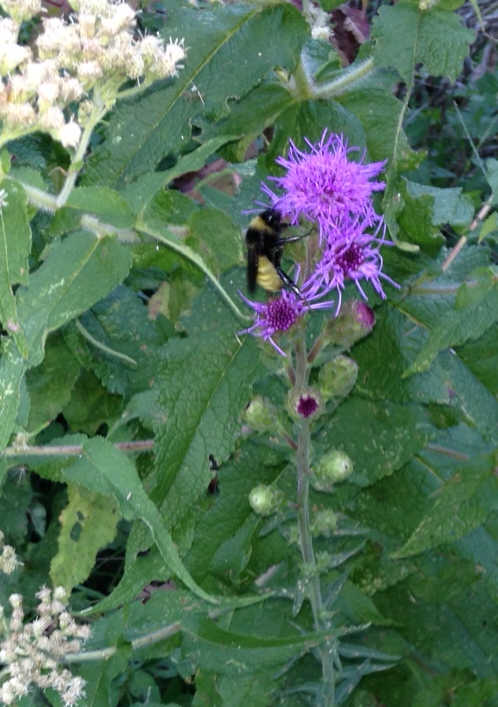
Northern Blazing Star

This spring I planted some bare root Northern Blazing Star — Liatris scariosa.  It has come up strong and is just now starting to bloom.  Last evening I saw that a bumblebee had already found it:

Bumblebee on Northern Blazing Star

Bumblebee on Northern Blazing Star

Undoubtedly there will be more pictures to follow.

Sneezeweed

My sneezeweed has been coming into bloom for a couple of weeks now.

Sneezeweed

Sneezeweed

I count at least 7 tiny bees in this photo.

You can understand why its Latin name is Helenium autumnale. Most of my other flowers are done blooming for the year.  Next year I plan to plant a lot more sneezeweed throughout my “meadow” garden so there will be  more late summer color and nectar source for the tiny solitary bees.

Mid-August in Delaware

My yard is so quiet now except for the clatter of the cicadas and the tiny twitter of the ruby-throated hummingbirds as they visit my feeders to tank up before their migration south.  The bluebird family visits less and less frequently to indulge in my mealworms, and I noticed today that Mr. and Mrs. BB’s feathers are starting to look a little bedraggled. I hope they’ll be back next year!

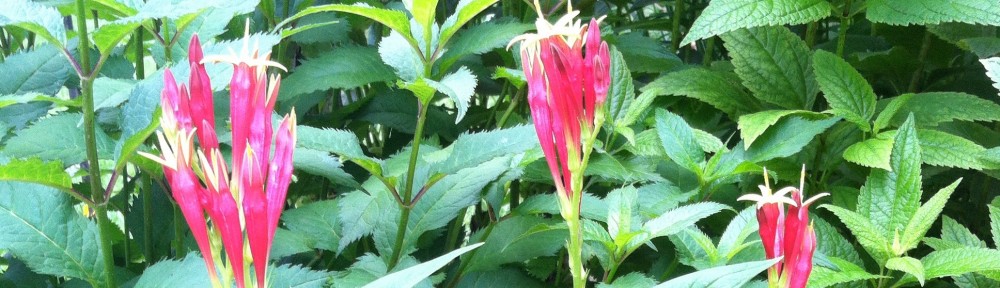
On a more cheerful note, some of my late-summer flowers are blooming!  Besides my hoary skullcap, the cardinal flowers (lobelia cardinalis) are a bright crimson, and my blue lobelia (lobelia siphilitica) is very popular with the bumblebees.

The cardinal flowers and blue lobelia are favorites of the bees

The cardinal flowers and blue lobelia are favorites of the bees. Look closely and you might see a bee on the blue lobelia!
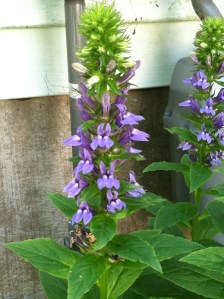
Blue lobelia up close.  I think there's a bee in there!

Blue lobelia up close.

A new flower I tried this year, nodding onion, has decided to bloom after it sat all summer doing nothing and I had about given up on it!

Nodding onion.  It's hard to get a good picture because it keeps nodding!

Nodding onion. It’s hard to get a good picture because it keeps nodding!

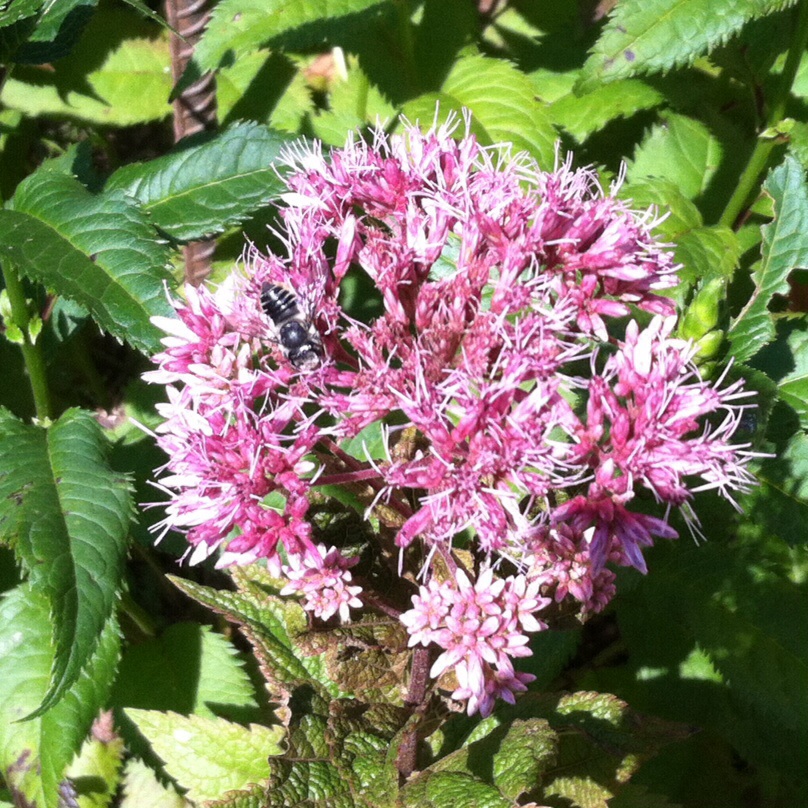
The bees are still all over the few remaining blossoms of my joe pye, which is pretty much finished for the year after a hot, dry spell.
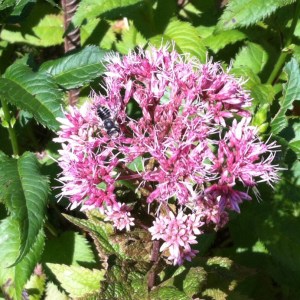
Joe pye with bee.  This patch was a-buzz all summer.

Joe pye with bee. This patch was a-buzz all summer!
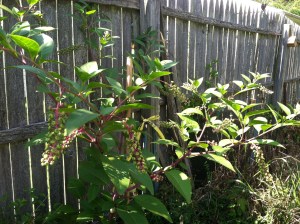
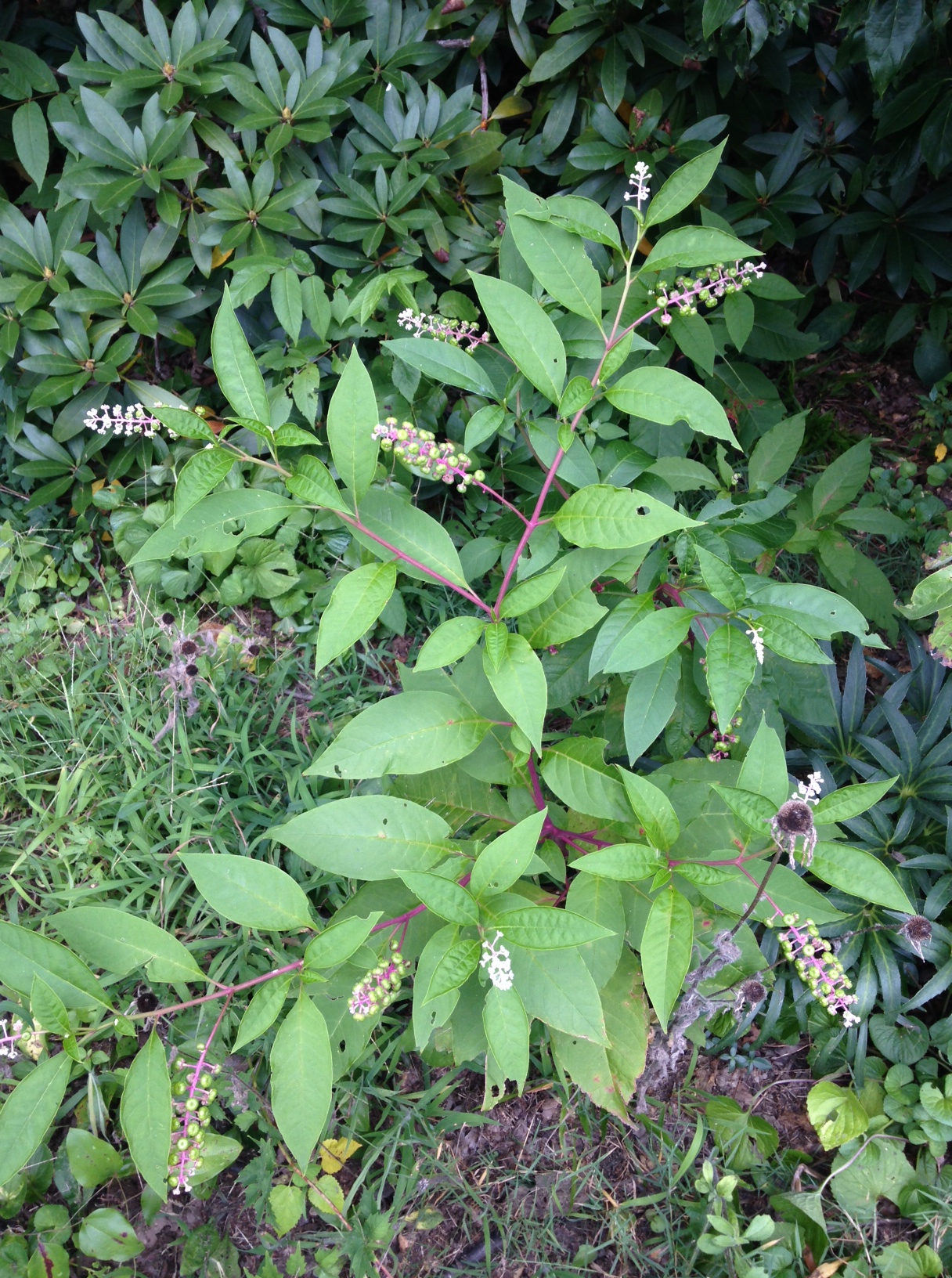
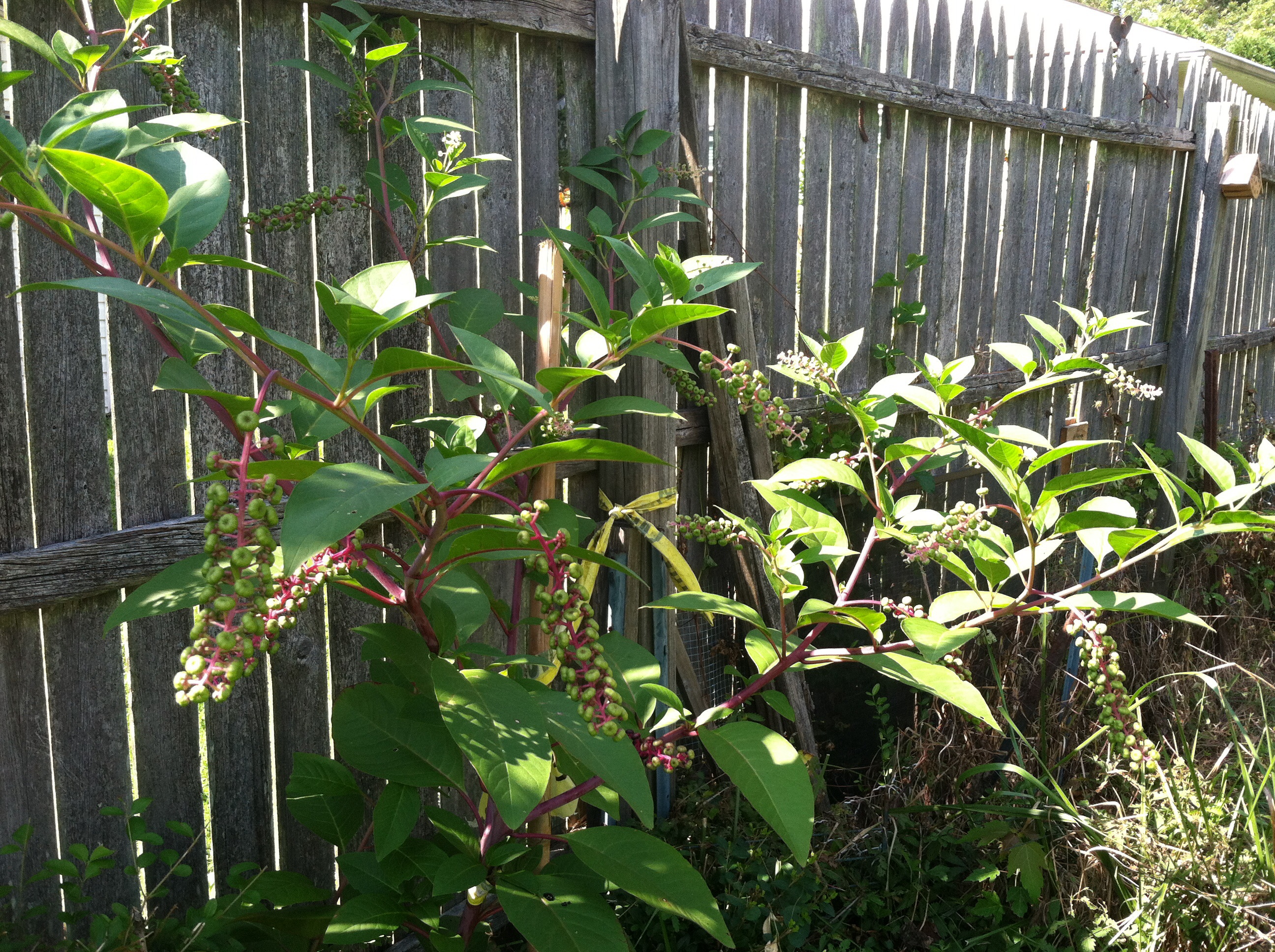
My pokeberry "tree".  Birds LOVE pokeberries, and I have been nurturing this one all summer. They're finally starting to ripen.

My pokeberry “tree”. Birds LOVE pokeberries, and I have been nurturing this one all summer. They’re finally starting to ripen.

I’m still waiting, somewhat impatiently, for my three varieties of goldenrod to bloom, but they just aren’t quite there yet.  A few more late-bloomers have yet to put on their show, and I’m really looking forward to seeing them–more later!
Hawk in Garden

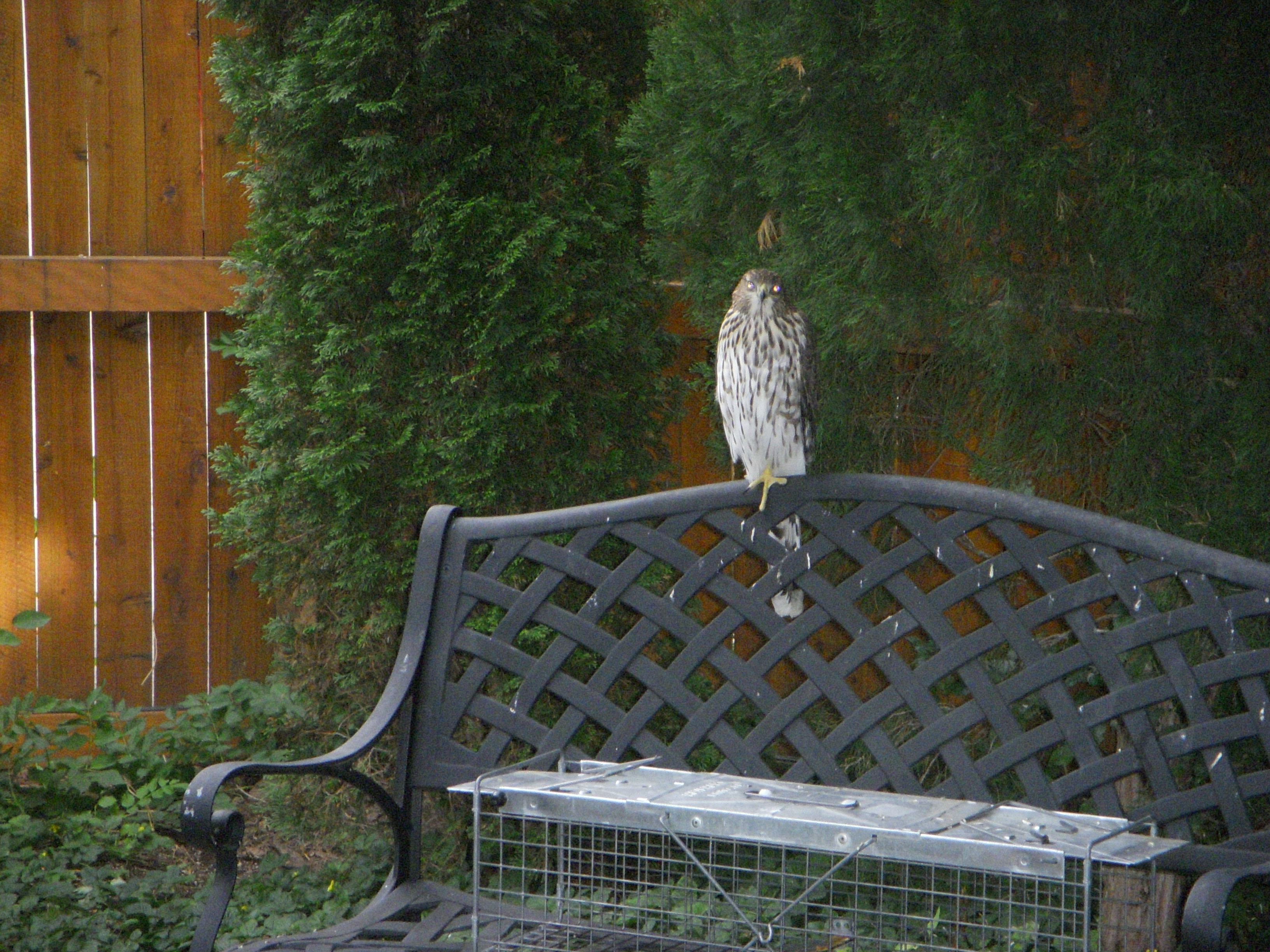
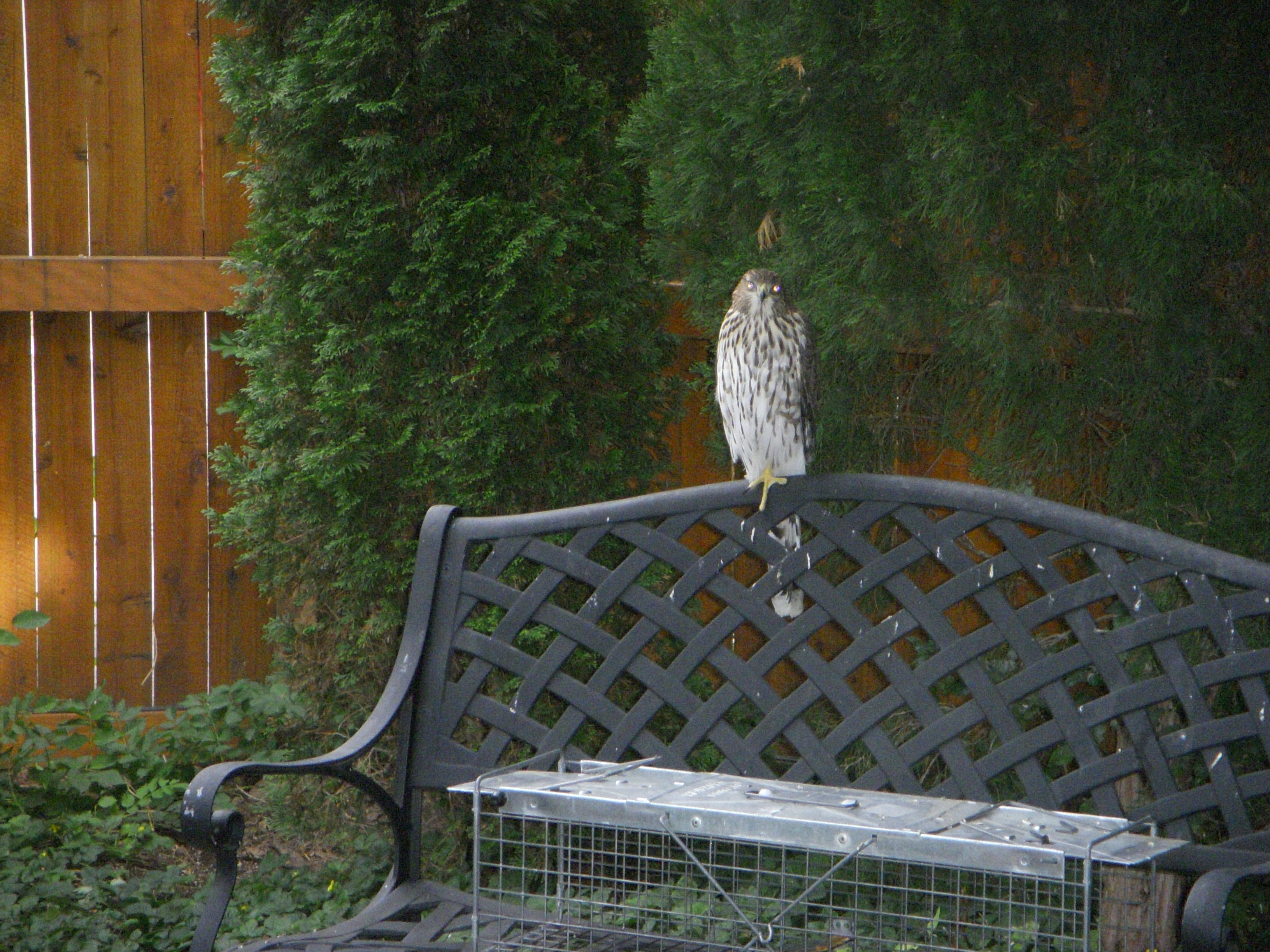
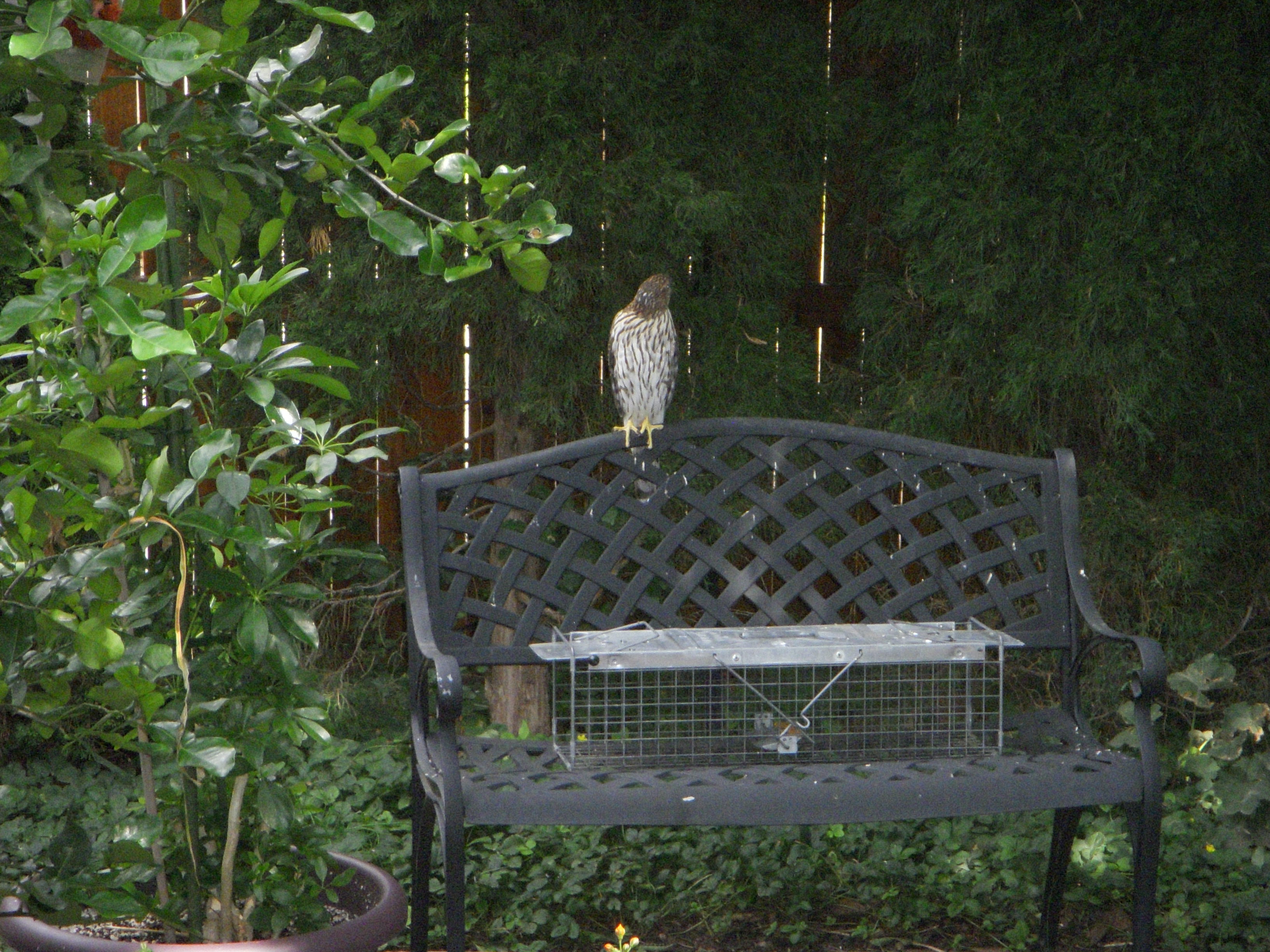
DSCN0937Yesterday evening we had an extraordinary viewing of a sharp shin hawk, sitting right on our backyard bench apparently interested in the numerous sparrows we have been fattening up at our seed feeder this summer.  The sparrows stayed in their tree and were relatively quiet, but the hawk would turn his head around 180 degrees listening for them.  He was completely unfazed by us, and Fred got some wonderful pictures.  It was a juvenile, with a striped breast and yellow eyes.  He finally flew up into the tree where the sparrows were. 

DSCN0935   DSCN0937 DSCN0933 DSCN0930

Alley boxes

Last year Fred built us 2 wooden boxes for the alley behind our house.  We had some mums and columbines come back this year, and I added some milkweed plants and sunflowers.  I had not realized I was buying really mammoth sunflowers.  I am in the pictures to show scale, not photogenicity, and I realize the trash bins are possibly even less photogenic, but they are part of the story, I guess.  I can’t wait to see how large the sunflower blossoms will be; more photos will follow.

Colorado

Me by Sunflower

Me in bamboo

Me in bamboo

A Monarch Butterfly in My Garden

Late afternoon the day before yesterday, I was walking around my garden when what should I see, but a large orange butterfly.  I immediately thought it might be a Monarch as it seemed too large to be a Painted Lady.  It must have flitted around and through the garden for a good 10 – 15 minutes before it finally rested with its wings open in a spot where I could get a photograph.

Male Monarch Butterfly

Male Monarch Butterfly

It was clearly a male Monarch butterfly.

I was amazed to find him again, yesterday — 24 hrs. later, still in the garden.  I keep fantasizing that he’s feeling that he has found a spot where the world is as it ought to be.  There still seem to be plenty of nectar flowers available — boneset, goldenrod and a butterfly bush. Plus there’s plenty of milkweed should a female arrive to lay eggs.  (I wish this male could somehow get a female to join him.)

I reported this sighting to Journey North (http://www.learner.org/jnorth/sightings/query_result.html?record_id=1407963782).

My Serviceberry Saga

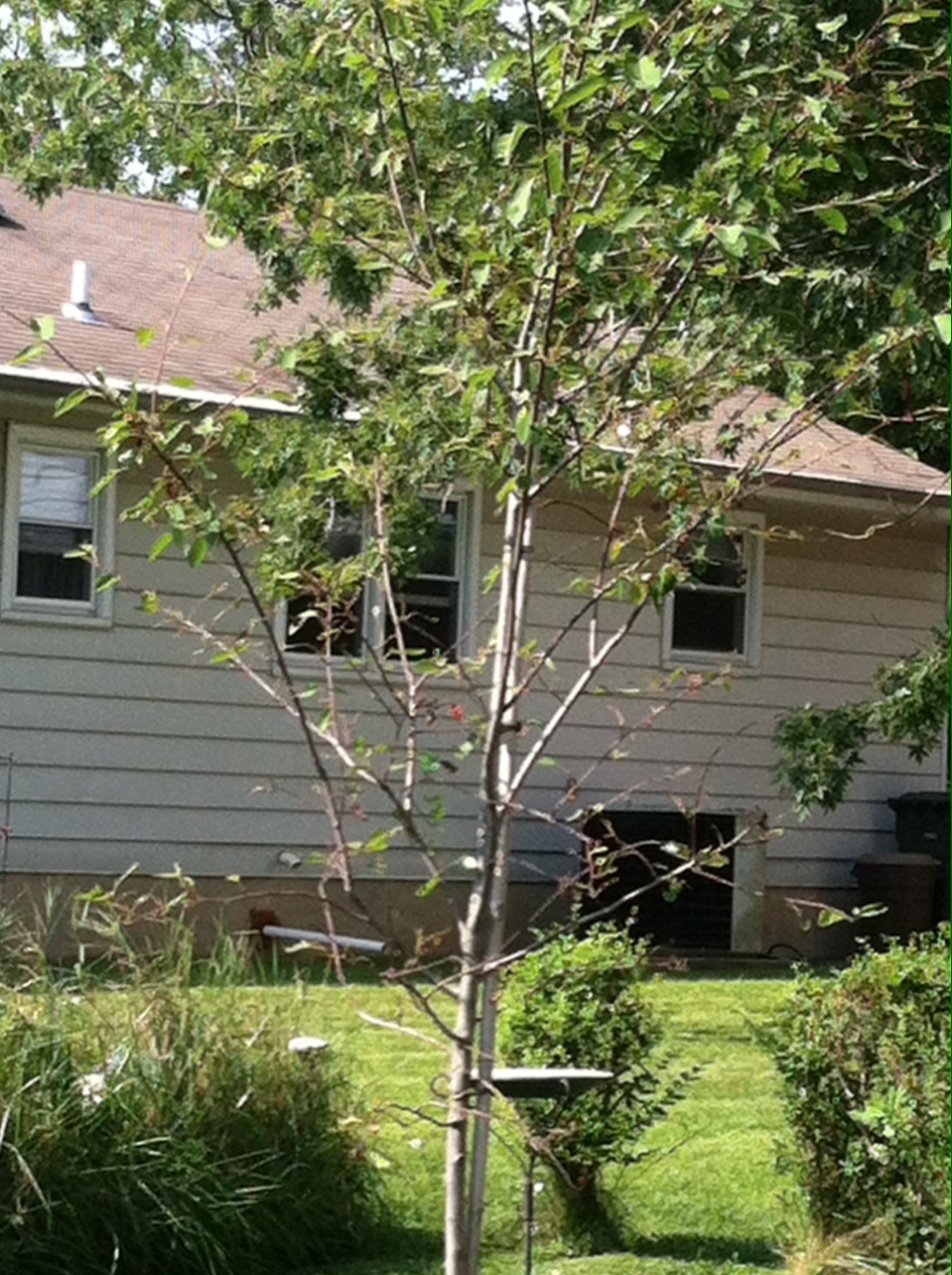
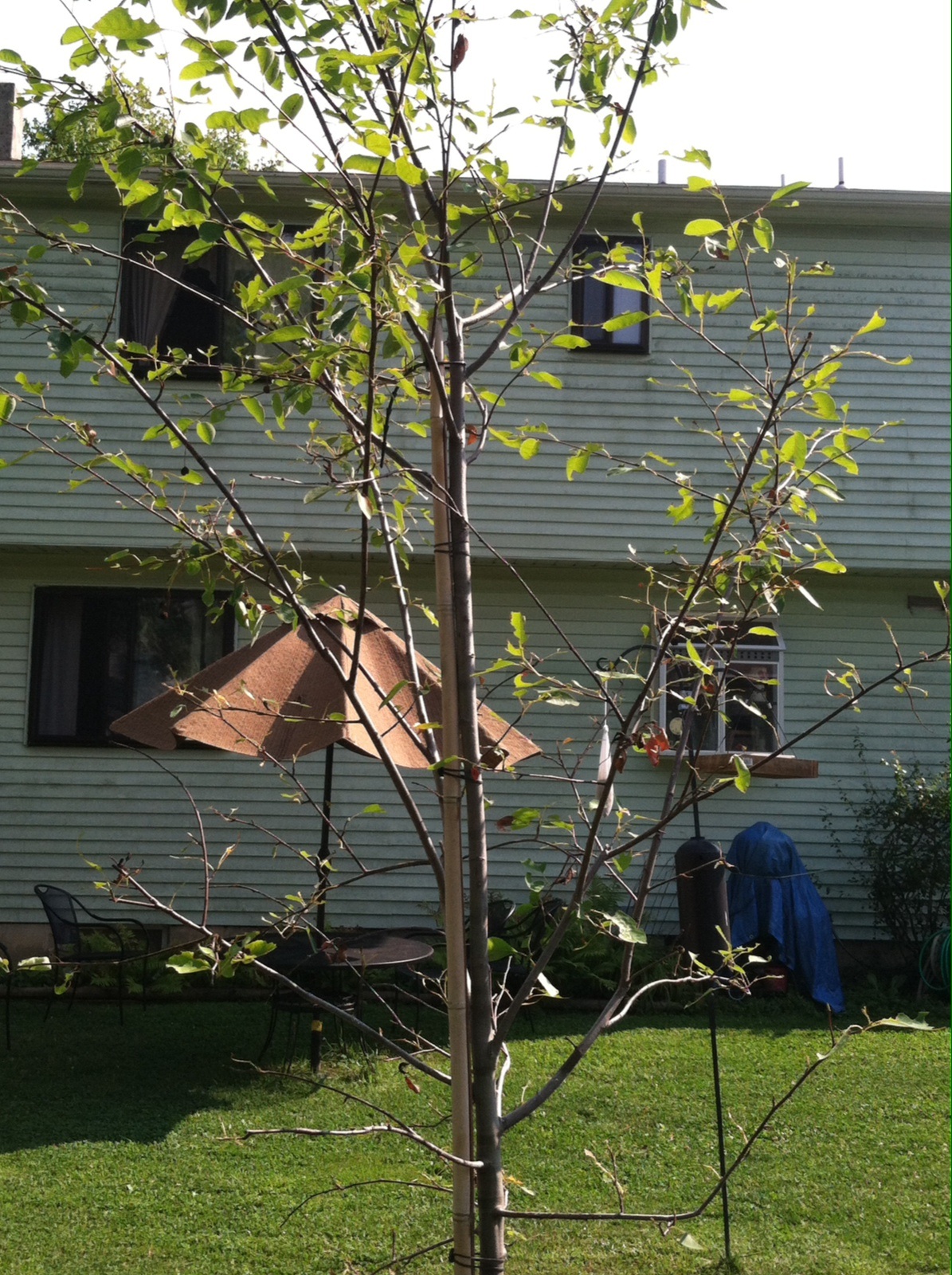
I have wanted a serviceberry tree for several years, and finally we bought one this past April and had it planted professionally by the nursery. It was near the end of blossoming when we got it, but produced a lot of very tasty berries later on which the birds enjoyed immensely.
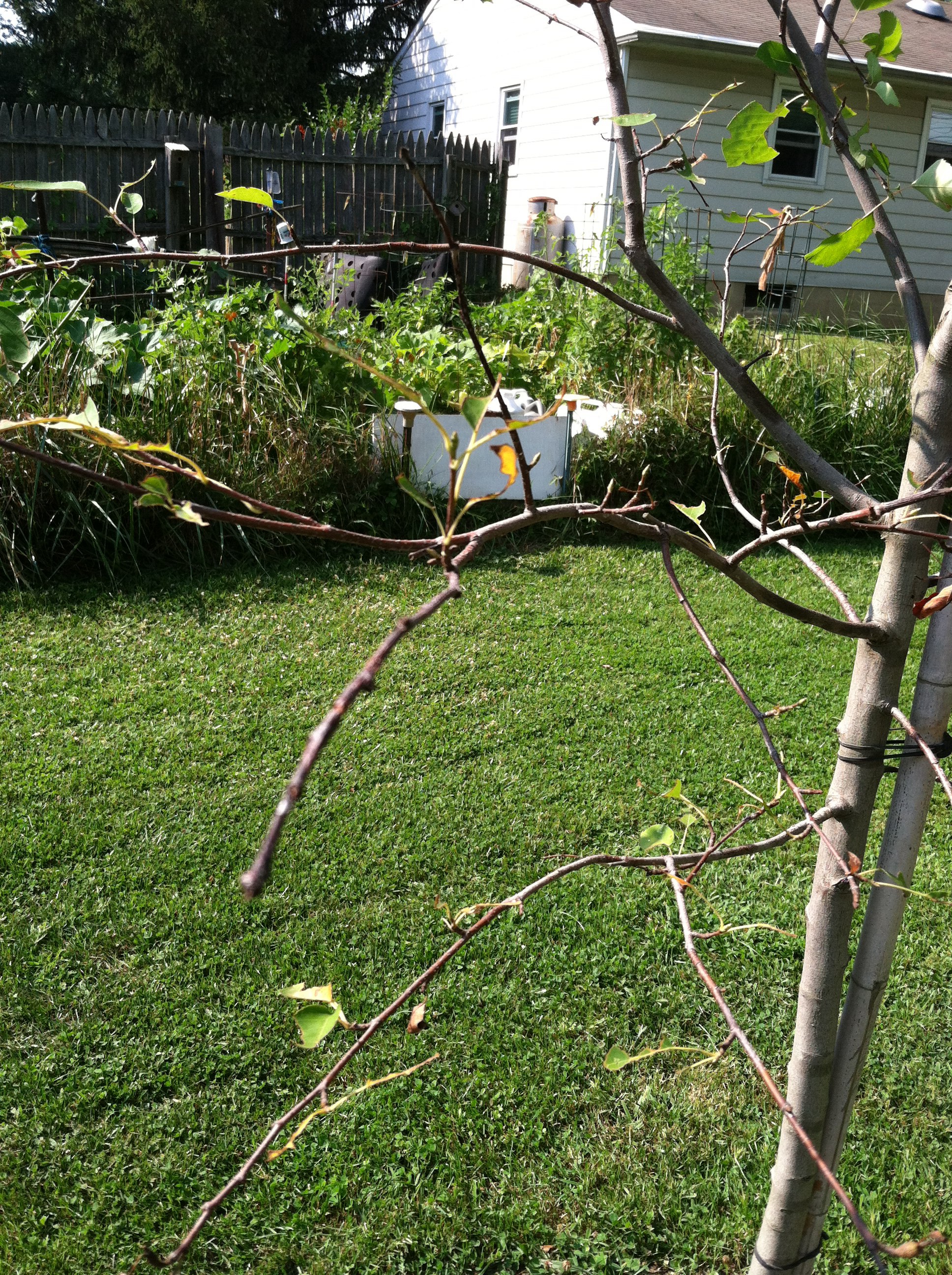
About three weeks ago, I noticed that something was eating the leaves at an alarming rate. The person at the nursery looked at my pictures and thought it might be some kind of caterpillar, though I hadn’t seen anything on the tree at all. She suggested we spray the tree with Neem oil, a topical, organic pesticide. So with some reservations, we sprayed the tree twice, one week apart, but without any effect. Today, the pest expert at the nursery called us and said he thinks it might be a leaf roller wasp, a native wasp that cuts out semi-circles and then rolls her larvae up in them, along with some pollen, to pupate. A larger tree isn’t affected very much by the leaf damage, but it can be significant in a smaller tree like ours. The expert isn’t entirely sure of his diagnosis, so I will be showing him more pictures, and in the meantime we will just hope for the best.

My serviceberry tree is showing some significant damage

My serviceberry tree is showing some significant damage

It's even more defoliated now!

It’s even more defoliated now!

A close-up of the half-moon cuts in the leaves

A close-up of the half-moon cuts in the leaves

Bare twigs with only the central leaf veins remaining!

Bare twigs with only the central leaf veins remaining!