Some Beautiful Quotes I Found

It was a rainy day today, but I spent the afternoon at the Delaware Nature Society’s Ashland Nature Center. Here are some lovely quotes I found there that seemed so appropriate for us:

“When we try to pick out anything by itself, we find it hitched to everything else in the universe.” John Muir

“Look deep into nature, and then you will understand everything better.” Albert Einstein

“A weed is a plant whose virtue is not yet known.” Ralph Waldo Emerson

“One touch of nature makes the whole world kin.” William Shakespeare

And finally, this almost brought tears to my eyes:
“And the day came when the risk to remain tight in a bud was more painful than the risk it took to blossom.” Anais Nin

This native aster is very common in the woods around here.  I transplanted this one from the wooded yard of a friend, and amazingly, it took!

This native wood aster is very common in the woods around here. I transplanted this one from the wooded yard of a friend, and amazingly, it took!

More Asters

A couple of months ago, the entire north side of the Swansboro Elementary School courtyard garden had to be bulldozed so that repairs could be carried out to the building foundation where water was leaking.  We dug up and tried to transplant as many of our perennials as possible.  Some of the asters we transplanted at my house next to the front porch.  At the time, I thought the plants looked dead and would never make it.  But amazingly they DID make it and are now blooming.  I just wish I had more of them.

Asters from Swansboro Elementary School

Asters from Swansboro Elementary School

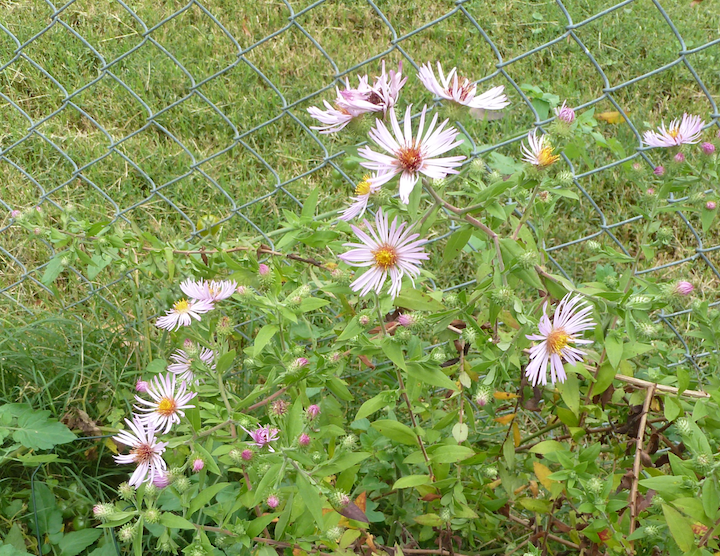
When I first decided a couple of years ago to try to plant a “butterfly garden” in my backyard, my friend Joyce suggested planting a climbing aster, Aster carolinianus, along the fence.  It has done well and is now coming into bloom for a second year.

Climbing Aster - Aster carolinianus

Climbing Aster – Aster carolinianus

The skippers really like this aster.

Skipper on Climbing Aster

Skipper on Climbing Aster

Finally, back to the small white asters which are attracting lots of bees.  I had a hard time getting this picture because the darned bumblebee wouldn’t stay in one place, so he’s a little fuzzy (photographically speaking as well as in real life).

Bumble Bee on Small White Aster

Bumblebee on Small White Aster

Finally, the Asters Are Starting to Flower!

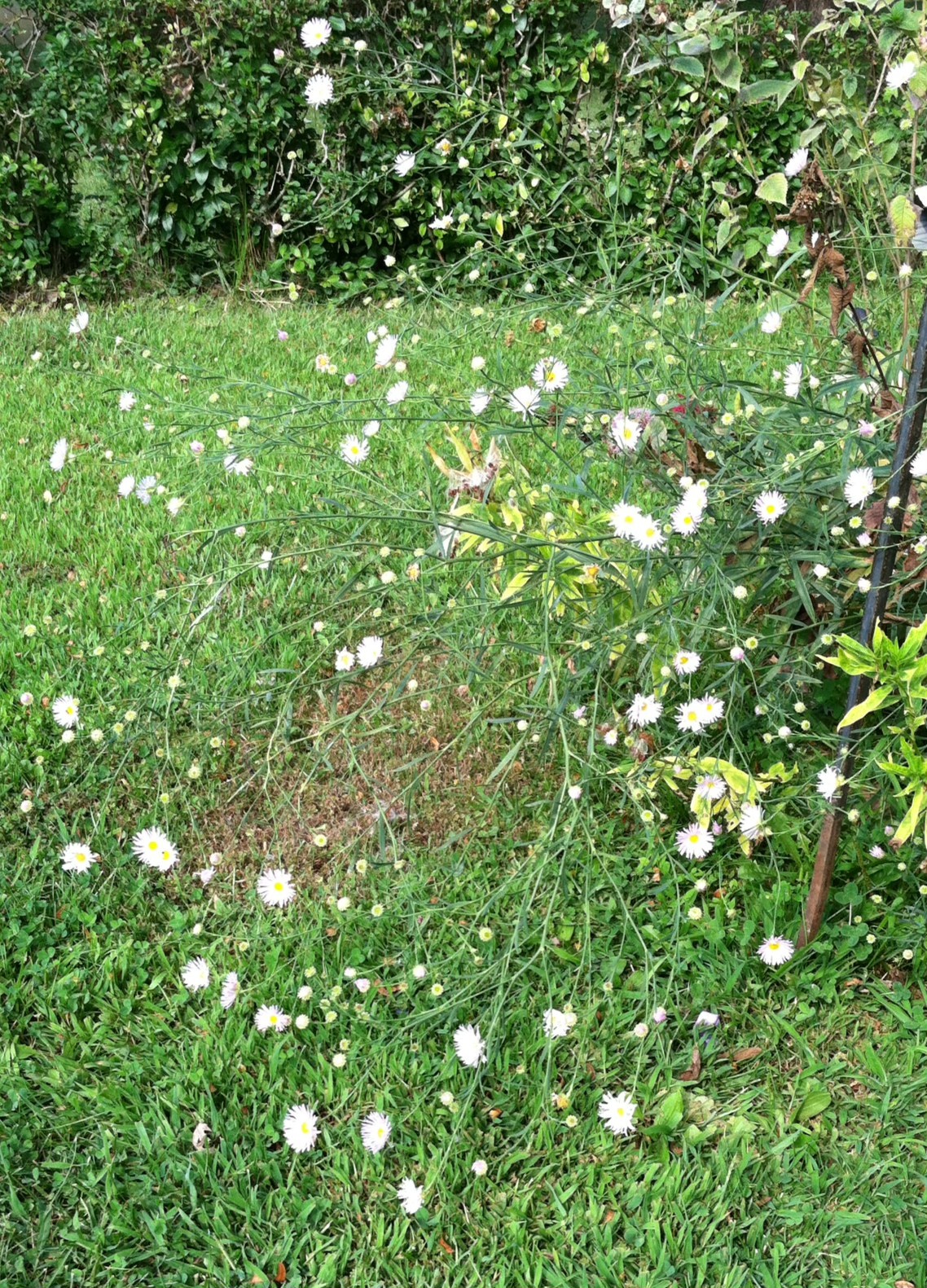
One of my favorite “freebies:” the Small White Aster (Aster vimineus)
is coming into bloom.  I have patches of these all over my yard.  You need to know that they’re going to do this come October, so you don’t pull them up earlier in the summer.  I had to fight off someone working on my house foundation who would have liked to pull up or trample all the “weeds” growing around my house.

Small White Aster

Small White Aster

A Closer View:

Small White Aster Closer View

Small White Aster Closer View

If You Plant It They Will Come. Really!

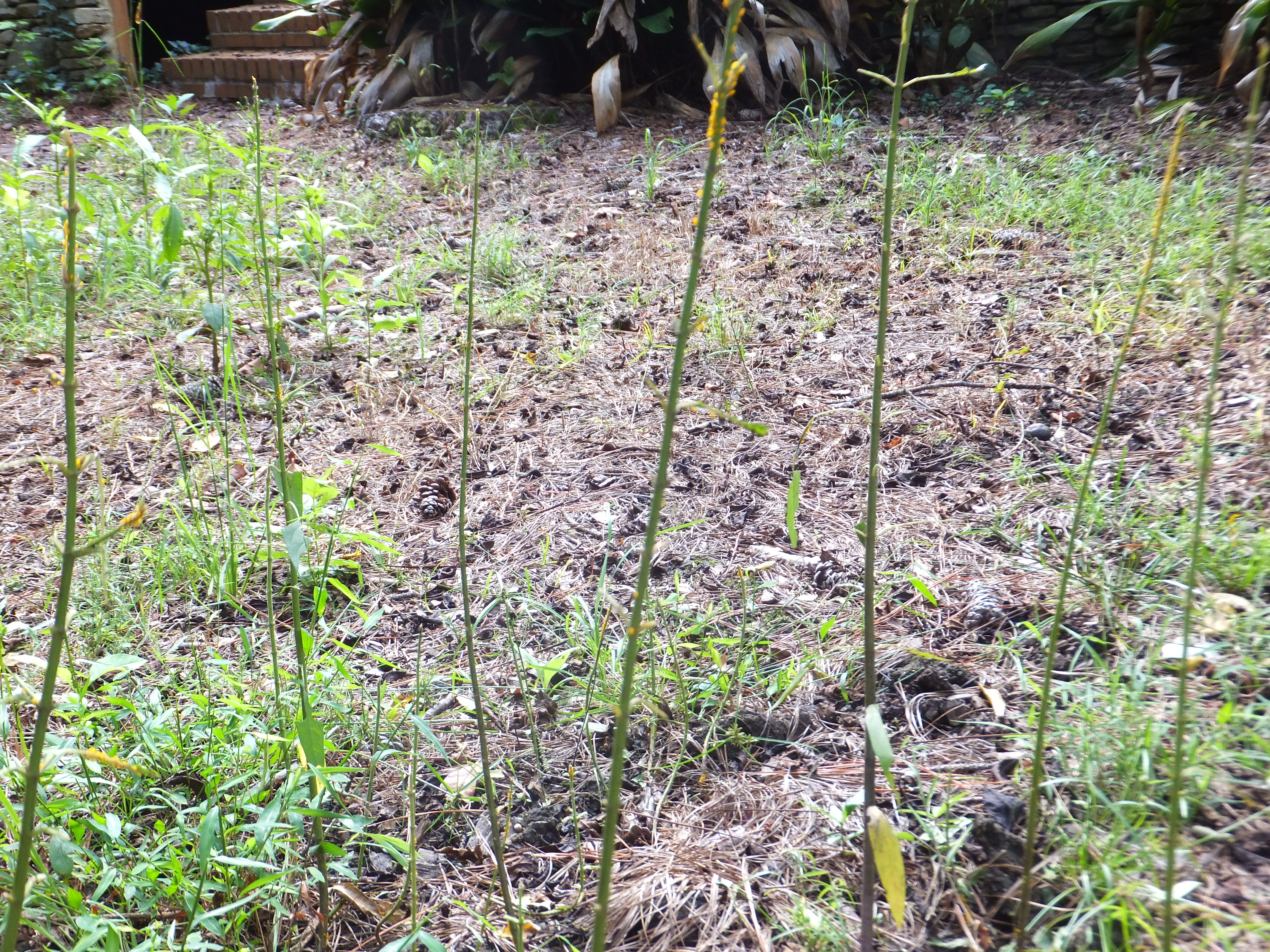
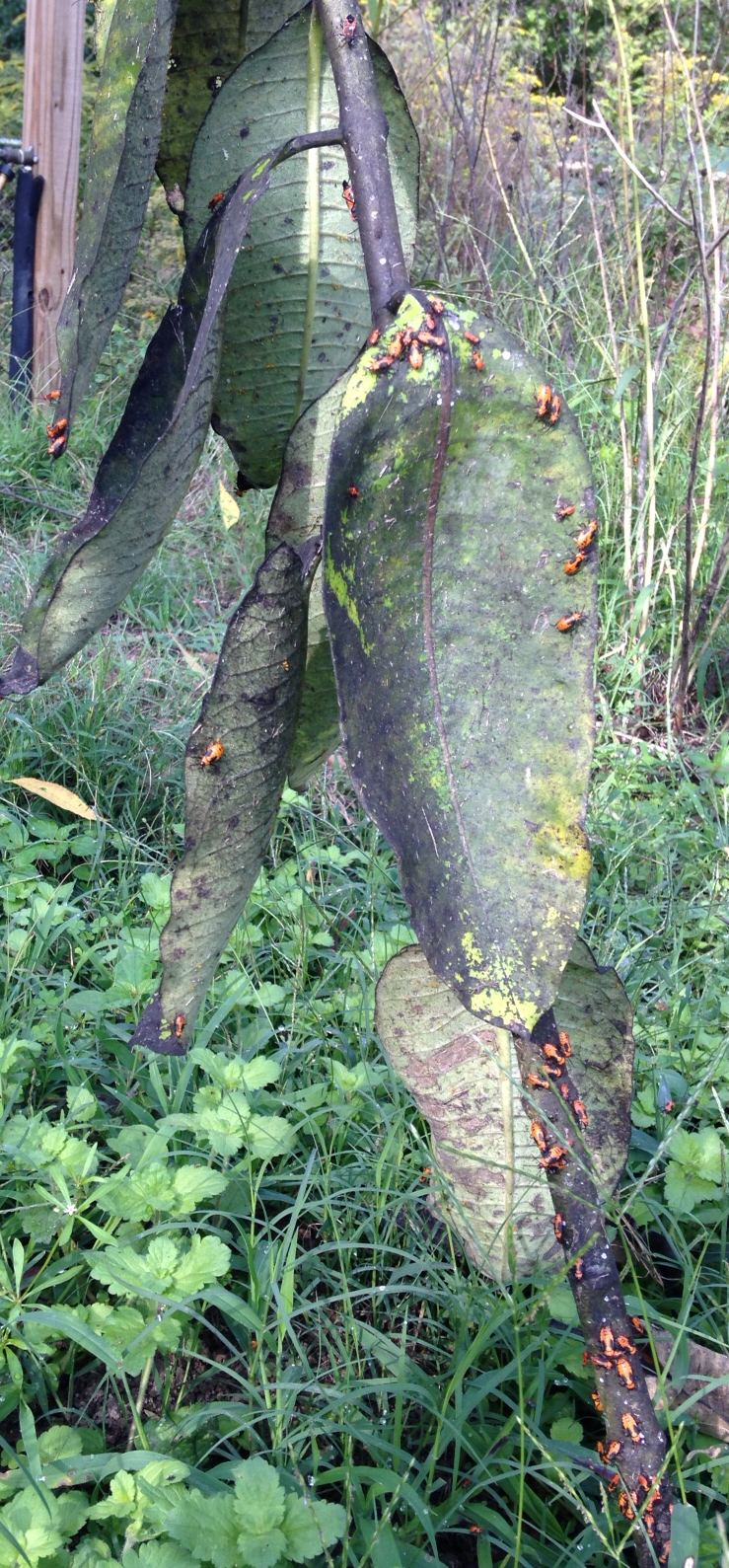
"Naked Milkweed"

“Naked Milkweed”

DSCF4273

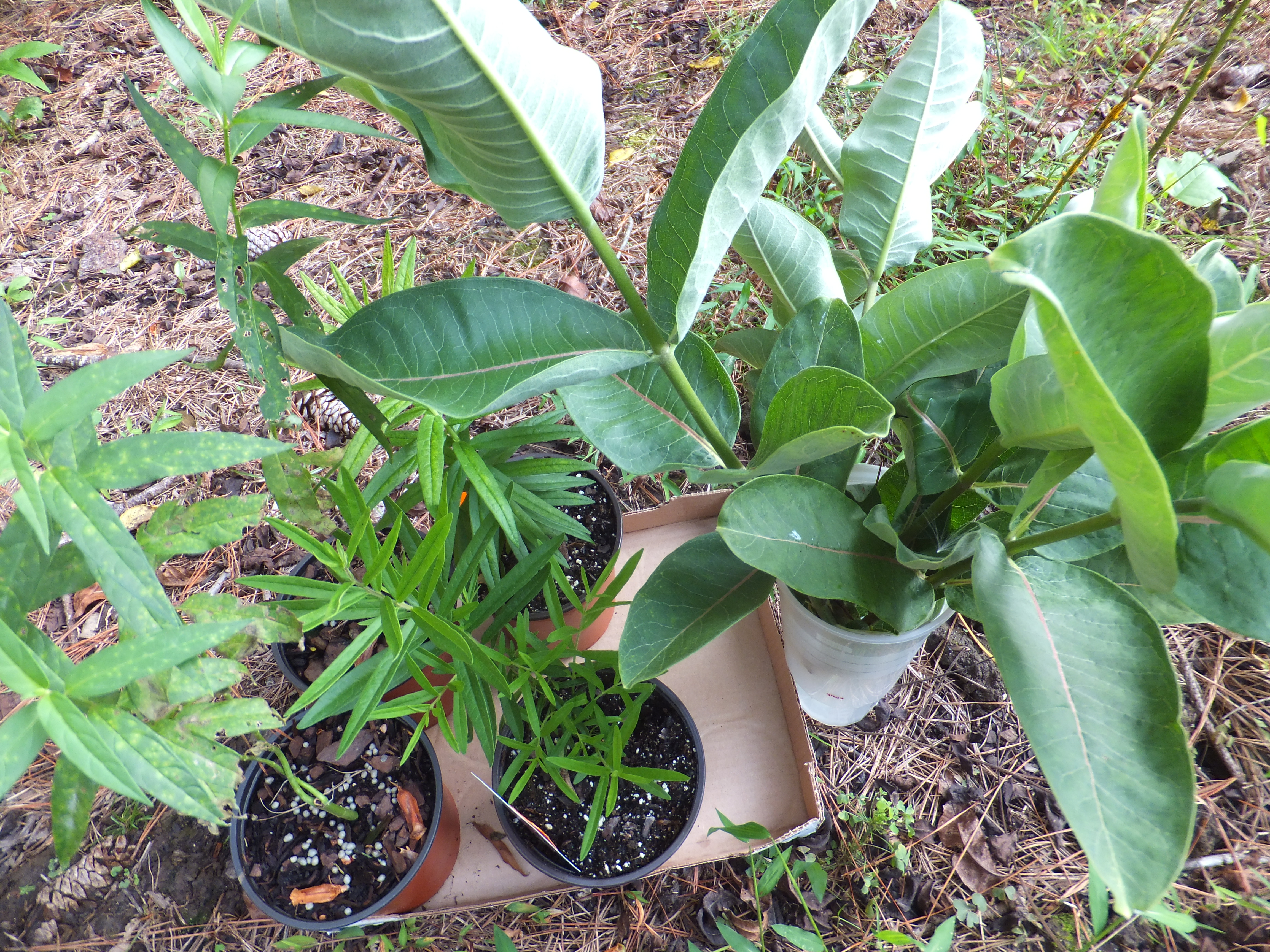
Additional plants for hungary caterpillars!

DSCF4272

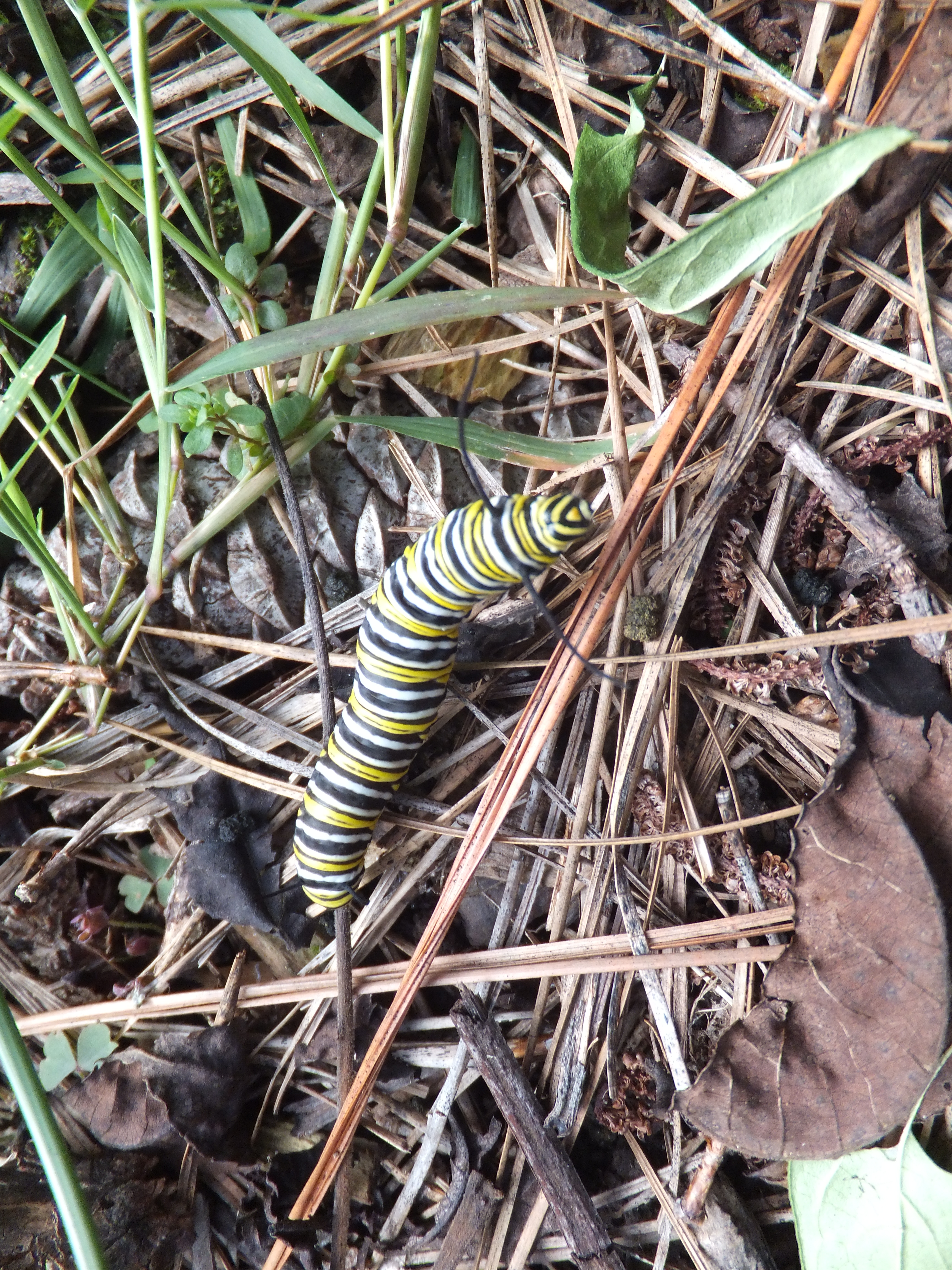
One of my five (5!) beautiful babies!

My husband and I were returning from a late afternoon errand, when I looked out the car window and didn’t see the milkweed. I go to investigate and was shocked! Everything, and I mean everything, had been eaten! Only the spindly spines of the plants were left. I go get my camera to take a picture for the blog, fuming to my hubby that the deer ate the MW even though it was deer resistant, that I couldn’t have anything. I take the picture and then think about how we have had afternoon rains everyday this week, and with the wet ground, I should be able to see deer tracks…concrete evidence of the deer. So I look closely at the ground and, lo and behold, see a caterpillar! For a nano-second, I think it might be a Monarch caterpillar, but dismiss it, thinking no way. This is a first year crop of MW, started from seeds.  It is, as I had been calling it, my “piddly little crop of MW.”  I quickly e-mail the pictures to my sister Robin and then call her, thankfully she was home. She takes one look at the pictures and exclaims that I have a MONARCH CATERPILLAR!!!  I say, are you sure??!!  She is an expert,  I knew she knew a monarch caterpillar when she saw one, I just couldn’t believe it!  Then she tells me that, with the extent of the eating, I must have more than one caterpillar. So still on the phone, I go out to look closer and found three more! Then she tells me I HAVE TO GET MORE MW. It is now 5:40, Saturday evening, and again I’m thinking, no way. I then remembered there was suppose to be a native plant nursery not far from me, but I had never been there, didn’t know where it was, and figured they would be closed anyway. But I quickly call them and they were open! In panic mode, I explained what was going on and she said they were closing at 6:00 but would stay open for me until 6:15. Because I didn’t know where I was going, I told my hubby he needed to come with me, this was AN EMERGENCY!  He was watching the University of GA football game, and to put it mildly, was not a happy camper. With him cursing me, and by the grace of God, we made it to the nursery!

The nursery’s name is Nearly Native Nursery and is in Fayetteville, GA  It is run by the nicest couple!  They were also most impressed with my four caterpillars, saying they had only found one so far this year. I bought four MW plants, two swamp MW and two of the orange, Butterfly. Thinking this still was not going to be enough foliage for four hungary caterpillars, they gave me cuttings of a HUGE variety of MW. They did not have any of that variety to sell, had some coming it, but it is huge. I planted the four and placed the cuttings near the caterpillars. It was then that I found caterpillar #5!
First thing this morning, I checked on things and all five were eating away…three on the huge variety and two on the plantings. As I said, I cannot believe a Monarch, which I have never seen, found my little first year crop of a few plants. AMAZING! Count me in with the true believers of the power of MW.
So that’s it. I’ve attached a few pictures. One is the “naked” MW, one the plants I bought and the cuttings they gave me, and another picture of a caterpillar. If you plant it, they will come.  Really!
More Bugs (Late Summer) – the Pretty and the Not-So-Pretty

I’ll start with the “pretty” stuff.  I have a late-blooming goldenrod cultivar of some sort that I bought at a nursery last year.  I don’t quite trust cultivars but this one seems to be attracting insects like crazy, so I guess it is OK.  I think the following picture shows a “Soldier Beetle.”  In fact, on looking at the picture more closely, I think there are TWO of them, one on top of the other.

Insect on Goldenrod

Insect on Goldenrod

More bumblebees on the Sedum:

Bumblebees on Sedum

Bumblebees on Sedum

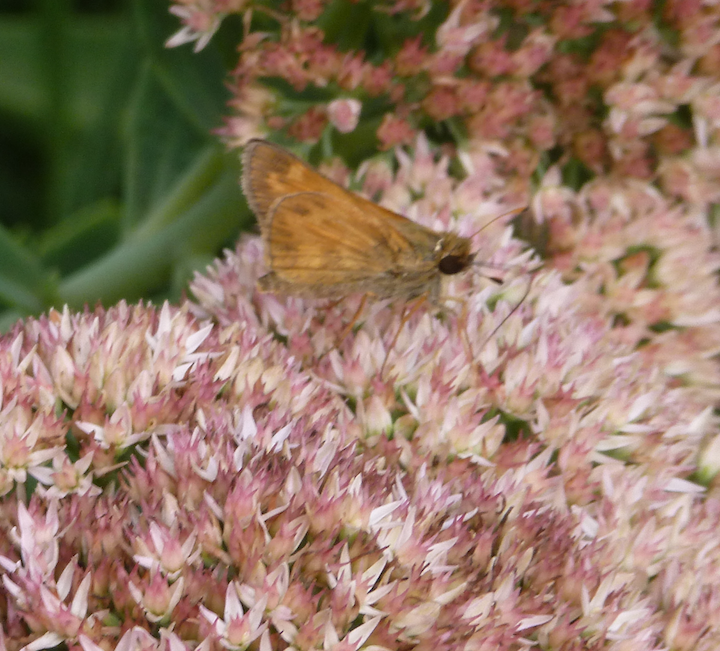
An unidentified skipper on the Sedum?

Skipper on Sedum?

Skipper on Sedum?

Finally here’s the not-so-pretty (well, really gross) picture that I took just for you, Wendy.

Milkweed Beetles on Common Milkweed

Milkweed Beetles on Common Milkweed

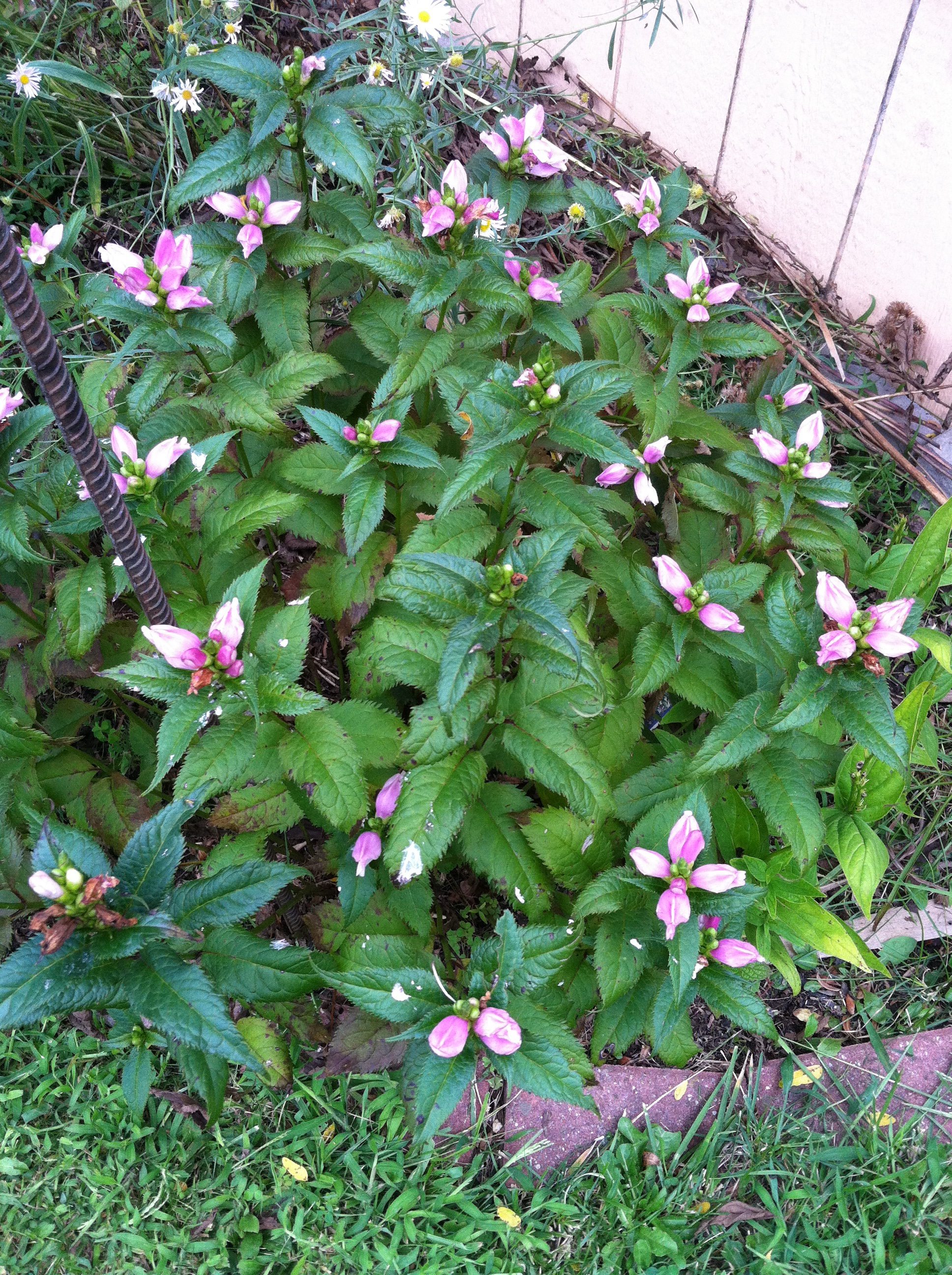
Obedient Plant

Look what I found growing among all the weeds in my “garden.”  It’s the Obedient Plant (Physotegia virginiana) that I planted  last year and thought had just disappeared.  For some reason I’ve never been able successfully to grow Obedient Plant (I’ve planted it several times) even though friends of mine call it “Disobedient Plant” because it spreads so aggressively.

Obedient Plant

Obedient Plant

I had to pull a few weeds just to get this picture.  Believe it or not my intention is to get the whole “garden” weeded by winter.

Sedum

Even though it’s a non-native, I’ve always had a soft spot in my heart for sedum, because the bees and butterflies love it. It provides a late-summer nectar source.  I know there are many different species of sedum but I don’t know exactly what I’ve got.  I have 3 different ones in 3 different parts of my yard.

Lately I’ve been seeing more butterflies on my sedum than on my butterfly bush.  Here are a couple:

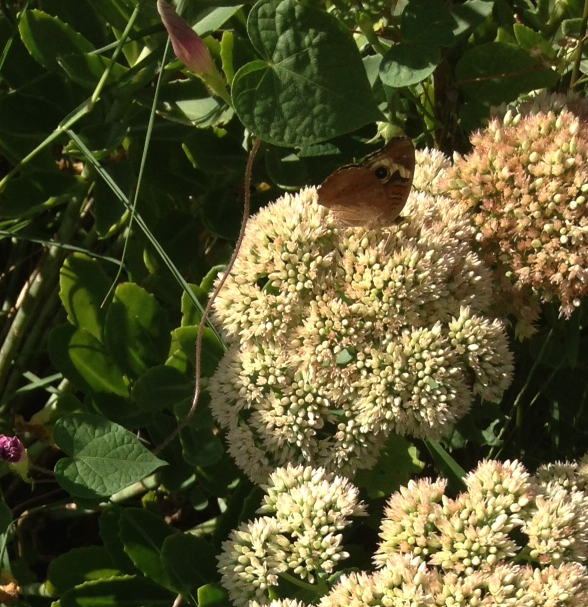
This Common Buckeye refused to keep its wings open long enough for me to get a good photograph, so I had to be satisfied with one with the wings closed:

Common Buckeye

Common Buckeye

This Painted Lady was just about as difficult to photograph.  I don’t really know if it is a Painted Lady or an American Lady.  According to my Life Cycles of Butterflies book, you have to count the number of eyespots on the underside of the lower wing to tell the difference.  You can see it’s in the company of 3 different bees and another small butterfly I can’t identify.

painted lady 2

It’s OK to Be a Late-Bloomer

image

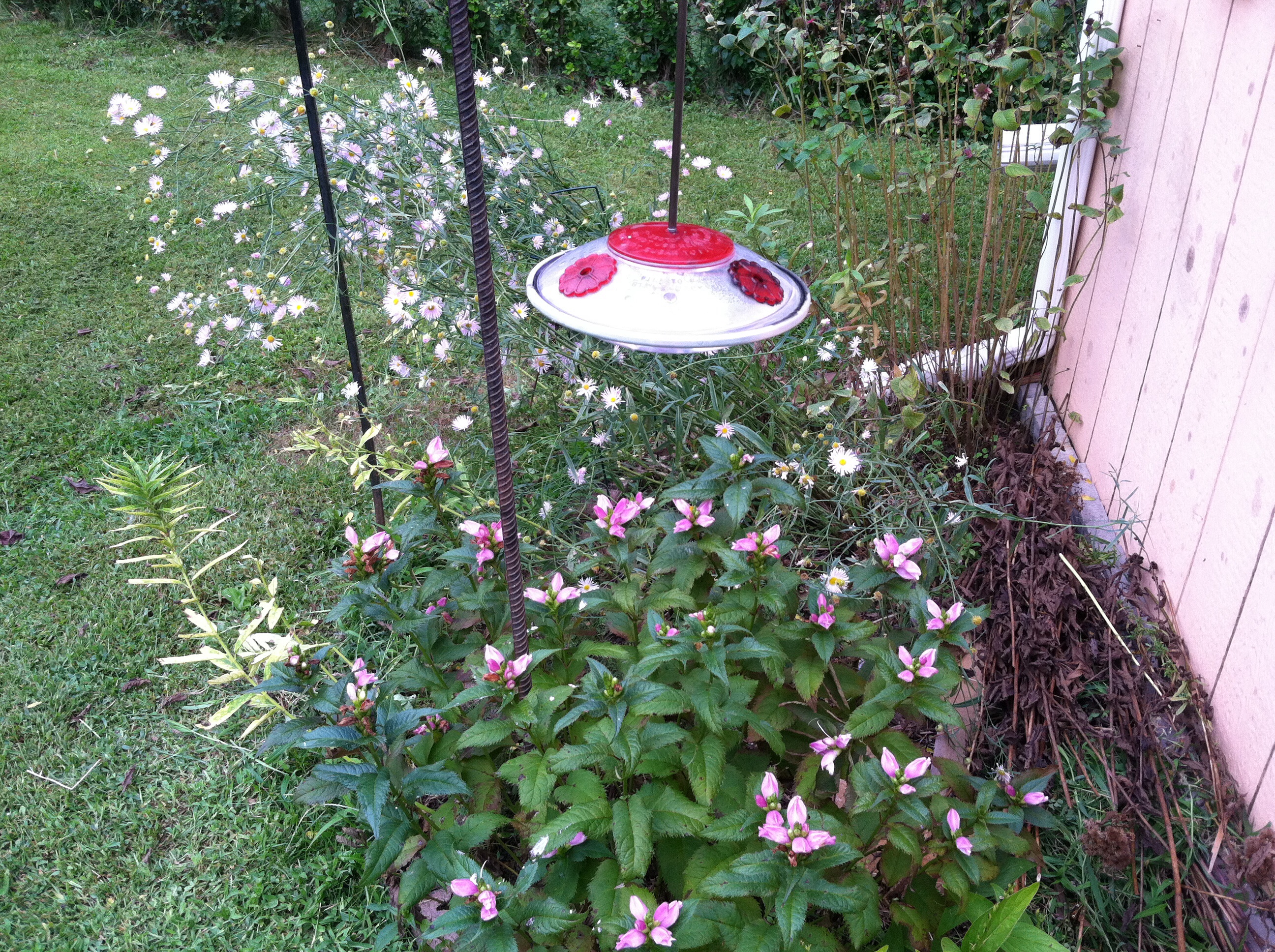
This is Pink Turtlehead, otherwise known as Chelone lyonii ‘Hot Lips’.  I really like this flower because it blooms in August and September after all the showy summer flowers are done and it’s supposed to be a larval host for the Baltimore Checkerspot butterfly.  Not that I have ever seen a Baltimore Checkerspot in my yard, but you never know when one might come calling!  The second picture shows it alongside my Boltonia Asteroides, which is still going strong. image

Jack-in-the-Pulpit Update

image

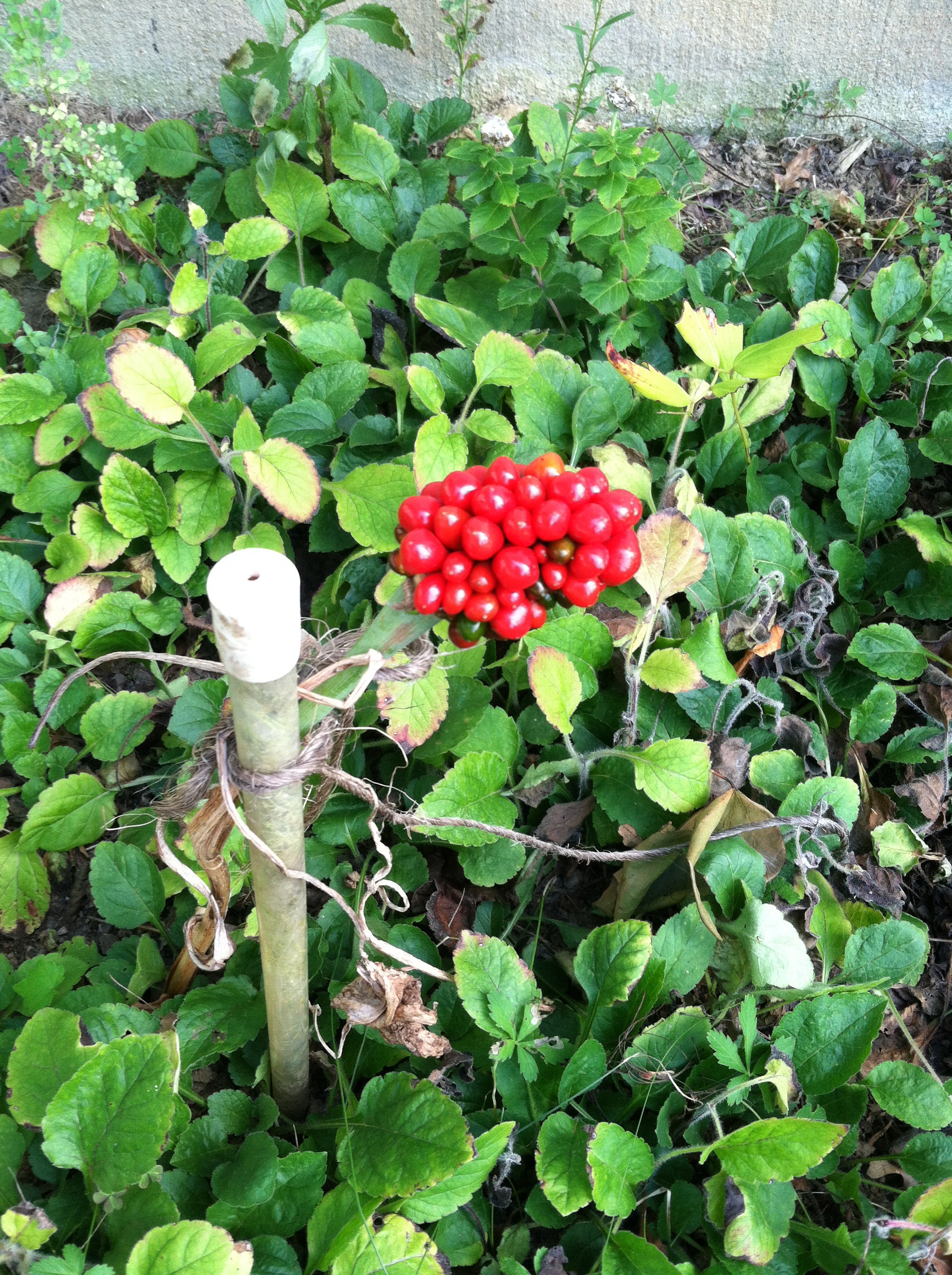
In a previous post this spring, I included a picture of a Jack-in-the-Pulpit with some berries that I hoped would ripen this summer.  Here they are!  The leaves have died away, but the berries continued to ripen–aren’t they a gorgeous red? In reading about this flower, I discovered that a plant is either male or female and can change sex from year to year, depending on growing conditions the previous summer.  This was a female flower.  Also, the females have two sets of leaves while the males have only one, an easy way to tell the sexes apart. If it is a hard summer and the corm is unable to store much energy, the plant will come back in the spring as a male.  Then if that male plant has a really good summer, it can come back as a female the next year.  All Jack-in-the-Pulpits start out as males for the first year or two to allow the corm to grow. Interesting, huh?