Here in Georgia, I have a terrible time keeping four legged eating machines, known to others as deer, out of my yard. I must check deer resistant plant lists before planting anything. All lists first state no plants are TOTALLY deer resistant. As I am a newbie to the world of native plants, I started by checking out three common native plants: milkweed, purple coneflowers and black eyed susans. Milkweed was listed as highly resistant. Yes! Purple coneflowers and black eyed susans were given a “B” on the scale. (Highly resistant plants were given an “A” down to least resistant, given a “D”.) This gives me cautious hope!
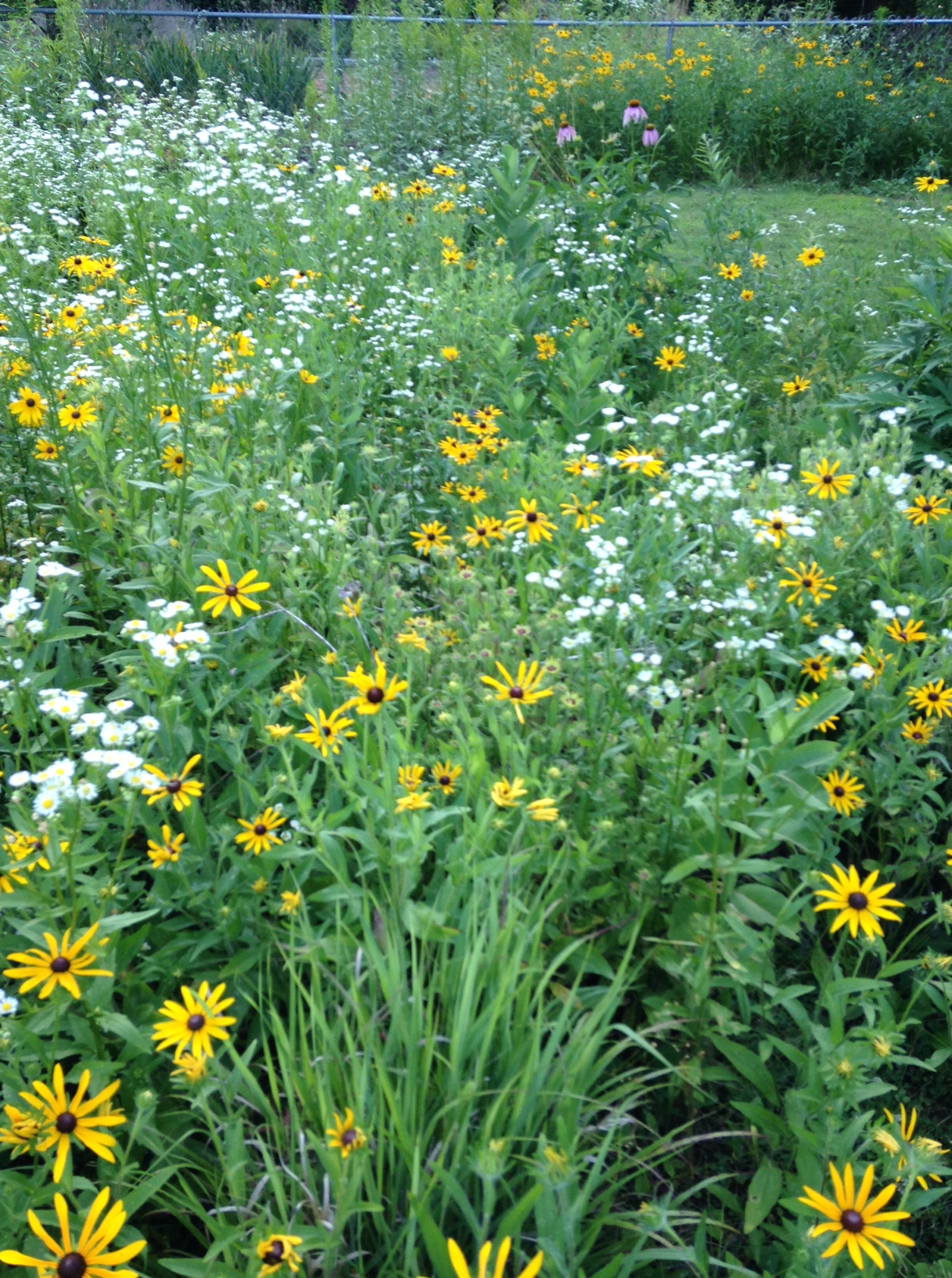
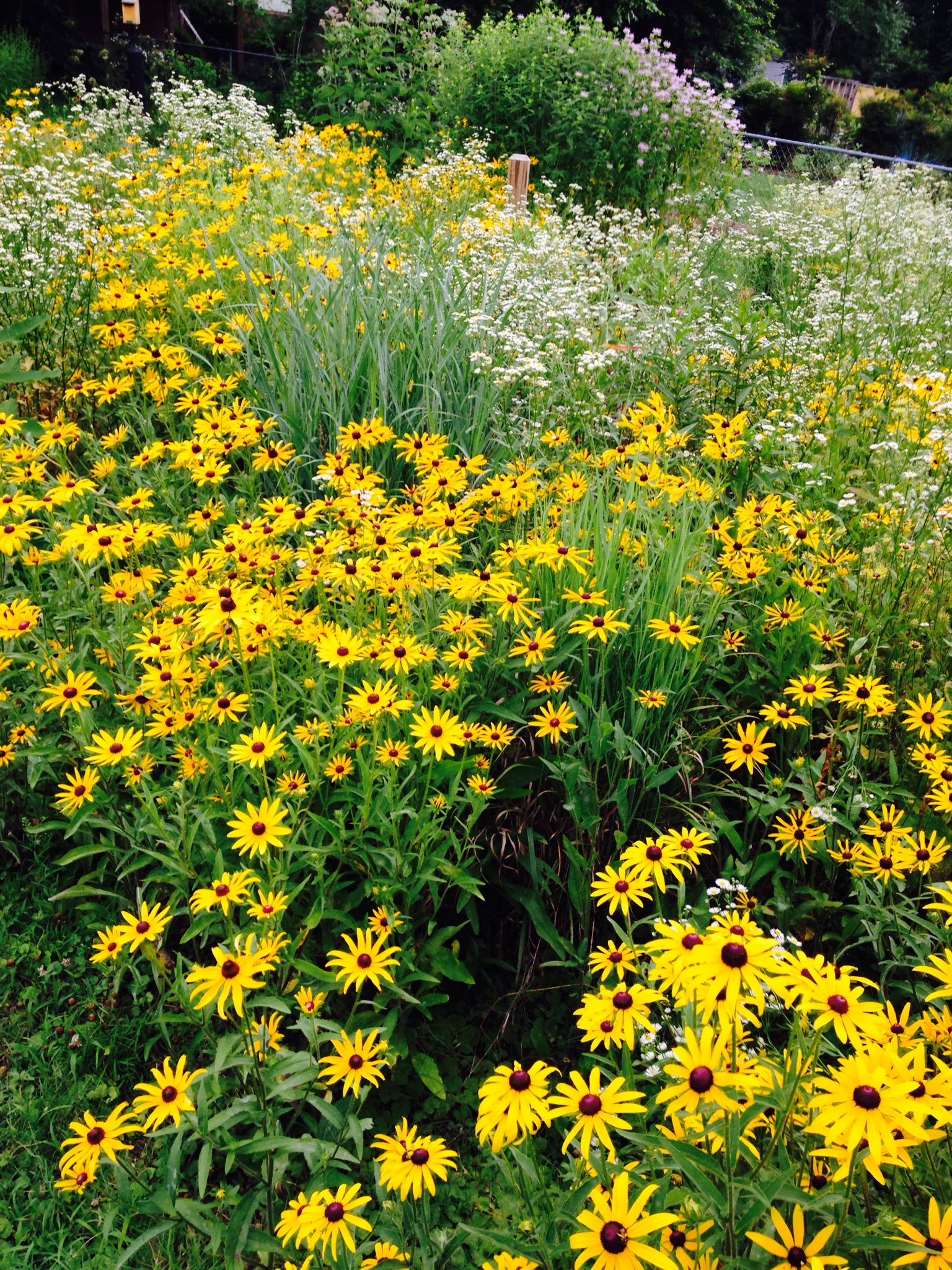
Last year my “garden” sort of limped along but this year everything grew very tall and thick! These pictures show what has come to flower by the end of June.
This is my favorite picture of the back part of my “back garden.” Here you can see Daisy Fleabane, Black-eyed Susans, Milkweed and Purple Coneflowers.
Back Garden in June, 2014
Here’s another “long shot” with a different view of the garden.
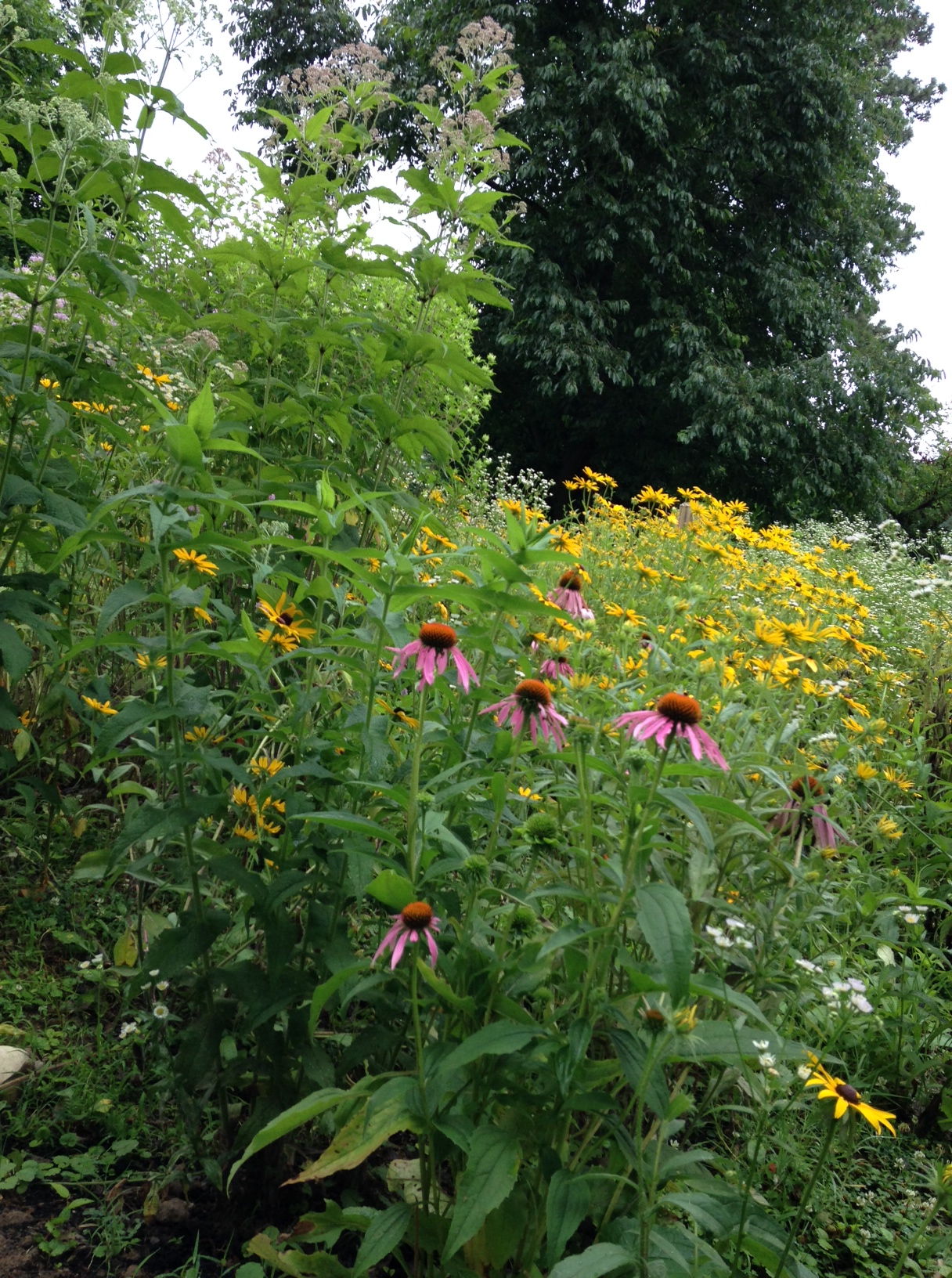
I like this picture because it shows how tall my Sweet Joe Pye Weed (still coming into bloom in late June) has gotten this year:
Sweet Joe Pye Weed with Coneflowers
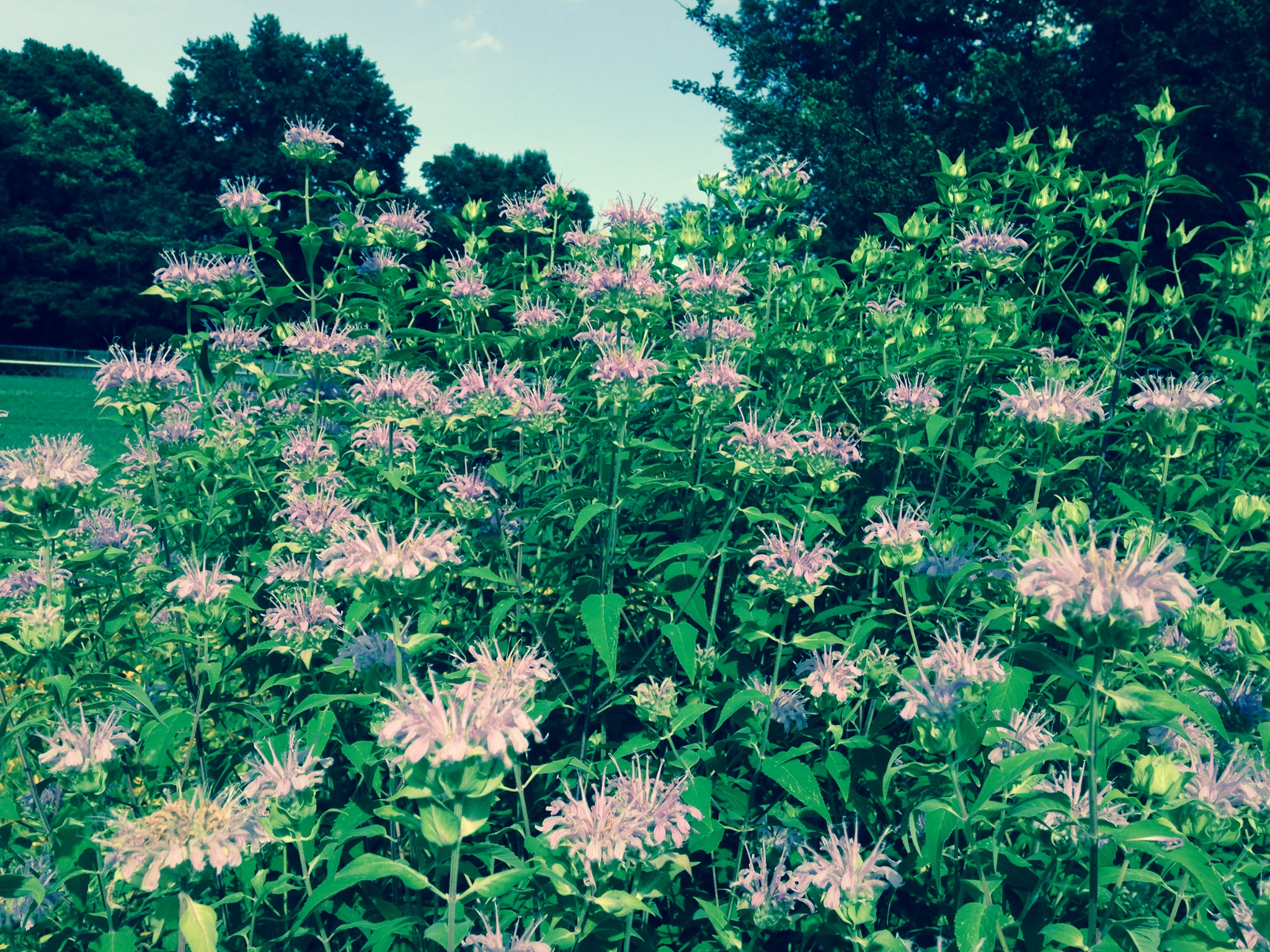
The Monarda fistulosa has gotten really tall this year and swarms with bees but I’ll be darned if I can manage to photograph those bees. They just won’t hold still for me! I plan to publish another post of pictures where I managed to catch a bee on something!
Monarda fistulosa in bloom
BUT here’s a video of Bees on Monarda. I apologize for it’s being “sideways.” I’ll replace it as soon as I can. (Actually, if you’re viewing this on an iPhone, just turn the phone sideways and everything is oriented correctly then,)
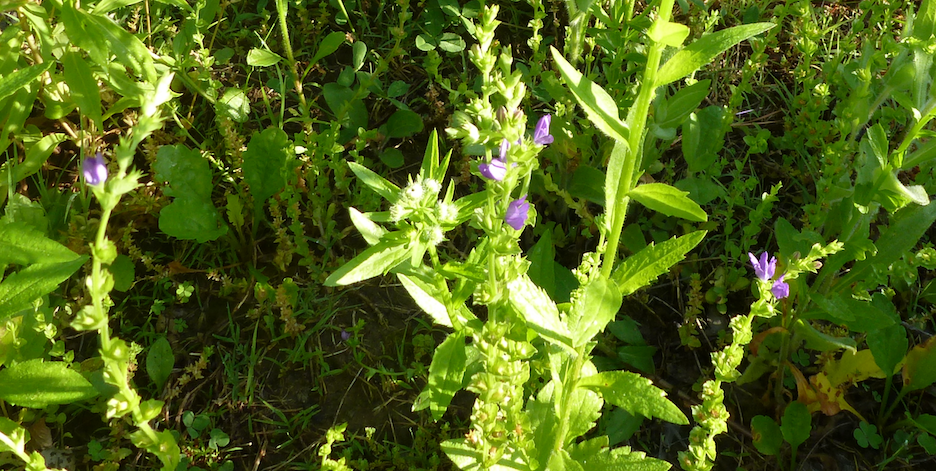
Finally, I was pulling something up that I considered to be a “weed-weed” (I happen to love “weeds”) when it occurred to me it was quite pretty and I didn’t know what it was so why was I pulling it up? My friend Suzette later identified it as “Venus’ Looking Glass.” It’s only about a foot tall. According to the Internet, it’s a native throughout the lower 48 states and serves as a nectar and host plant to many different insects. It supposedly is “aggressive,” but I’m not pulling it up anymore. – Robin
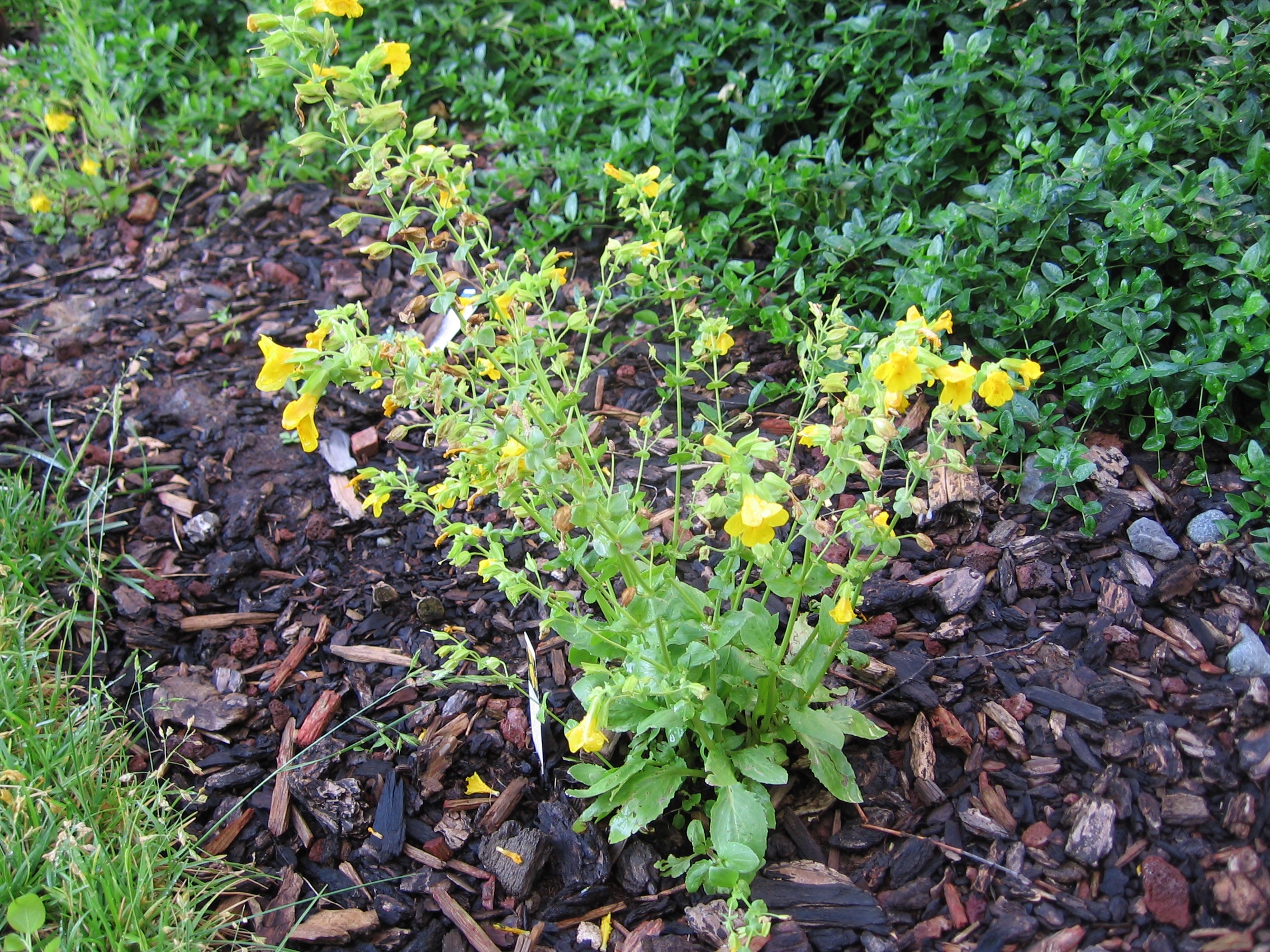
This is a common wildflower that grows along the banks of streams and seeps in western North America. Plants are supposed to grow to be one to three feet tall. This one is in its first year. It has bright yellow snap dragon-like flowers March through August. Leslie
My butterfly milkweed is in full bloom now in my baking-hot front flower garden. I’ve had a hard time finding flowers that will survive in the heat, but these have done well. Now I’m just waiting for some butterflies!
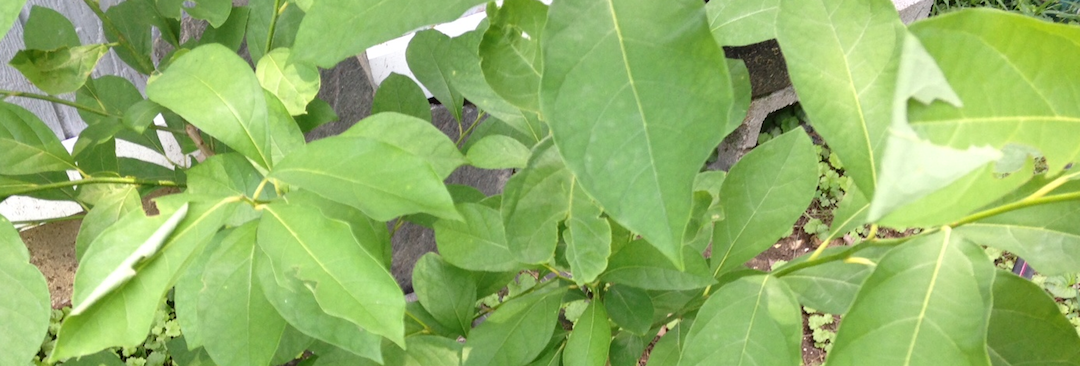
There ARE Spicebush Swallowtail Butterfly caterpillars inside the leaf rolls! (See “Spicebush Leaves are Getting Rolled Already” post below.) A friend helped me unroll a couple of leaves and there they were! We let the leaves roll back up so the little caterpillars were “safe” again. (The caterpillars generate a white sticky substance — you can see it in these pictures — that keeps the rolls closed up.) – Robin
Baby Spicebush Swallowtail Caterpillar inside a Leaf Roll
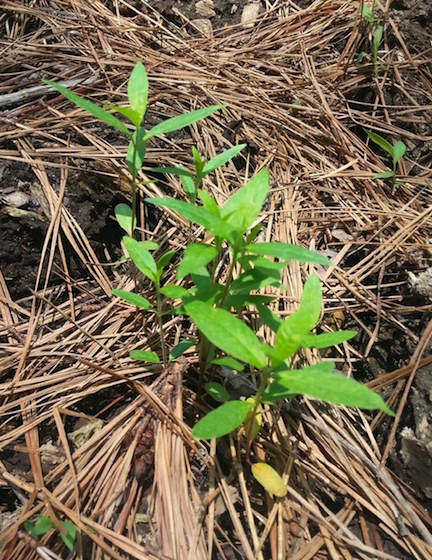
The following picture is of Common Milkweed just coming up in Wendy’s garden outside Atlanta:
Common Milkweed Sprouting in Wendy’s Garden outside Atlanta, GA
At first Wendy thought these were just “weeds” but then she realized they were not “weeds” at all — they were MILKWEED, an absolute requirement for Monarch Butterfly caterpillars.
This picture is from Robin’s yard in Virginia. It shows that in mid-June the leaves are already being rolled — someone is inside each roll. Spicebush Swallowtail caterpillars? She’s afraid to open up the rolls completely to get a good look at what’s inside. We’ll have to wait to see what emerges.
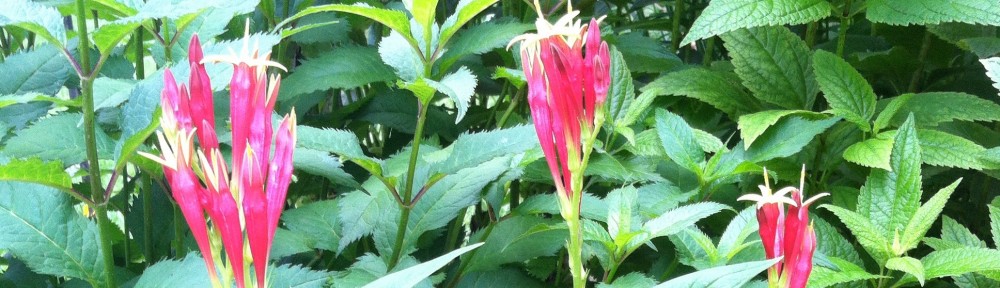
The picture above is of Indian Pink growing in Deb’s garden in Delaware.
We live all over the country and will post pictures and details about our gardening efforts from Delaware to Maryland to Virginia to Georgia to Colorado and Idaho.
Also, pets are a huge part of all our lives. So, even though it doesn’t quite fit in with our “Weeds to Bees” theme, we decided to include posts devoted to our various “pets” — cats, dogs, and even some chickens.


 FROM WEEDS TO BEES